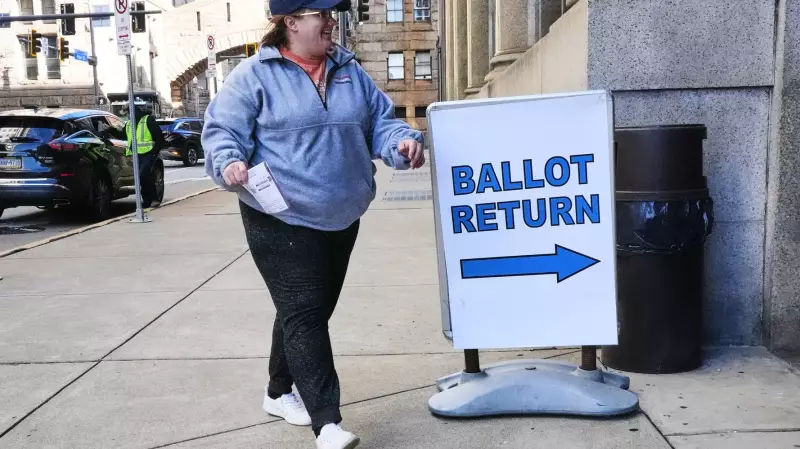
The United States Supreme Court issued a significant ruling on Wednesday, affirming the right of political candidates to legally contest the rules governing how votes are counted in an election. The 7-2 decision, authored by Chief Justice John Roberts, specifically involved a case brought by Representative Mike Bost, a Republican from Illinois.
The Case and the Core Ruling
Rep. Mike Bost, a longtime ally of former President Donald Trump who participated in efforts to challenge Joe Biden's 2020 presidential victory, sought to contest Illinois's vote-counting procedures. The central question before the Court was whether a candidate like Bost had the legal standing to bring such a challenge before an election actually takes place.
The majority, in a decisive 7-2 vote, ruled that he does. Chief Justice John Roberts wrote the opinion for the Court, while Justice Sonia Sotomayor authored the dissenting opinion. Roberts argued that candidates should not have to wait until an election is imminent or over to challenge rules they believe are flawed.

The Court's Reasoning on Timing and Integrity
In his written opinion, Roberts emphasized the profound importance of electoral integrity to democratic legitimacy. "Rules that undermine the integrity of the electoral process also undermine the winner's political legitimacy," he wrote. He noted that counting unlawful votes or discarding lawful ones erodes public confidence in election results.
The Court rejected the idea that a candidate must prove a substantial risk of losing the election or missing a legal vote threshold to have standing. Requiring such a showing could force many election disputes to arise just before an election or after the votes are cast, Roberts stated. He pointed out that federal courts have repeatedly warned against changing election rules on the eve of an election, as it can cause voter confusion and further undermine confidence.
Preventing Last-Minute Legal Chaos
The ruling aims to create a more stable electoral environment. "The democratic consequences can be worse if courts intervene only after votes have been counted," Roberts continued. He framed the Court's position as a preventative measure, arguing that "counting first and ruling upon legality afterwards is not a recipe for producing election results that have the public acceptance democratic stability requires."
By allowing candidates to bring challenges earlier in the process, the Supreme Court seeks to avoid the chaotic, post-election litigation that has characterized recent U.S. election cycles. This decision establishes a clearer legal pathway for addressing grievances about voting procedures well in advance of Election Day.