Political Defections Highlight Power Dynamics Over Ideological Convictions
The landscape of Canadian federal politics has been reshaped by a series of high-profile defections, exposing a troubling trend where career advancement often takes precedence over core principles. Recent months have witnessed multiple politicians crossing the floor, abandoning their party affiliations in pursuit of personal influence and power within government.
Nunavut MP's Dramatic Party Switch
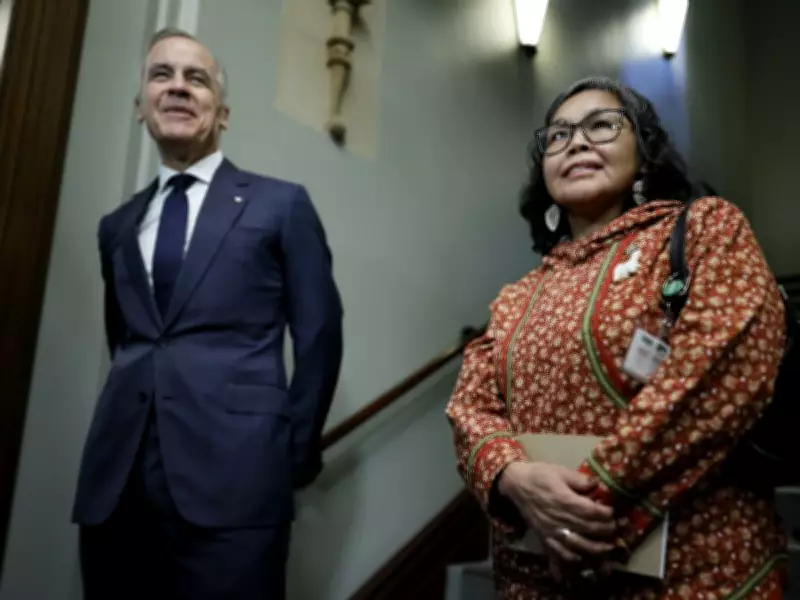
In a move that sent shockwaves through political circles, former Nunavut NDP MP Lori Idlout announced her decision to join the Liberal caucus, leaving the struggling New Democrats with only six seats in Parliament. This defection represents a significant blow to the NDP's parliamentary presence and raises questions about ideological consistency among elected officials.
Idlout justified her decision by stating she had heard clearly from Nunavummiut that this represents a crucial moment for both Nunavut and Canada. She praised Prime Minister Mark Carney as "our first prime minister from the North," a notable shift from her previous criticisms of the Liberal government.

Contradictory Positions and Changing Allegiances
Less than a month before her defection, Idlout had been sharply critical of Liberal policies, accusing the government of ignoring Nunavut's concerns and expressing disgust with Carney's response to territorial issues. She had previously criticized the government for appealing a lawsuit regarding medical experiments on Inuit children and condemned the fast-tracking of a hydroelectric project as infringing on Indigenous rights.
Perhaps most strikingly, just days before joining the Liberals, Idlout had publicly endorsed extremist NDP leadership candidate Avi Lewis, calling him "the strongest out of all the other leadership candidates" and speaking highly of him at a campaign event in Ottawa.
Ideological Inconsistency and Political Pragmatism
The ideological distance between Prime Minister Mark Carney's pragmatic approach and Avi Lewis's socialist platform creates a significant credibility gap for Idlout's political transformation. Carney's policies, while left-leaning by some standards, appear moderate compared to Lewis's ambitious socialist agenda, which includes proposals for universal heat pumps, prioritizing powerlines over pipelines, establishing public grocery options, and creating a public pharmaceutical manufacturer.
This dramatic shift suggests that Idlout may have concluded she would wield more influence over policies affecting her territory from within the governing party rather than from an opposition party struggling to maintain official status. In her defection announcement, she emphasized the need for "a strong and ambitious government that makes decisions with Nunavut — not only about Nunavut."
A Broader Pattern of Political Opportunism
Idlout's defection is not an isolated incident but part of a broader pattern of political opportunism. In recent months, three Conservative MPs—Chris d'Entremont, Michael Ma, and Matt Jeneroux—have also crossed the floor to join other parties. The case of Michael Ma proved particularly brazen, as he attended both Conservative and Liberal holiday celebrations within days of each other, demonstrating minimal concern for ideological consistency.
These developments challenge the conventional understanding of elections as contests of ideas where voters choose representatives based on shared values and policy platforms. Instead, they reveal how many politicians prioritize personal advancement and influence over ideological commitment.
The Erosion of Political Principles
The recent wave of defections raises fundamental questions about political integrity and representation in Canada's democratic system. When elected officials can so readily abandon the principles upon which they campaigned and for which their constituents voted, it undermines public trust in political institutions and processes.

Prime Minister Mark Carney may have successfully exploited these weak convictions to strengthen his parliamentary position, but at what cost to political accountability and ideological coherence? The growing trend of floor-crossing suggests that for some politicians, power and pragmatism have become more compelling than maintaining consistent principles and honoring electoral mandates.