

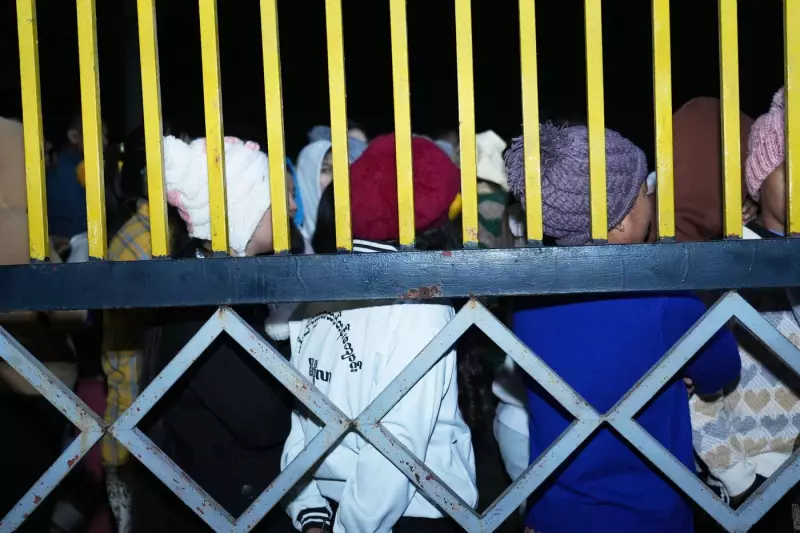
For the first time in five years, polling stations opened across Myanmar on Sunday, December 28, 2025, in an election conducted under the authority of the nation's military rulers. The vote represents a significant, though tightly controlled, political event for the Southeast Asian country.
A Closely Watched Vote Under Military Oversight
The election is the first to be held since the military seized power in a coup in early 2021. Voters, including those pictured waiting at a station in the capital city of Naypyitaw, participated in a process that international observers and many Western nations view as lacking the freedom and fairness of a genuine democratic contest. The military government, however, has promoted the poll as a necessary step in its stated roadmap to what it calls "disciplined democracy."
Context of the 2025 Election
The last general election in Myanmar was held in November 2020, which was won decisively by the National League for Democracy (NLD), the party of ousted leader Aung San Suu Kyi. The military's subsequent refusal to accept those results and its seizure of power plunged the country into widespread civil unrest and a brutal conflict that continues to this day. This new election is being held under electoral laws rewritten by the junta, which have effectively barred the NLD and other major opposition parties from participating.

Security was reported to be high at polling stations, with a heavy presence of government personnel. The military government has framed the election as a return to normalcy, but critics argue it is an attempt to legitimize its rule without addressing the core demands for democracy and federalism held by large segments of the population and ethnic armed groups.
Implications for Myanmar's Future
The outcome of this election is widely expected to cement the military's political influence for the foreseeable future. Pro-military parties and those approved by the junta are anticipated to secure a majority of seats in the restructured parliament. The international community, including Canada, which has imposed sanctions on the junta, is closely monitoring the proceedings but has largely dismissed the vote's legitimacy in advance.
For the people of Myanmar, the election day arrives amid an ongoing humanitarian crisis and fierce fighting in many regions outside the central heartlands. The poll is unlikely to resolve the deep political and ethnic divisions that have torn the country apart since the coup. Instead, it marks a new chapter in the military's long-term project to shape the nation's governance structures according to its own design, with profound consequences for Myanmar's sovereignty and the welfare of its citizens.






