

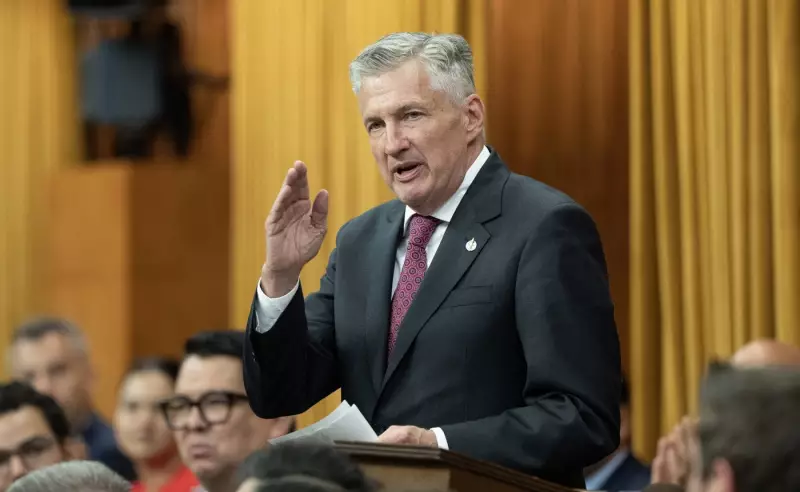
Liberal Member of Parliament Bruce Fanjoy, who secured a significant victory in the last federal election, has declared that 'act one is over' following his defeat of Conservative Leader Pierre Poilievre. Fanjoy represents the riding of Carleton, a constituency long considered a Conservative stronghold.
A Symbolic Victory in Carleton
The political landscape in the Carleton riding underwent a dramatic shift when Bruce Fanjoy, the Liberal candidate, successfully unseated Pierre Poilievre. Poilievre, who leads the federal Conservative Party, had held the seat for years. Fanjoy's win on election night was not just a personal triumph but a symbolic moment that sent ripples through Canadian politics.
Fanjoy made his statement about the concluded 'act one' while rising in the House of Commons on Wednesday, May 28, 2025. The session, captured in Ottawa, highlighted the new MP's early presence on the parliamentary stage. His comment suggests he views the election battle as merely the first chapter in a longer political narrative.

The Context of the Political Battle
The Carleton race was one of the most closely watched contests in the country, pitting a high-profile party leader against a determined challenger. Fanjoy's campaign managed to connect with voters in the Ontario riding, leading to an outcome that few political pundits had predicted. This result has prompted analysis about shifting voter allegiances and the effectiveness of national campaign strategies at the local level.
While the original news item was published by The Canadian Press on December 25, 2025, the event it describes—Fanjoy's House of Commons appearance and his pointed remark—occurred months earlier. This indicates an ongoing reflection on the impact of that electoral upset.
What Comes Next for the Riding and Parliament
By framing his electoral win as the end of 'act one,' MP Bruce Fanjoy implicitly signals that the next phase—governance and representation—is now beginning. His performance in the House of Commons will be scrutinized as he works to solidify the Liberal Party's gain in Carleton and address the concerns of his constituents.
For Pierre Poilievre, the loss of his own seat was a historic personal and political setback, forcing him to seek entry to Parliament through another means. The dynamic between the two figures, now as parliamentary colleagues rather than just electoral opponents, adds a new layer to their political rivalry.
The outcome in Carleton serves as a potent reminder that in Canadian politics, no seat is entirely safe, and voter sentiment can pivot decisively. All eyes will now be on how both Fanjoy and Poilievre navigate the subsequent 'acts' of their political careers in Ottawa.






