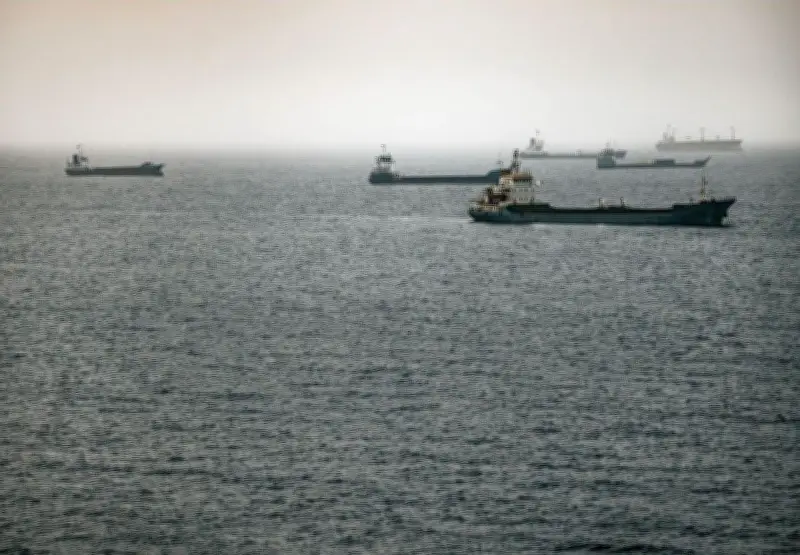
Iran has rejected U.S. President Donald Trump's assertion that peace talks could continue without a ceasefire, insisting that Washington must first meet Tehran's conditions for resolving transit issues through the Strait of Hormuz and normalizing its oil exports. The rejection came as Trump issued a fresh threat on social media, vowing to shower Iran with 1,000 missiles if it acted on a threat to kill him.
Trump's social media threat and assassination plot
In a post on his social media platform late Friday, Trump cited calls to kill him made at the funeral of Ayatollah Ali Khamenei, after Israel reportedly informed the U.S. of an Iranian assassination plot. "If Iran acts on that threat, in this case, ME! they will be showered with 1000 Missiles," Trump wrote. The threat escalated tensions that had already been heightened by U.S. airstrikes and Iranian retaliation earlier in the week.
Iran's conditions for talks
The semi-official Fars news agency reported Saturday that Iranian authorities want the U.S. to implement "agreed-upon understandings" before any talks take place, citing an informed source it did not identify. This came hours after the U.S. demanded that Iran publicly declare all channels of the Strait of Hormuz open to shipping and pledge not to attack civilian vessels transiting the waterway. Senior Trump administration officials, speaking on condition of anonymity, said Tehran will face consequences if it fails to deliver the public assurance.

Collapse of ceasefire and renewed hostilities
The developments followed several nights of U.S. airstrikes and Iranian retaliation that sent oil prices higher this week and raised doubts about further talks toward a broader peace deal. Trump earlier on Friday said he considers the ceasefire agreed with Tehran in mid-June to be over. The recent tensions, along with a U.S. Treasury move to revoke a waiver allowing Iran to sell its oil globally, posed the biggest challenges yet to the truce.
The U.S. has blamed Iran for attacks on ships transiting the Strait of Hormuz — the world's most vital energy conduit. Tehran responded to the latest wave of U.S. strikes by hitting back at American bases in the region. According to Bloomberg News, the U.S. launched airstrikes on Iran and blocked its global oil sales on Tuesday, shaking a tenuous ceasefire.
Ongoing diplomatic efforts
Despite the flare-up, U.S. officials said they expect expert-level discussions with Iran to continue. Iranian Foreign Minister Abbas Araghchi traveled to Oman on Saturday for talks on the future of Hormuz. The U.S. airstrikes and Iranian retaliation have raised oil prices and cast doubt on further peace negotiations.
Khamenei's funeral and succession
Iran is holding a three-day memorial ceremony for Khamenei, following a days-long funeral that drew large crowds to cities in Iran and neighboring Iraq. Khamenei was killed in an attack as the U.S. and Israel began their war on Iran at the end of February. His son and successor, Mojtaba Khamenei, on Saturday called for revenge for the killing of his father. "It is our certain and undeniable duty that this revenge be carried out," he said in a post on X.
Mojtaba has not been seen in public or appeared on video since his appointment, days after the Feb. 28 airstrikes by the U.S. and Israel that killed his father and marked the start of the war. His absence has sparked questions about how badly he was wounded in the same attack and the extent of his involvement in negotiations with the U.S. to end the conflict. Iranian officials acknowledged he was injured but say he has been actively taking decisions during the conflict.