Hungary's Political Shift: Rejecting Orbán While Embracing Nationalist Roots
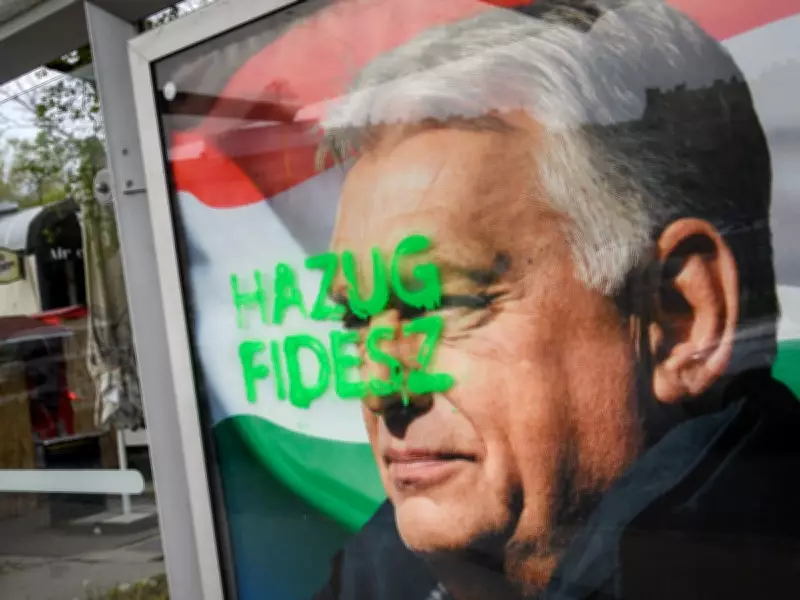
In a significant political development, Hungarian voters have ousted long-standing Prime Minister Viktor Orbán and his Fidesz party in recent elections, yet this rejection does not signify an abandonment of the nation's deep-seated nationalist identity. The victory of Péter Magyar, while potentially reflecting well-timed opportunism, emerges against a backdrop of widespread dissatisfaction with governmental failures and economic challenges.
Symbols of Persistent Nationalism
Across Hungarian cities, visual reminders of nationalist sentiment remain prevalent. The distinctive red, white, and green-striped liver-shaped stickers adorning vehicles represent more than mere decoration—they symbolize advocacy for the restoration of "Greater Hungary," encompassing territories in Slovakia, Croatia, Romania, Ukraine, and Serbia. These symbols, once championed by Orbán, continue to circulate despite his political defeat, indicating that nationalist ideology transcends individual leadership.
Historical Context of Hungarian Nationalism
Hungary's nationalist trajectory spans centuries, beginning with the arrival of Magyar tribes as Asiatic nomads in the ninth century. Following prolonged periods of Ottoman Turkish oppression and Austrian rule, Hungarians achieved autonomy in 1867, nineteen years after their revolutionary uprising of 1848. Subsequent decades witnessed aggressive assimilation policies known as "Magyarization," which included banning minority language education and encouraging surname changes, resulting in an estimated 2 to 3 million assimilations between 1850 and 1910.

After the First World War and the dissolution of the Austro-Hungarian Empire, nationalist fervor intensified. Hungary implemented Europe's first modern antisemitic legislation in 1920, imposing quotas on Jewish participation in professions and academia. Although Hungary allied somewhat reluctantly with Nazi Germany, it participated in the persecution of Jewish communities before enduring Soviet occupation.
Nationalism Under Totalitarianism and Post-Communism
Nationalist expression persisted even during totalitarian regimes, most notably during the 1956 revolution and through the expulsion of approximately 250,000 ethnic Germans between 1945 and 1946. Following the collapse of communism, nationalism evolved in complex ways, particularly after Fidesz's electoral victory in 2010. Founded by Orbán as a student organization in 1988, Fidesz garnered labels including "far right," "Christian nationalist," and "populist right." However, the party diverged from traditional Magyar nationalism by abandoning historical antisemitism in favor of staunch support for Israel and positioning itself as a defender of broader Western cultural values and Christianity rather than exclusively Magyar ethnicity.
Orbán's Controversial Policies and EU Conflict
A defining aspect of Orbán's tenure was his stringent opposition to open borders, which provoked significant conflict with European Union authorities. Hungary closed its borders to the influx of predominantly young Middle Eastern migrants during the mid-2010s refugee crisis, leading to substantial financial penalties from Brussels. The EU initially fined Hungary €200 million (approximately C$320 million) for violating asylum policies, followed by daily penalties of €1 million as Budapest maintained its position.
The Rise of Péter Magyar
Péter Magyar's electoral success appears to stem from strategic timing and public disillusionment with Fidesz's governance rather than a fundamental rejection of nationalist principles. His victory suggests that Hungarians remain committed to national identity and sovereignty while seeking alternative leadership to address pressing domestic issues. The political landscape continues to reflect the enduring tension between nationalist traditions and contemporary governance challenges.

As Hungary navigates this transitional period, the persistence of nationalist symbols and historical consciousness indicates that while Orbán may have been rejected, the underlying nationalist sentiment that has shaped Hungarian politics for generations remains firmly intact. The coming months will reveal whether Magyar's leadership can reconcile these enduring nationalist values with the demands of modern governance and international relations.