

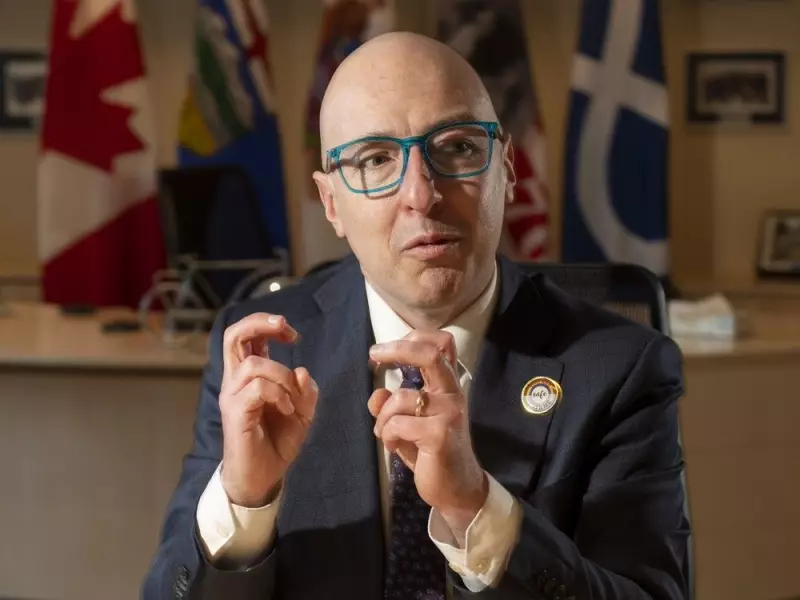
Edmonton's municipal leadership is mounting a formal challenge against proposed provincial electoral boundary changes, arguing the revisions would significantly weaken the city's political influence. Following a private meeting on December 17, city council voted unanimously to direct Mayor Andrew Knack to send a letter of opposition to the Alberta Electoral Boundaries Commission.
Proposed Changes Spark Concern for Urban Representation
The commission's interim report has sparked controversy with two key recommendations for the Edmonton area. The first proposes merging the urban ridings of Edmonton-Glenora and Edmonton-Riverview into a single electoral district. The second, and more contentious, plan involves creating a vast new riding that would stitch together Parkland County, Enoch Cree Nation, and the rural western portions of Edmonton.
While the report suggests Edmonton would gain a seat overall, increasing from 20 to 21, Mayor Knack forcefully disputes this math. He contends that because one of the new seats would not be contained solely within city limits, Edmonton does not gain a full additional representative.

Mayor Knack's Case for Contained Boundaries
"I believe that it's critically important that the boundaries are contained within Edmonton," Knack stated during the council meeting. He emphasized the city's respect for regional partners but insisted that MLA representation must be based within municipal borders to ensure effective advocacy for Edmonton-specific issues.
Knack's letter to the commission acknowledges the difficulty of balancing population shifts but warns the proposed map fails to account for Edmonton's rapid growth. He notes that the two affected ridings represent nearly 23 percent of the city's recent population increase. The mayor estimates the changes could sideline the voices of up to 36,000 Edmontonians.
Practical Challenges of a Hybrid Riding
A core argument against the hybrid urban-rural-First Nation riding is the immense practical challenge it would pose for a single MLA. Knack's letter highlights the divergent needs of the three communities in areas like policing, public transit, and infrastructure, suggesting one representative could not adequately serve such distinct constituencies.
Knack pointed to the recent federal electoral boundary redraw as a model, where commissions adjusted maps to keep the Edmonton St. Albert and Edmonton-Wetaskiwin ridings exclusively within the city. He also cited the commission's own report, which accommodated a request from Spruce Grove to keep its boundaries contained as much as possible, splitting the former Spruce Grove-Stony Plain riding.
"If it's good enough for Spruce Grove, my hometown," Knack argued, "I think it's good enough for the city of Edmonton to make sure that our representatives are contained within our boundaries." The city council's move sets the stage for a continued debate over fair representation as the commission finalizes its recommendations.






