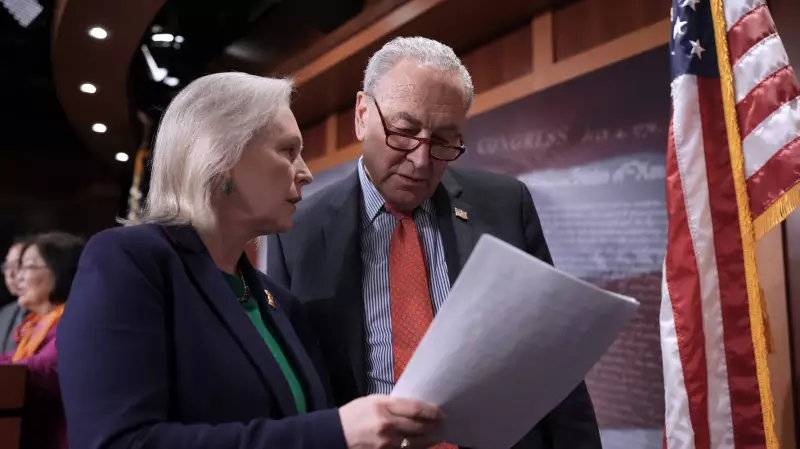
Even the staunchest critics of the Democratic Senate leadership now acknowledge a significant achievement: the recruitment of a powerful slate of candidates for the pivotal 2026 midterm elections. Senate Minority Leader Chuck Schumer and Democratic Senatorial Campaign Committee (DSCC) Chair Kirsten Gillibrand have secured top-tier contenders in four Republican-held states, dramatically improving the party's odds of reclaiming the Senate majority.
A Quartet of Formidable Recruits
The cornerstone of the Democratic strategy rests on four experienced politicians, each persuaded to enter challenging Senate races. The final piece fell into place this week when former Alaska Representative Mary Peltola announced her campaign against GOP Senator Dan Sullivan. She joins a high-profile group that includes Maine Governor Janet Mills, former Ohio Senator Sherrod Brown, and former North Carolina Governor Roy Cooper.
This recruitment is seen as a major coup, as each candidate could have chosen easier paths, such as gubernatorial runs or retirement. In an interview, Gillibrand framed the decision to run as a patriotic duty, stating the need for "all hands on deck" to fight against the agenda of President Donald Trump, who would be in the final two years of his term.

Proving a Point Amid Internal Criticism
The successful recruitment drive comes after a period of intense internal scrutiny for Schumer and the DSCC. Their strategy and candidate preferences have faced regular challenges from a bloc of liberal senators pushing for a more aggressive approach. Schumer himself faced intra-party criticism in the spring of 2025 for a vote to keep the government open.
However, an ally of Schumer, speaking anonymously, noted that electoral success is key to solidifying leadership, pointing to Schumer's past DSCC leadership during the 2006 and 2008 cycles that built a Democratic supermajority. Gillibrand defended their time-tested approach, arguing the proof is in the results: "Our focus is finding the most formidable candidate who can win. There's no other measurable that we look at."
The DSCC's "Type" and the Ideological Debate
The committee's preferred candidates share a clear profile: they are established officials with proven fundraising ability for multi-million dollar races. Charisma and specific ideology are secondary. This has led to friction, such as backing 78-year-old Janet Mills over a progressive primary challenger in Maine and choosing Representative Haley Stevens in Michigan over more charismatic options.
One Democratic consultant anonymously criticized the approach, saying, "The committee has a type, and many of those people are bland and don't pop. We have a worse bench because of it." Meanwhile, progressive senators like Elizabeth Warren and Chris Murphy have urged a more populist economic message.
Gillibrand, who has moved between the moderate and progressive wings of the party, emphasized unity around affordability issues like groceries, housing, and healthcare costs. She diplomatically declined to engage with Warren's criticism that the DSCC backs candidates who can attract corporate donors seeking a centrist shift.
Republicans, through the National Republican Senatorial Committee's Joanna Rodriguez, dismissed the Democratic recruits as "failed career politicians" out of touch with their states. They touted the GOP record on safety, the economy, and opportunity.
Despite the partisan sparring, the Democratic recruitment feat is undeniable. With strong candidates now in place for the four seats they need to reach 51, Schumer and Gillibrand have positioned their party for a serious fight to control the Senate during the close of the Trump presidency.