More than 200 Democratic candidates for Congress have signed a pledge requiring them to turn down donations from corporate PACs, support a ban on trading stocks while in office, and vote for policies to crack down on 'dark money' in elections. This broad embrace of anti-corruption messaging comes ahead of the 2026 midterm elections, signaling a strategic shift for the party. Despite this widespread commitment, however, voters in battleground districts still do not give Democrats an advantage over Republicans when it comes to cleaning up corruption in Washington, highlighting the challenge the party faces in making this issue resonate.
Pledge Details and Organizer Insights
Tiffany Muller, president of End Citizens United, the group that organized the pledge, stated, 'Candidates understand the need to have a proactive, positive reform agenda, especially when what we're seeing out of this administration is kind of the most brazen corruption that we have ever seen in our country's history.' She emphasized that the initiative is not only about winning elections but also about building long-term momentum to pass meaningful reform. The group, which first gained prominence by asking candidates to reject corporate PAC money in 2018, reports that the new 'Unrig Washington' pledge is spreading faster than its predecessor. More than 150 candidates had agreed to reject corporate PAC money in 2018, a number that the current pledge has already surpassed with over six months to go before the midterms.
Key Signatories and Strategic Messaging
The list of signatories includes many top candidates, such as Rep. Chris Pappas, the party's nominee for Senate in New Hampshire; oysterman Graham Platner in Maine; Lt. Gov. Juliana Stratton, who won the Senate nomination in Illinois; all leading Democratic candidates in Colorado's swingy 8th District; and both Democratic candidates in Nebraska's 2nd District. In a memo set to be released Monday, the group suggests using anti-corruption arguments to underscore Democrats' near-universal messages about affordability. Polling found that three-quarters of voters believe corruption affects what they pay for healthcare, and two-thirds believe it impacts the price of groceries and other everyday goods. The memo states, 'These findings are critical because it means corruption is not competing with affordability. It is one of the clearest ways to talk about why costs are high, why families are getting economically squeezed, and why so many believe the system isn't working for them.'

Senator Ossoff as a Model Candidate
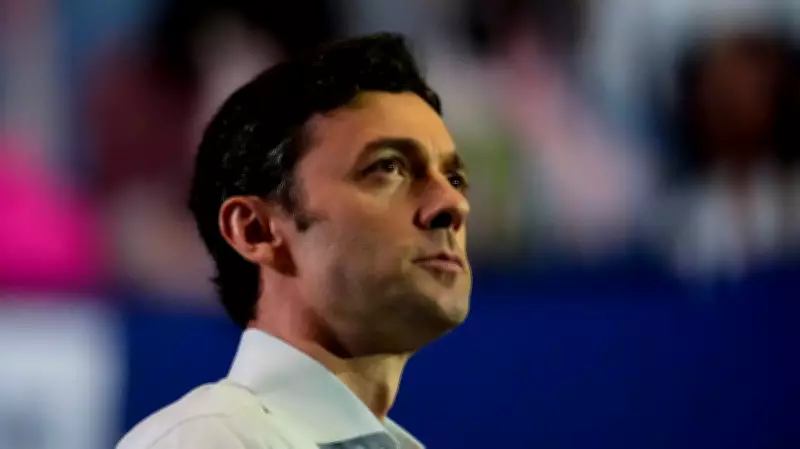
Muller pointed to Sen. Jon Ossoff (D-Ga.) as a candidate who has successfully merged anti-corruption and affordability issues. 'Nobody is articulating this kind of frame better than he is doing right now,' she said. Ossoff, running for reelection in a swing state, is theoretically vulnerable, but a GOP primary field without a clear leading candidate and his strong messaging have both parties increasingly confident he will triumph in November. At a rally in Augusta, Ga., Ossoff declared, 'As you pay more for everything, the first family's wealth is growing by billions of dollars. Because they are crooks, and everybody knows it.'
Voter Trust and Polling Data
Despite Ossoff's success, the party as a whole struggles to gain an advantage on corruption. A Change Research survey of voters in 62 battleground House districts found that 42% of voters ranked corruption among their top three policy concerns. However, a 46% plurality trusted neither party to clean up corruption in Washington, while 28% trusted the GOP and 26% trusted Democrats. Overall, the poll found Democrats with a 45% to 40% lead on the generic ballot. Muller acknowledged the frustration among Democratic partisans watching the Trump administration engage in rampant self-dealing, saying, 'Voters are 'pox on all your houses, I don't trust any of you,' which can be sad given what we're watching every day out of this administration. It leaves people wondering 'how on earth can voters feel this way?'' She added that it is not enough to simply say Republicans are bad on corruption; the party needs a more proactive message.

Broadening the Reform Agenda
Muller also noted that gaining an advantage may require embracing ideas some Democrats are uncomfortable with. End Citizens United polled on anti-corruption ideas typically favored by the right, including term limits, and found them popular. 'We need to push our side to go further, because voters are so sick of it, and that's why Trump was able to run on it in 2016 and somewhat in 2024,' she said, without explicitly endorsing term limits. 'There are ways to bring in policy reforms beyond what we have in [the Unrig Washington] pledge.'