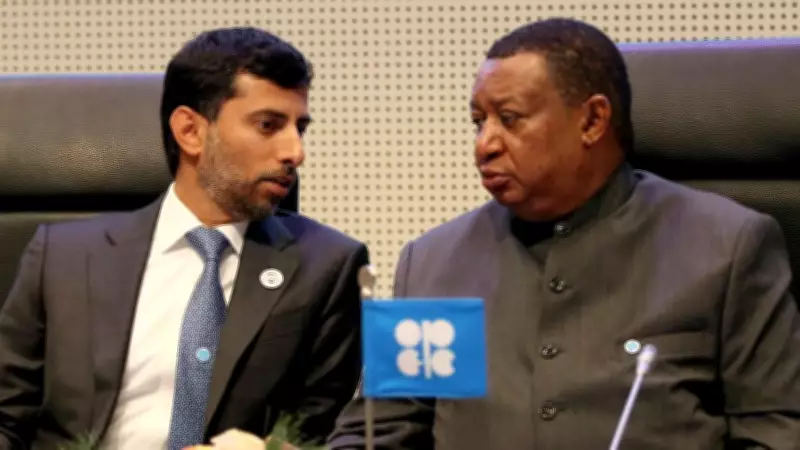
The United Arab Emirates' Energy Minister Suhail Mohamed Al Mazrouei declared that the UAE has a responsibility to its investors to produce oil without constraints, a statement that could reshape the country's stance within the OPEC+ alliance. Speaking at a press conference in Abu Dhabi, Al Mazrouei emphasized the need for the UAE to maximize its production capacity to meet global demand and secure economic returns for its stakeholders.
Strategic Shift in Oil Policy
Al Mazrouei's remarks come amid ongoing tensions within OPEC+ over production quotas. The UAE has long advocated for a higher baseline production level, arguing that its investments in capacity expansion should be recognized. "We owe it to our investors and partners to operate at full potential," Al Mazrouei stated. "Restrictions hinder our ability to deliver value and respond to market needs."
Impact on Global Markets
The minister's comments sent ripples through oil markets, with analysts speculating that the UAE could push for a larger share of OPEC+ production quotas or even consider leaving the group. The UAE has invested heavily in boosting its production capacity to 5 million barrels per day, up from around 4 million, and seeks to utilize this capacity fully.

Al Mazrouei also highlighted the UAE's commitment to energy security and its role as a reliable supplier. "The world needs our oil, and we are ready to provide it," he said. "Any artificial constraints only lead to market volatility and higher prices, which benefit no one."
OPEC+ Dynamics
The statement comes ahead of the next OPEC+ meeting, where the group will discuss production targets for the coming months. The UAE has previously clashed with Saudi Arabia, the de facto leader of OPEC, over quota allocations. Saudi Arabia has advocated for cautious production increases to support prices, while the UAE seeks to capitalize on its expanded capacity.
Energy experts suggest that the UAE's stance could lead to a renegotiation of the OPEC+ agreement or even a fracturing of the alliance. "The UAE is sending a clear signal that it will prioritize its national interests," said Dr. Fatima Al-Suwaidi, an energy analyst at the Gulf Research Center. "This could have significant implications for global oil supply and prices."
Economic Considerations
The UAE's economy is heavily reliant on oil revenues, and the government has been under pressure to diversify. However, with oil prices remaining relatively high, the incentive to maximize production is strong. Al Mazrouei noted that the UAE's oil sector is a key driver of economic growth and job creation, and that restrictions would undermine these benefits.
"We have a responsibility to our people and our investors to ensure that our resources are used efficiently," Al Mazrouei said. "Producing without restrictions is not just a matter of policy; it is an economic imperative."
Reactions and Future Outlook
Market reactions have been mixed, with some traders welcoming the prospect of increased supply, while others fear a breakdown of OPEC+ discipline. Oil prices initially dipped on the news but recovered as investors weighed the potential for a supply glut.
The UAE's position is likely to be a major topic of discussion at the upcoming OPEC+ summit. Al Mazrouei expressed confidence that a solution can be found, but he did not rule out unilateral action. "We are committed to dialogue, but we will not sacrifice our national interests," he concluded.