April 13 Byelections Poised to Deliver Liberal Majority Government
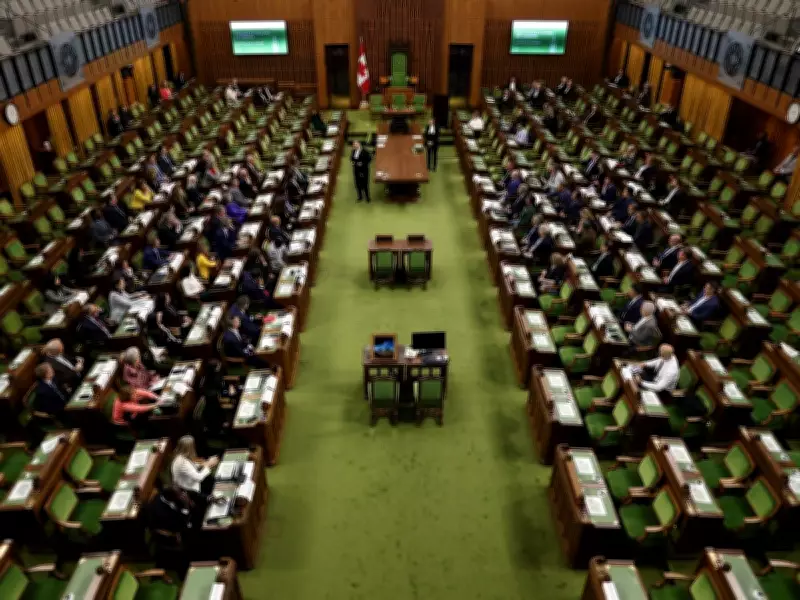
Political observers are marking April 13 on their calendars as a potentially decisive date for Canada's federal government. With a fourth defection to the Liberal benches this week and three byelections scheduled for mid-April, Prime Minister Mark Carney's Liberals appear on the verge of securing a parliamentary majority.
Defections and Byelections Create Majority Pathway
The political landscape shifted significantly on Wednesday when former NDP member from Nunavut, Lori Idlout, crossed the floor to join the Liberal ranks. This marks the fourth defection to the government side in recent months, following three Conservative MPs—Chris d'Entremont from Nova Scotia, Michael Ma from Ontario, and Matt Jeneroux from Alberta—who previously joined the Liberals.
Each defection has progressively tightened the gap between government and opposition benches, setting the stage for what could be a historic parliamentary shift. Now, victories in just two of the three April 13 byelections would secure a razor-thin Liberal majority government of 172 seats in the House of Commons.

The Three Critical Byelection Contests
Prime Minister Carney announced the three byelections in a statement from the PMO on March 8. The contests span key regions across the country:
- Scarborough Southwest (Toronto-area): This riding became vacant when former Liberal MP and Minister of National Defence Bill Blair was appointed Canada's high commissioner to the United Kingdom. Doly Begum, the former Ontario NDP deputy leader who recently joined the Liberals, will run for this seat.
- University—Rosedale (Toronto-area): This seat opened when former Liberal MP and Deputy Prime Minister Chrystia Freeland resigned in early January to become economic adviser to Ukrainian President Volodymyr Zelenskyy. Dr. Danielle Martin, a family physician and healthcare advocate, is running for the Liberals to replace Freeland.
- Terrebonne (Montreal-area): This riding requires a special byelection after the Supreme Court of Canada nullified the Liberals' one-vote federal election win in mid-February. The decision came after the Bloc Québécois candidate challenged results when a supporter's mail-in ballot wasn't counted. Liberal Tatiana Auguste, who briefly served as MP before the court decision, is running again for the party.
If the Liberals manage to win all three byelections, they would gain a small cushion with 173 seats in the House.
Public Opinion Divided on Political Maneuvering
New data from the Angus Reid Institute, released on Wednesday, reveals that Canadians are deeply divided about these political developments. The polling shows that 43 percent of Canadians believe it would be a good thing if the prime minister creates a majority through floor crossing alone, while 39 percent consider it a bad thing.
Similarly, Canadians are split on the practice of floor crossing itself, with equal-sized groups (43 percent each) believing it should be allowed versus those who think it should be forbidden. According to Angus Reid, these opinions largely split along political affiliation lines.
Long-Term Implications for Canadian Politics
The new parliamentary numbers resulting from these developments will carry through to the next federal election, which must occur on or before October 20, 2029. This date marks four years after the last general election on April 28, 2025.
Political analysts note that a one-seat majority presents both opportunities and challenges for the governing party. While it provides greater legislative control, it also requires near-perfect attendance and party discipline for every vote, creating potential vulnerabilities for the government.
The coming weeks will prove crucial as campaigning intensifies for the April 13 byelections. With the Liberal majority hanging in the balance, these three contests have taken on national significance that extends far beyond their individual ridings.