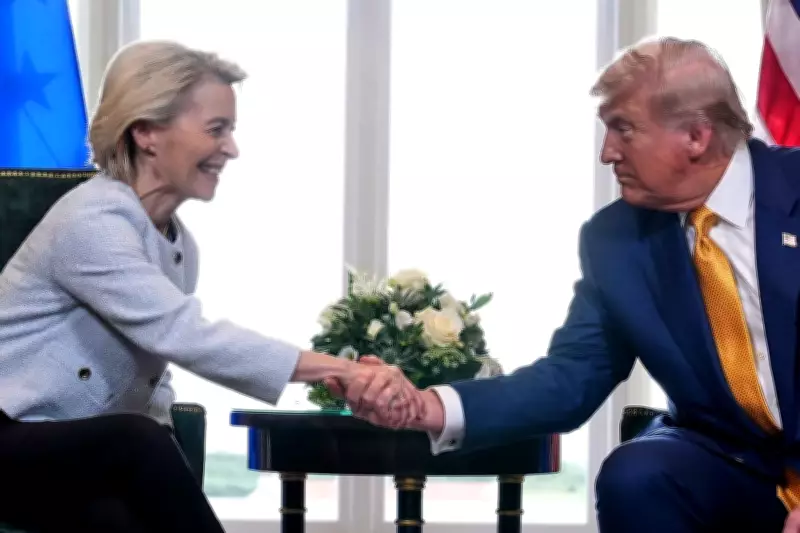
The European Union has agreed to implement a trade pact with the United States following threats from President Donald Trump, marking a significant breakthrough in transatlantic relations. The agreement was reached after intense negotiations, with European Commission President Ursula von der Leyen and President Trump shaking hands at the Trump Turnberry golf course in Scotland on July 27, 2025.
Background of the Trade Deal
The trade pact aims to reduce tariffs and increase cooperation between the two economic powerhouses. President Trump had previously threatened to impose tariffs on European goods if the EU did not agree to more favorable trade terms. The deal is expected to boost economic growth on both sides of the Atlantic.
Key Provisions
- Reduction of tariffs on industrial goods
- Increased market access for agricultural products
- Commitment to digital trade and data flows
- Enhanced cooperation on environmental standards
Reactions and Implications
European leaders have welcomed the agreement, emphasizing its importance for global trade stability. However, some critics argue that the EU made too many concessions. The deal is seen as a victory for Trump's aggressive trade policies, which have reshaped international commerce.

Next Steps
The European Parliament and member states must ratify the pact before it can take full effect. Implementation is expected to begin within months, with phased tariff reductions over several years.
This development comes amid broader trade tensions between the US and other partners, including China. The EU-US agreement could serve as a model for future negotiations.