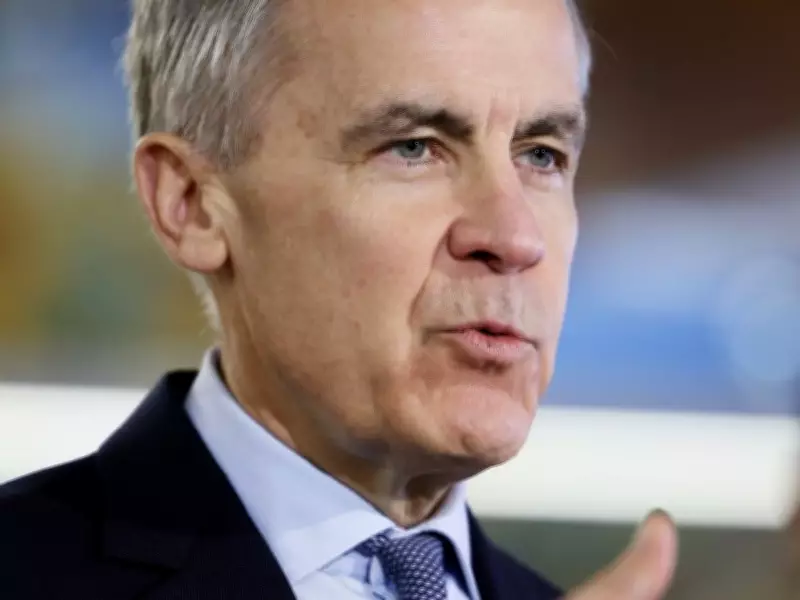
Carney's Fiscal Plan Draws Criticism for Increased Spending and Debt
Prime Minister Mark Carney, once a banker known for financial prudence, is now facing scrutiny over his government's latest spending initiatives. In a move that has sparked debate, Carney has released the Main Estimates for the upcoming year, outlining a budget of approximately $506 billion. This represents an increase of $18 billion compared to the previous year's estimates, raising eyebrows among fiscal conservatives and taxpayers alike.
Historical Context and Campaign Promises
During his campaign for office, Carney acknowledged that "the federal government has been spending too much," a stance that now appears at odds with his actions. His current spending levels surpass those of his predecessor, Justin Trudeau, layering new expenditures on top of existing financial commitments. Adjusted for inflation and population growth, Carney's 2026 budget is 35% higher than the $258 billion spent in 2017, highlighting a significant expansion in government outlays.
The Burden of Debt and Interest Payments
A major concern is the escalating cost of debt interest, which has become a substantial drain on public funds. Interest payments now exceed $1 billion per week, making it the third-largest expense if treated as a separate department. In 2026, these charges are projected to outpace spending on the Department of National Defence, even after Carney boosted defence funding. This trend underscores warnings from former Liberal finance minister Paul Martin, who emphasized the "quicksand of compound interest" as a real threat to fiscal stability.

Over the past decade, debt interest costs have more than doubled, from $21 billion to over $40 billion today. Projections indicate that by 2030, interest payments could reach $76 billion, consuming 13 cents of every dollar collected by the government. This rapid growth raises alarms about long-term financial sustainability and the burden on future generations.
Bureaucratic Expansion and Consultant Costs
Federal spending has risen in tandem with the growth of the bureaucracy. Between 2015 and 2024, the cost of the federal bureaucracy increased by 80%, and Carney's plans include a further 5% hike in 2026-27. Additionally, despite campaign promises to reduce reliance on external consultants, spending in this area has doubled since 2015 and is set to reach nearly $27 billion in 2026. This includes increased funding for corporate welfare through regional development agencies, which will cost taxpayers $1.9 billion—a 26% annual increase.
Questionable Allocations and Research Funding
Critics point to specific allocations that they deem wasteful, such as an extra $80 million for the Social Sciences and Humanities Research Council. This body has funded projects like tracking urban grocery carts for $105,000, studying gender politics in Peruvian rock music for $20,000, and analyzing the rhetoric of selfies for $94,000. While intended to provide insights into issues important to Canadians, these expenditures have sparked debate over priorities and efficiency in government spending.
Broader Implications and Future Outlook
Carney, who sold himself as a skilled financial manager due to his banking background, now faces pressure to curb borrowing and address the spiraling debt. With increases in funding for entities like the Governor General's Office and Parks Canada, as well as higher budgets for the House of Commons and Senate, the government's approach to fiscal restraint is under question. As Franco Terrazzano, federal director of the Canadian Taxpayers Federation, notes, Carney must learn to "put down the credit card" to prevent further financial deterioration.
In summary, Carney's spending plan highlights ongoing challenges in balancing government expansion with fiscal responsibility, leaving taxpayers to bear the cost of rising debt and bureaucratic growth.