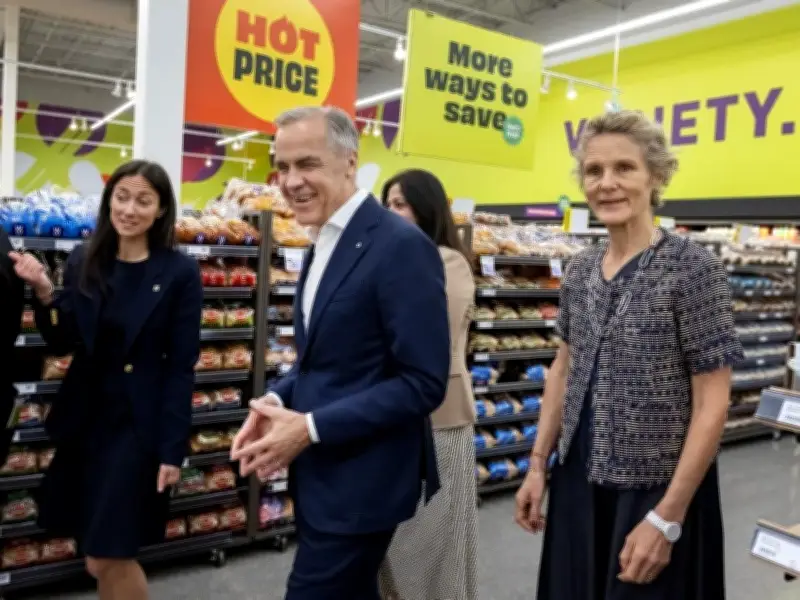
Prime Minister Mark Carney visited a Brampton grocery store on Friday to promote the first payment of the new Groceries and Essentials Benefit program, a reworked version of the GST rebate. However, critics argue the move highlights the government's failure to address affordability.
Criticism of the program
According to Brian Lilley, the program is an admission that Canada's economy is not functioning properly. He argues that a healthy economy would not require government assistance for basic necessities like groceries. While supporters claim it helps low-income Canadians, Lilley points out that most average families do not qualify.
Who qualifies?
To receive the benefit, individuals must qualify for the GST rebate, meaning a single person with no children must earn $56,181 or less, and a couple with two children must earn $66,841 or less. About 45% of recipients are aged 19-24 or over 65, despite these groups making up only 25% of the population. The median household income in Brampton is over $110,000, leaving many families without assistance despite rising costs.

Rising food prices
Food prices continue to climb, with the cost of a $100 grocery basket five years ago now at $130. Recent inflation data shows tomatoes up 20.9%, coffee up 15.5%, beef up 12.5%, carrots up 10.5%, and pork up 9.4% year-over-year.
Economic downturn
Canada's economy is in recession, with unemployment at 6.6% and bankruptcies up 10% from last year. Economics professor Eric Kam of Toronto Metropolitan University dismissed the idea of a 'technical recession' as wordplay, stating the economy has been heading in the wrong direction for about eleven years.
Lilley concludes that a healthy economy would allow people to afford groceries through jobs and manageable inflation, not government handouts.