The Challenge of Countering Iranian Shahed Drones in Modern Warfare
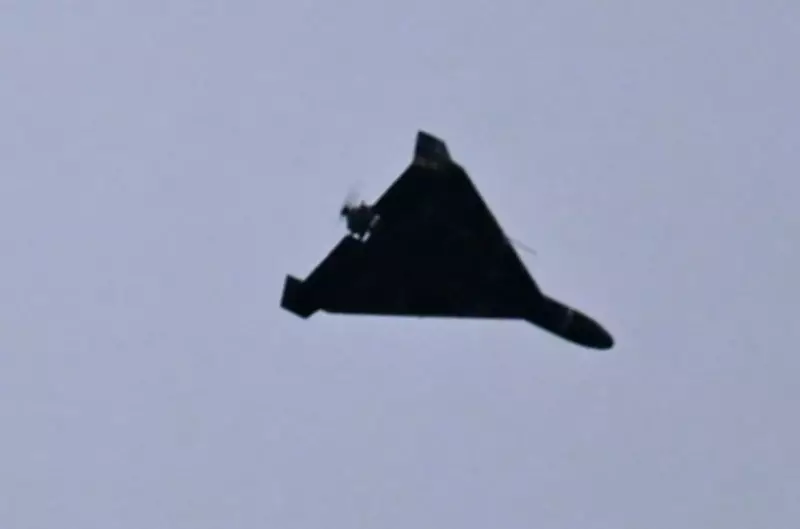
Cheap yet devastatingly effective, Iranian-designed Shahed drones have inflicted significant damage throughout the Middle East conflict. These unmanned aerial vehicles possess advanced anti-jamming capabilities and other sophisticated features that make them exceptionally difficult to intercept and destroy.
Sophisticated Navigation Systems Evade Electronic Countermeasures
According to Thomas Withington, a researcher at Britain's Royal United Services Institute (RUSI), Shahed drones are designed to explode on impact and connect to GPS to register their location shortly before or after takeoff. They then typically turn off their receivers to avoid detection and jamming.
The drones travel long distances toward their targets using gyroscopes that measure speed, direction, and position—a technology known as an "inertial navigation system." This approach allows them to bypass the extensive GPS jamming prevalent in conflict zones.

"GPS is going to get jammed by whatever is protecting the target," Withington explained. "If you look at a map of GPS jamming at the moment in the Middle East, you see that there's a lot of jamming. By not using the GPS, you avoid that."
The drones can return to GPS navigation just before impact for more precise strikes or remain completely offline throughout their mission. While not always perfectly accurate, this system provides sufficient targeting capability for their intended purposes.
Advanced Anti-Jamming Technology
Russia has been manufacturing Shahed-style drones for use in its war in Ukraine, incorporating state-of-the-art interference suppression technology. A 2023 study by the US-based Institute for Science and International Security revealed that these drones employ "state-of-art antenna interference suppression" to eliminate enemy jamming signals while preserving desired GPS signals.
Similar anti-jamming mechanisms were discovered in the wreckage of an Iranian-made drone that struck Cyprus during the early days of the Middle East conflict, according to a European industry source.
Todd Humphreys, a professor of aerospace engineering at the University of Texas at Austin, noted: "They have put the Shahed together using off-the-shelf parts, but it has many of the capabilities that US military GPS equipment has."
This technological sophistication means that defending against Shahed drones now requires advanced electronic warfare equipment that many military forces lack.
Stealth Materials and Alternative Positioning Systems
A 2023 RUSI paper highlighted that Shahed drones are constructed from "lightweight radar-absorbing materials" such as plastic and fiberglass. Their small size and low-altitude flight capabilities enable them to slip through conventional aerial defense systems undetected.
Ukrainian air force spokesman Yuriy Ignat confirmed that "the Shaheds have been upgraded" with enhanced capabilities that make them even more challenging to counter.
Some experts believe Iran employs multiple positioning systems to further complicate interception efforts. Serhii Beskrestnov, a technology adviser to the Ukrainian defense ministry, suggested that Iran utilizes the BeiDou system—a Chinese alternative to the US-developed GPS.
The Russian-manufactured version of Shahed drones reportedly employs both BeiDou and GLONASS, the Russian equivalent of GPS. Other analysts suspect Iran may be incorporating LORAN, a radio navigation system developed during World War II, providing additional redundancy and resilience against electronic countermeasures.
These combined technological advantages—advanced navigation systems, anti-jamming capabilities, stealth materials, and alternative positioning options—create a formidable challenge for military forces attempting to defend against Iranian drone technology in contemporary conflicts.