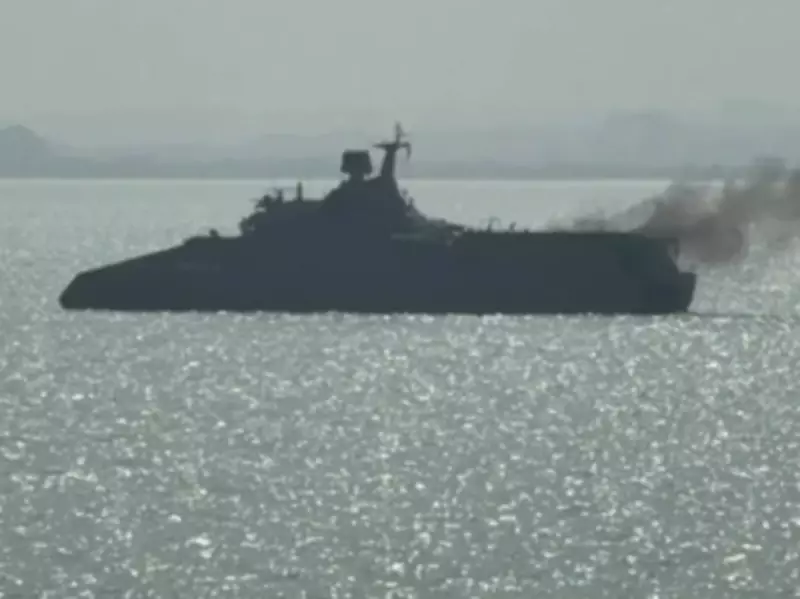
In a dramatic escalation of hostilities, a United States submarine has sunk an Iranian warship in the Indian Ocean, marking the first torpedo sinking of an enemy vessel since the Second World War. The incident occurred approximately 40 kilometers south of Sri Lanka, with officials confirming at least 87 Iranian sailors killed and another 60 missing, while 32 were rescued.
Historic Naval Engagement Unfolds
The attack targeted the IRIS Dena, which was returning from exercises in the Indian Ocean. Shocking footage from the U.S. Navy submarine captured the moment of impact, as described by Defence Secretary Pete Hegseth. "Yesterday, in the Indian Ocean, an American submarine sunk an Iranian warship that thought it was safe in international waters. Instead, it was sunk by a torpedo – a quiet death," Hegseth stated, highlighting the unprecedented nature of the event in modern naval warfare.
Regional Violence Spreads Beyond Middle East
Simultaneously, violence from the U.S.-Israel conflict with Iran has spread beyond the Middle East. A NATO interception blew an Iranian missile heading towards Turkey out of the sky. Overnight, Iranian drones attacked the U.S. consulate in Dubai, causing a fire, while a missile struck America's largest military base in Qatar. Israel has vowed that Iran's next supreme leader will meet the same fate as the recently killed Ayatollah Ali Khamenei, whose funeral in Tehran has been postponed due to new airstrikes.

Iranian Retaliation and Threats Intensify
In response, Iranian cleric Nasser Makarem Shirazi issued a fatwa, a formal Islamic edict, demanding Muslims avenge the "blood of the martyr" Ayatollah Ali Khamenei, blaming Israel and the U.S. as the main perpetrators. Counter-terrorism expert Ghaffar Hussain warned that this decree heightens the risk of murders and terror attacks globally, citing Iran's history of exporting terrorism and targeting dissidents.
Cyber and Sleeper Agent Threats Emerge
British intelligence sources warn that Iran has activated deadly sleeper agents within the U.K., using cyber warriors to unleash chaos. Dr. Andreas Krieg, a security professor at King's College London, noted that periods of heightened confrontation create incentives for Tehran to demonstrate reach, with leadership shake-ups triggering riskier actions. There are fears that Iran-linked "hacktivists" from the Basij paramilitary militia could be operating on U.K. soil, stalking and killing dissidents while causing digital disruption.
Humanitarian Crisis in Persian Gulf
Iran has trapped thousands of tourists on cruise ships at Persian Gulf ports by blockading the Strait of Hormuz, vowing to "burn every ship" attempting passage. With at least six cruise ships stranded, passengers, including families with children, are growing desperate as basic services like food and water become concerns. Airlines are attempting emergency flights to evacuate people, but uncertainty looms over escape timelines.
Historical Context of Iranian Aggression
This incident follows a pattern of Iranian aggression abroad. In 2018, France uncovered an Iranian bomb plot at a Paris rally for opposition figures, while Denmark accused Iranian intelligence of an assassination attempt on an opposition figure. In 2012, Indian police linked Iranian agents to a bombing targeting an Israeli diplomat in New Delhi. These events underscore the global threat posed by Iran's Revolutionary Guards, who are now feared to be hunting dissidents amid the ongoing conflict.
The sinking of the Iranian warship represents a pivotal moment in the escalating tensions between the U.S. and Iran, with repercussions felt across international waters and borders. As both sides dig in, the risk of further bloodshed and regional destabilization remains high, with experts urging vigilance against potential terror attacks and cyber warfare.