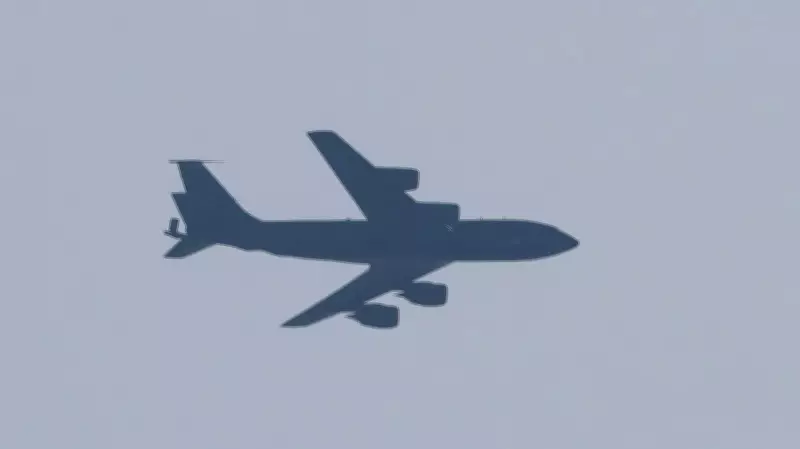
A U.S. military refueling aircraft crashed in western Iraq on Thursday, in an incident that U.S. Central Command confirmed involved another aircraft but was not the result of hostile or friendly fire. This event underscores the inherent risks of military operations, even in friendly airspace, as the United States has deployed a significant number of aircraft to the Middle East for missions against Iran.
Details of the Crash and Rescue Efforts
In a statement, U.S. Central Command announced it is conducting rescue operations after the KC-135 Stratotanker refueling aircraft went down. The second aircraft involved in the incident, also identified as a KC-135, landed safely. The crash occurred during Operation Epic Fury, the military designation for U.S. operations targeting Iran.
A U.S. official, speaking anonymously, revealed that the crashed aircraft had as many as six service members on board. The KC-135, built by Boeing in the 1950s and early 1960s, serves as a critical component of the U.S. military's air refueling fleet, enabling extended missions without the need for landing.

Claims and Context of the Incident
The Islamic Resistance in Iraq, an umbrella group of Iran-backed armed factions, claimed responsibility for downing the U.S. refueling aircraft. In a statement, the group asserted it shot down the KC-135 "in defense of our country's sovereignty and airspace." However, U.S. authorities have not confirmed any hostile involvement, maintaining that the crash was not due to enemy fire.
This incident adds to the mounting casualties in the region. Since the U.S. and Israel initiated strikes against Iran on February 28, seven U.S. troops have been killed, and Reuters reported on Tuesday that as many as 150 U.S. troops have been wounded. The United States has conducted strikes against over 6,000 targets in Iran, contributing to a death toll exceeding 2,000 people, including nearly 700 in Lebanon.
Broader Implications and Related Events
The crash coincides with other non-combat incidents, such as a fire on board the USS Gerald Ford that injured two U.S. sailors on the same day. These events highlight the operational challenges and dangers faced by U.S. forces in the Middle East, even in scenarios not directly involving combat.
As rescue efforts continue, the situation remains fluid, with ongoing assessments of the crash's cause and impact on military operations. The KC-135's role in sustaining aerial missions makes this loss particularly significant for U.S. strategic capabilities in the region.