U.S. Military Buildup Signals Potential Sustained Campaign Against Iran
According to multiple reports from The Washington Post and Fox News, the United States is preparing for a "sustained, weeks-long" military campaign against Iran. This preparation comes as negotiations between the two nations regarding Tehran's nuclear program appear to be on the brink of collapse.
Significant Military Assets Deployed to the Region
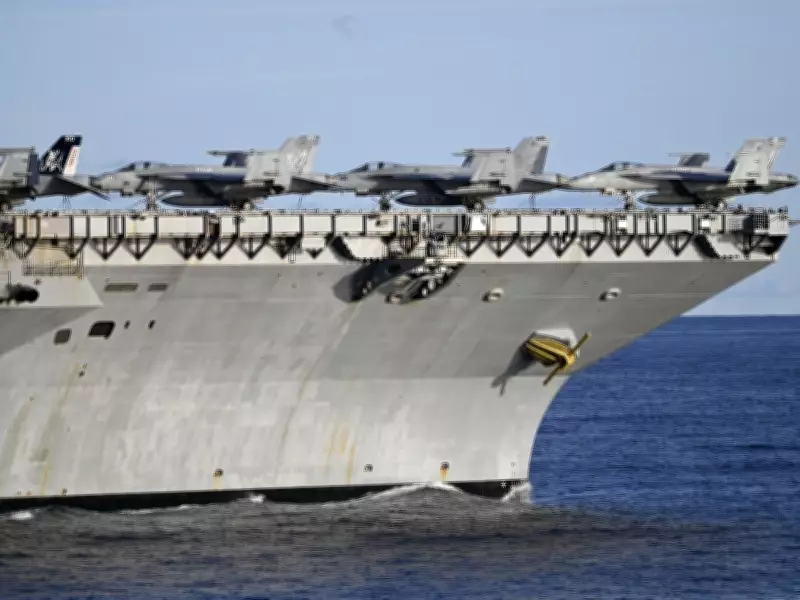
The reports detail a substantial buildup of U.S. military power in the Middle East. A key element of this deployment is the movement of the aircraft carrier USS Gerald R. Ford, the world's largest warship. It is currently transiting the Mediterranean Sea and is expected to join a second carrier, the USS Abraham Lincoln, which is already positioned in the Arabian Sea.
This dual-carrier strike posture is a rare display of force typically reserved for major conflicts. Analysts suggest it would enable the U.S. to conduct prolonged strikes over days, rather than isolated attacks. The USS Gerald R. Ford strike group, which includes guided missile destroyers, was reportedly approaching the Strait of Gibraltar as of Thursday, February 19, 2026.

Nuclear Talks in Geneva Yield Little Progress
The military mobilization coincides with high-stakes discussions in Geneva between U.S. and Iranian officials. The talks aim to secure changes to Iran's nuclear program, but the White House has indicated that "little progress" has been made and that the sides remain "very far apart on some issues."
White House Press Secretary Karoline Leavitt issued a stark warning to Iran via the BBC, stating it would be "very wise" for Tehran to reach a deal with the United States as American forces stockpile fresh aircraft and naval units in the region.
Potential for Strikes Within Days
Reports suggest a U.S. military strike could be initiated as early as Saturday, February 21, 2026. During a meeting of his Board of Peace, U.S. President Donald Trump offered cryptic remarks about the situation. "Maybe we're going to make a deal," Trump said in Washington, D.C. "Maybe not. You're going to be finding out over the next, maybe, 10 days."
The possibility of an expanded military attack has intensified following the redeployment of the USS Gerald R. Ford from the Caribbean Sea and the repositioning of the USS Abraham Lincoln from the South China Sea.
Iranian Preparations and Global Reactions
In response to the U.S. buildup, Iran has reportedly been reinforcing key military and nuclear sites, including the Taleghan 2 explosives testing facility and the Natanz nuclear site. President Trump has publicly mused about replacing the Iranian regime led by Ayatollah Ali Khamenei, suggesting last week that toppling the government would be the "best thing that could happen" to Iran.
The U.S. military response has reportedly reassured some regional allies, such as Israel. However, other nations and diplomats have expressed deep concern. A European diplomat familiar with the nuclear talks warned the Washington Post that an extended conflict would be "bloody" and risk drawing more countries into the war, either deliberately or by miscalculation.
Canada's Stance on Regime Change
Canadian Foreign Affairs Minister Anita Anand stated unequivocally that Canada would not re-establish diplomatic ties with Iran unless a regime change occurs. "We will not open diplomatic relationships with Iran unless there is a regime change. Period," Anand told The Globe and Mail on Saturday, February 14, 2026.
This position aligns with growing international pressure on Tehran, fueled by its violent crackdown on domestic protests. The protests, which began in late December 2025 over economic issues like inflation and unemployment, have escalated into broader anti-regime demonstrations. Estimates of casualties from the government's response range from at least 7,000 to upward of 36,000.

The crisis has sparked global solidarity protests, including massive rallies in Toronto. One demonstration two weeks ago drew an estimated 150,000 people near Sankofa Square, followed by another protest on Saturday, February 14, 2026, where approximately 350,000 people gathered, beginning on Yonge Street in North York, to call for regime change in Iran.
President Trump has reportedly been considering a new round of strikes against Iran since January 2026, directly in response to Tehran's crackdown on protesters. The situation remains highly volatile, with the world watching to see if diplomacy can avert a major military confrontation in the Middle East.