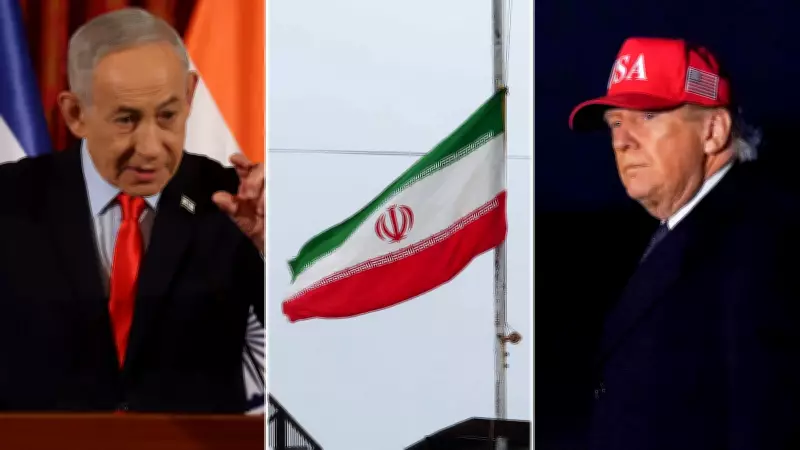
In a significant escalation of Middle Eastern tensions, the U.S. embassy in Riyadh, Saudi Arabia, has been targeted by drone attacks. This incident occurs amidst a rapidly expanding exchange of military strikes between Israel and Iran, marking a dangerous widening of the regional conflict.
Escalating Hostilities and U.S. Military Response
Former U.S. President Donald Trump has publicly outlined aggressive military operations against what he described as Iran's "sick and sinister" regime. In detailed remarks, Trump asserted that the United States is actively "annihilating" the Iranian Navy and systematically destroying its missile capabilities. These statements were made from Istanbul, where Trump warned that U.S. attacks would persist as the war with Iran continues to broaden on multiple fronts.
Regional Retaliation and Widening Conflict
The situation is further complicated by retaliatory actions from Iran-backed militant groups across the region. Notably, Hezbollah has launched strikes against Israel, a move that analysts like David Fraser indicate demonstrates the expanding geographical scope of this conflict. "Hezbollah striking Israel indicates how widening this conflict is getting," Fraser noted, highlighting the multi-front nature of the hostilities.

Military experts express deep uncertainty about the conflict's trajectory. As one analyst, Ham, commented on the U.S. war efforts in Iran, "It's unclear where or how the U.S. will exit," pointing to the complex challenges facing American military strategy in the region.
Broader Implications and International Concerns
The drone attack on the U.S. embassy in Riyadh represents a direct threat to diplomatic installations and underscores the vulnerability of international assets in the region. This development has raised alarms about the potential for further escalation and the safety of diplomatic personnel.
Meanwhile, the conflict has significant implications for global energy markets and security. Energy prices have surged due to tanker disruptions and facility shutdowns, rattling global supply chains. The latest Middle East flare-up is driving crude oil and fuel prices higher, creating economic pressures worldwide.
International Diplomatic Responses
Canada has urged a diplomatic solution to the Iran conflict, though officials have not explicitly stated whether they view the recent strikes as illegal under international law. The Canadian government has also advised its citizens to avoid all travel to ten countries as the conflict spreads throughout the Middle East, reflecting growing concerns about regional stability.
This embassy attack and the expanding Israel-Iran conflict represent one of the most serious security challenges in the Middle East in recent years, with potential ramifications for global politics, energy security, and international diplomacy that will likely unfold in the coming weeks and months.