U.S. Military Downs Iranian Drone Near Aircraft Carrier Amid Ongoing Nuclear Talks
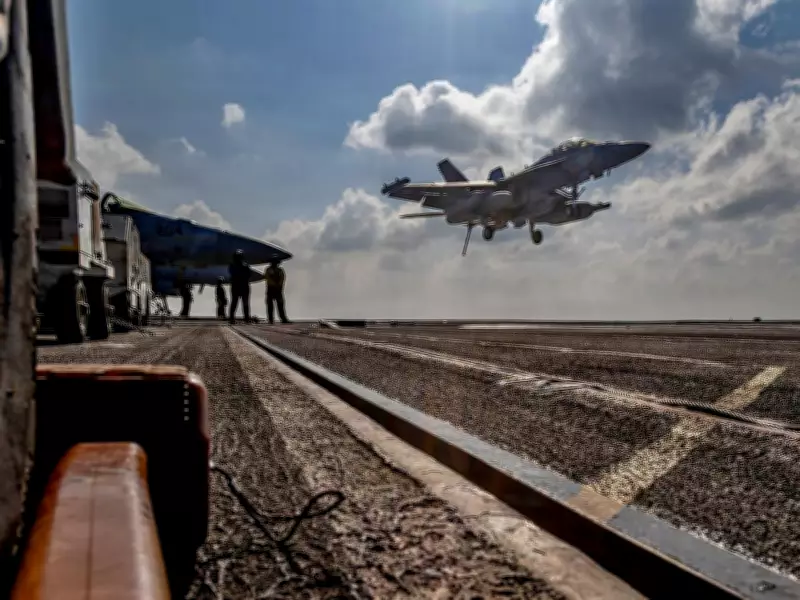
In a tense incident over the Arabian Sea, a U.S. F-35C warplane shot down an Iranian drone that was aggressively approaching the USS Abraham Lincoln aircraft carrier. The event occurred on Tuesday, with U.S. Central Command stating the unmanned aircraft was intercepted in self-defence due to its unclear intent as it neared the Nimitz-class carrier.
No American service members were harmed during the engagement, and no U.S. equipment sustained damage, according to official statements from military authorities. The confrontation unfolded just hours after an oil tanker participating in a U.S.-military fuel procurement program reported being hailed by small armed vessels in the strategic Strait of Hormuz near Iran's coastline.
Diplomatic Channels Remain Open Despite Escalating Tensions
Despite this military skirmish, President Donald Trump confirmed that diplomatic negotiations between the United States and Iran continue regarding Tehran's nuclear program. "We are negotiating with them right now," Trump told reporters at the White House, adding that "they'd like to do something."

The president referenced previous diplomatic efforts that had faltered, noting "they had a chance to do something a while ago and it didn't work out, and we did Midnight Hammer," alluding to the June U.S. military strike in Iran. White House Press Secretary Karoline Leavitt confirmed that scheduled talks involving Trump's Middle East envoy Steve Witkoff remain on track for Friday.
"As for the president, he remains committed to always pursuing diplomacy first, but in order for diplomacy to work, of course, it takes two to tango," Leavitt stated during an appearance on Fox News. She emphasized that while diplomatic channels remain open, "the president has always a range of options on the table — and that includes the use of military force."
Regional Tensions Escalate Amid Military Posturing
The drone incident follows weeks of increasing pressure from the Trump administration toward Iran. The U.S. president has threatened airstrikes in response to Tehran's violent crackdown on Iranian protesters and has repeatedly referenced a U.S. Navy "armada" approaching the Middle East as leverage to compel Iran to curb its nuclear ambitions.
On Monday, Trump hinted at the possibility of a new nuclear agreement while warning that "bad things would happen" if talks fail to produce progress. This warning came just days after U.S. Central Command cautioned Iran against overflying American vessels or training weapons at U.S. forces, while acknowledging Iran's right to conduct naval exercises in the Strait of Hormuz.
Iranian Foreign Minister Abbas Araghchi has stated that the Islamic Republic remains open to diplomacy but urged restraint from the United States, warning against "threats, intimidation or pressure." The diplomatic balancing act occurs against a backdrop of renewed risks to maritime traffic in the region, with security analysts noting the potential for miscalculation.
"These moves risk pushing President Trump off the diplomatic path and back toward a military option," observed Becca Wasser, defence lead for Bloomberg Economics. "That's a dangerous play at a time when the U.S. has amassed significant firepower in the Middle East."
The incident underscores the fragile nature of U.S.-Iran relations, where military posturing and diplomatic overtures coexist in a delicate balance. As both nations navigate these turbulent waters, the international community watches closely, aware that any misstep could escalate into broader conflict in this strategically vital region.