U.S. Military to Blockade Iranian Ports Following Collapsed Ceasefire Negotiations
The United States military has announced it will implement a comprehensive blockade of all Iranian ports and coastal areas starting Monday, marking a significant escalation in regional tensions. This decision comes after marathon ceasefire talks between the U.S. and Iran held in Pakistan concluded without an agreement, setting the stage for a potential confrontation in the strategically vital Persian Gulf region.
Blockade Details and Immediate Consequences
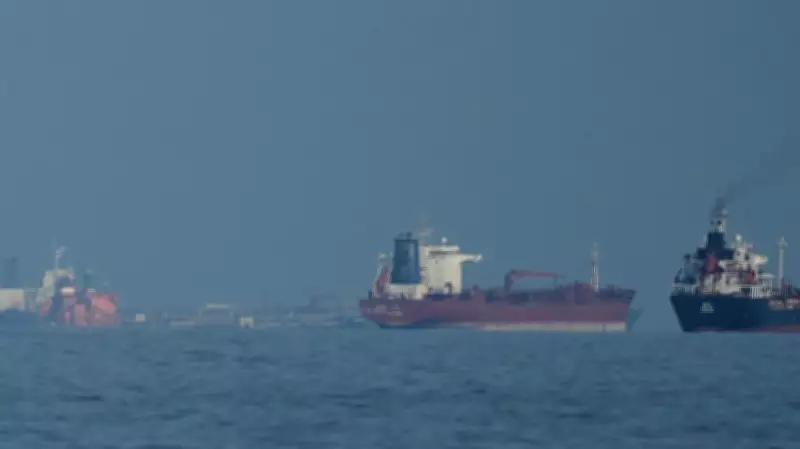
U.S. Central Command stated that the blockade will commence on Monday at 10 a.m. EDT (5:30 p.m. Iran time) and will be enforced impartially against vessels of all nations entering or departing Iranian ports. This includes all Iranian ports on the Arabian Gulf and Gulf of Oman. Notably, the blockade represents a scaled-back approach from President Donald Trump's earlier threat to completely seal off the Strait of Hormuz, as CENTCOM confirmed it will still permit ships traveling between non-Iranian ports to transit the critical waterway.
Early reports from Lloyd's List intelligence indicate that the blockade announcement has already disrupted the limited ship traffic that had resumed in the strait since the ceasefire began. Marine trackers report that over 40 commercial vessels have crossed since the ceasefire started, a dramatic decrease from the typical 100 to 135 daily passages before hostilities erupted.

Iran's Forceful Response and Regional Threats
Iran responded to the blockade announcement with immediate and forceful threats. According to the Islamic Republic of Iran Broadcasting (IRIB), "Security in the Persian Gulf and the Sea of Oman is either for everyone or for NO ONE." The Iranian military warned that "NO PORT in the region will be safe" if the blockade proceeds.
Mohsen Rezaei, a military adviser and former Revolutionary Guard Commander, declared on social media that Iran possesses "major untouched levers" to counter any Hormuz blockade, emphasizing that the country would not be coerced by "tweets and imaginary plans." Iranian parliament speaker Mohammad Bagher Qalibaf, who led Iran's delegation in the talks, delivered a direct message to Trump: "If you fight, we will fight."
Economic Impact and Global Energy Markets
The blockade announcement triggered immediate volatility in global energy markets. Oil prices surged in early trading, with U.S. crude jumping 8% to $104.24 per barrel and Brent crude rising 7% to $102.29. This represents a substantial increase from the approximately $70 per barrel price before the conflict began in late February.
The blockade is widely seen as an attempt to pressure Iran, which has continued exporting millions of barrels of oil during the conflict, much of it through "dark" transits that evade Western sanctions. Trump has explicitly stated his goal of undermining Iran's control over the Strait of Hormuz, through which 20% of global oil transited before fighting commenced.
Failed Negotiations and Nuclear Stalemate
The face-to-face talks that concluded early Sunday represented the highest-level negotiations between the U.S. and Iran since the 1979 Islamic Revolution. According to Trump, Tehran's nuclear ambitions constituted the core reason for the talks' failure. In comments to Fox News, he threatened devastating strikes against Iranian infrastructure if the country doesn't abandon its nuclear program.
Vice President JD Vance, who led the U.S. negotiating team, stated that Washington required "an affirmative commitment that they will not seek a nuclear weapon." A U.S. official speaking anonymously revealed that Iranian negotiators could not agree to all American "red lines," which included:

- Iran never obtaining nuclear weapons
- Ending uranium enrichment programs
- Dismantling major enrichment facilities
- Allowing retrieval of highly enriched uranium
- Opening the Strait of Hormuz completely
- Ending funding for Hamas, Hezbollah and Houthi rebels
Iranian officials blamed "U.S. overreach" for the collapse, with Foreign Minister Abbas Araghchi claiming on social media that negotiations failed due to "maximalism, shifting goalposts, and blockade." Qalibaf noted some progress had been made but emphasized that the United States needed to demonstrate it could gain Iran's trust.
Regional Context and Humanitarian Toll
The conflict has exacted a heavy human cost, with at least 3,000 fatalities in Iran, 2,055 in Lebanon, 23 in Israel, and more than a dozen in Gulf Arab states. Infrastructure damage has been reported across half a dozen countries in the region.
Iran has consistently denied seeking nuclear weapons while asserting its right to maintain a civilian nuclear program. Experts note that Iran's stockpile of enriched uranium, though not currently weapons-grade, remains only a short technical step away from weapons capability.
Uncertain Future and Diplomatic Efforts
Neither nation has indicated what will occur after the current ceasefire expires on April 22. Pakistani Foreign Minister Ishaq Dar stated that his country will attempt to facilitate renewed dialogue in coming days, while Iran's state-run IRNA news agency reported Tehran remains open to continuing discussions.
In a related development, Trump extended his diplomatic feud to include Pope Leo XIV, criticizing the Catholic leader's foreign policy approach in a Truth Social post after the Pope denounced the war and called for peace negotiations.