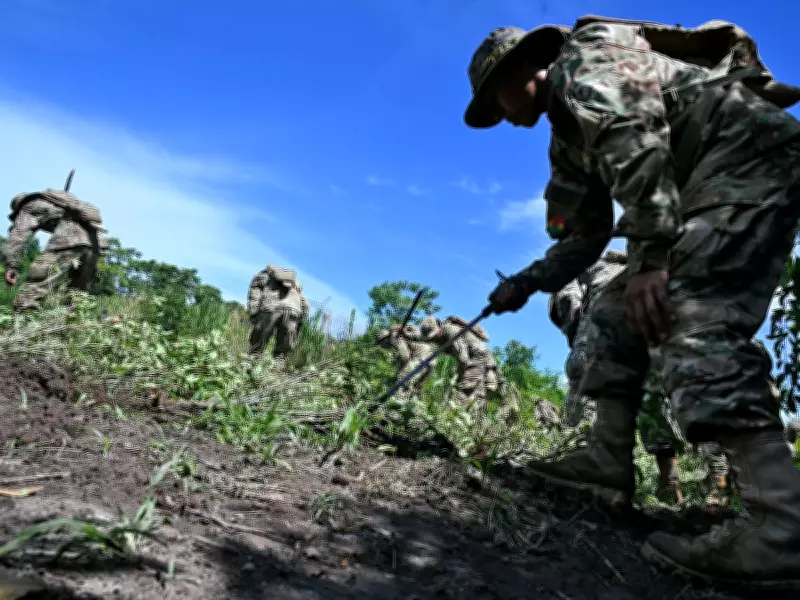
The United States, in collaboration with allies across Latin America and the Caribbean, has officially ushered in a new and intensified phase of anti-drug cooperation. This strategic shift involves enhanced extraditions, shared intelligence operations, and coordinated security plans, despite facing criticism from various international organizations.
Shield of the Americas Initiative Announced
Dubbed "Shield of the Americas," this joint initiative was announced on March 8 by President Donald Trump and leaders from sixteen nations during a summit held in Florida. The program is largely modeled on the Salvadoran approach to combating drug trafficking and organized crime, signaling a unified front in the region's ongoing battle against narcotics.
Recent High-Profile Captures and Extraditions
In a swift demonstration of this renewed cooperation, U.S. authorities took custody of Uruguayan drug trafficker Sebastian Marset following his capture in Bolivia. Marset, who was added to Washington's list of most-wanted fugitives just a year prior, appeared before a judge on Monday after being expelled by Bolivian authorities.

Additionally, Washington announced the arrest, pending extradition, of a suspect accused of being one of the leaders of "Los Piratas," the Chilean affiliate of the Tren de Aragua gang. The suspected drug kingpin, 40-year-old Venezuelan national Rafael Enrique Gamez Salas, could be deported to Chile in the near future.
Expanding Regional Security Efforts
The collaboration has extended to other nations, with Ecuador recently carrying out an air strike on a FARC rebel training camp in a border area shared with Colombia. While Colombian President Gustavo Petro condemned the attack, his Defense Minister Pedro Sanchez confirmed ongoing cooperation with Ecuador, Venezuela, and the United States to quell such pockets of rebellion.
Further solidifying this partnership, the FBI has opened a permanent office in Ecuador, whose government has recently imposed curfews in regions hardest hit by violence related to organized crime.
Political Timing and Strategic Awareness
The Trump administration is acutely aware of the conservative political shift that has swept through Latin America and is actively trying to accelerate its anti-drug efforts before a new political cycle begins. This growing collaboration also means suspects can be sent home from the United States, as seen in January when the Department of Homeland Security announced the arrest of Chilean national Armando Fernandez Larios.
Larios, a former military officer and agent of the DINA, the feared political police force of Augusto Pinochet's regime, pleaded guilty to the 1976 assassination of former Chilean minister Orlando Letelier in Washington. After nearly four decades living in the United States, he could soon be deported to his home country.
Notable Absences and Ongoing Cooperation
Brazil, Mexico, and Colombia did not attend the Florida summit, but intelligence cooperation remains ongoing according to their leaders and diplomatic sources in Washington. Trump continues to exert pressure on Mexican President Claudia Sheinbaum, evidenced by Mexico's operation that led to the death of kingpin Nemesio Oseguera, or "El Mencho," leader of the Jalisco New Generation Cartel (CJNG).
This new era of drug war cooperation marks a significant escalation in regional security efforts, combining diplomatic initiatives with actionable intelligence and enforcement measures to combat transnational drug trafficking networks.