U.S. Demands China Join New Nuclear Pact Amid Allegations of Covert Testing
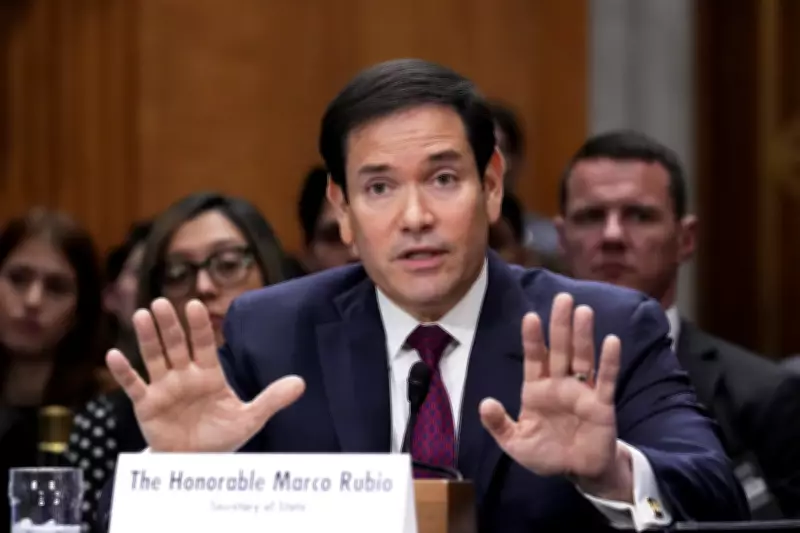
In a significant diplomatic development, the United States has formally called for China to be included in a forthcoming nuclear arms control agreement. This demand comes alongside serious accusations from Washington that Beijing has been conducting secret atomic tests, a claim that could escalate already strained international relations. The announcement, made by U.S. Secretary of State Marco Rubio, underscores a strategic shift in American foreign policy aimed at addressing what officials describe as a growing nuclear threat from China.
Rubio's Firm Stance on Global Nuclear Security
Secretary of State Marco Rubio, speaking from the Capitol in Washington, emphasized the necessity of Chinese participation in any new nuclear framework. "A comprehensive and effective nuclear deal cannot be achieved without China's full involvement and transparency," Rubio stated. He further accused Beijing of engaging in clandestine testing activities, which he argued violate international norms and undermine global security efforts. These allegations are based on intelligence reports that suggest China has conducted tests at remote facilities, though specific details remain classified.
The U.S. position marks a departure from previous arms control negotiations, which primarily focused on Russia. By targeting China, the Biden administration aims to curb what it perceives as an unchecked expansion of Beijing's nuclear capabilities. This move is seen as part of a broader strategy to maintain American dominance in global security affairs while addressing emerging threats from rival superpowers.

Implications for International Diplomacy and Arms Control
The inclusion of China in nuclear talks presents considerable challenges, given Beijing's historical reluctance to engage in multilateral arms control agreements. Chinese officials have consistently maintained that their nuclear arsenal is minimal and solely for defensive purposes. However, U.S. intelligence assessments contradict this, indicating a rapid modernization and expansion of China's nuclear forces.
Experts warn that these accusations could further deteriorate U.S.-China relations, which have been tense over trade, technology, and territorial disputes. "Accusing China of secret tests without公开 evidence risks provoking a diplomatic crisis," noted Dr. Evelyn Chen, a professor of international relations at the University of Toronto. "It may also complicate efforts to revive broader nuclear disarmament talks involving other nuclear-armed states."
Moreover, the U.S. demand raises questions about the future of existing treaties, such as the New START agreement with Russia. Some analysts suggest that a new deal including China could serve as a model for a more inclusive and robust international framework, but achieving consensus will require delicate negotiation and confidence-building measures.
Global Reactions and the Path Forward
Reactions from the international community have been mixed. Allies in Europe and Asia have expressed support for greater transparency from China but are cautious about escalating tensions. Meanwhile, Beijing has yet to issue an official response to the allegations, though state media has previously dismissed similar claims as "baseless and politically motivated."
As the situation unfolds, several key factors will influence the outcome:

- Verification Mechanisms: Any new deal must include stringent verification protocols to ensure compliance, a point of contention in past negotiations.
- Diplomatic Engagement: Sustained dialogue between U.S. and Chinese officials will be crucial to avoid miscalculations and build mutual trust.
- Global Support: Garnering backing from other nuclear powers and non-nuclear states will be essential for the legitimacy and effectiveness of the agreement.
In conclusion, the U.S. call for China's inclusion in a new nuclear deal, coupled with accusations of secret testing, represents a pivotal moment in global arms control. While the path to an agreement is fraught with obstacles, the stakes for international security could not be higher. As Secretary Rubio and his counterparts navigate this complex landscape, the world watches closely, hoping for a resolution that enhances stability rather than fuels conflict.