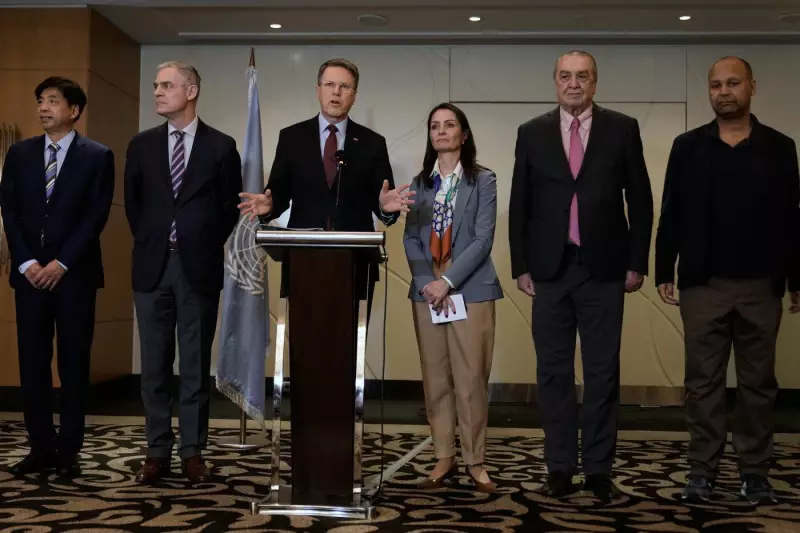
A United Nations team is currently on the ground in Lebanon, conducting a critical assessment of the volatile southern border area with Israel. This mission follows the recent and significant withdrawal of UN peacekeeping forces from the region, creating a security vacuum that requires urgent international attention.
High-Level UN Delegation in Beirut
The delegation is being led by Samuel Zbogar, Slovenia's permanent representative to the United Nations and the current president of the UN Security Council. The high-level visit underscores the seriousness with which the international body views the evolving situation. The team arrived in Beirut on Saturday, December 6, 2025, and immediately began consultations.
Their primary objective is to examine all viable options for maintaining stability and preventing escalation along the contentious Blue Line—the UN-drawn boundary between Lebanon and Israel. The departure of the peacekeeping contingent, known as UNIFIL, has left a palpable void, raising concerns about potential miscalculations or renewed hostilities between Hezbollah in Lebanon and the Israeli military.

Scrutinizing the Post-Peacekeeper Landscape
The UN team's evaluation is multifaceted. Analysts suggest they are reviewing a spectrum of possibilities, which could range from proposing a new, modified mandate for an international presence to enhancing technological surveillance and monitoring mechanisms. Another key focus is likely on bolstering the capacity of the Lebanese Armed Forces to assert authority in the south, a long-standing but challenging goal.
This strategic review comes at a time of heightened regional tension. The border area has seen repeated exchanges of fire over the past year, making the UN's role in conflict prevention more critical than ever. The findings and recommendations of Zbogar's team will be crucial in shaping the Security Council's next steps and its ongoing policy towards the Lebanon-Israel file.
Implications for Regional Security
The outcome of this assessment will have direct consequences for regional security dynamics. A failure to establish a credible alternative to the previous peacekeeping mission could embolden non-state actors and increase the risk of a broader conflict. Conversely, a robust and actionable plan from the UN could provide a much-needed framework for de-escalation.
All eyes are now on the UN delegation as it concludes its work. The international community awaits its report, which will inform critical decisions on how to preserve a fragile peace in one of the world's most tense border regions after the landmark change brought by the peacekeepers' exit.