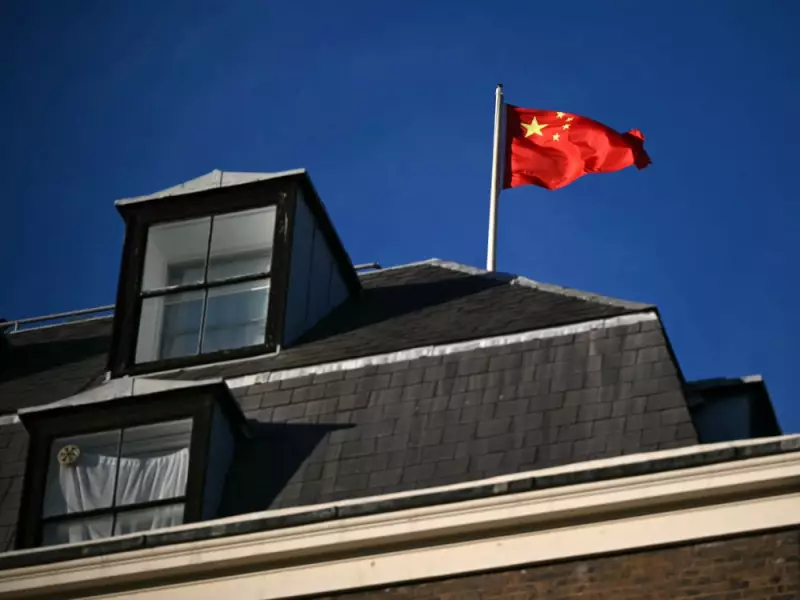
LONDON — According to a recent analysis, the West, and the United Kingdom in particular, is engaged in a strategic struggle it is destined to lose unless it can bring itself to accurately name its principal opponent: China. The contention is that political and economic warfare is being waged by Beijing, yet a persistent reluctance within Western capitals to classify the People's Republic as an outright adversary is crippling an effective response.
The Paradox of the 'Systemic Rival' and Partner
The core of the problem, as identified by commentators like Michael Murphy, is a fundamental contradiction in official language. The UK establishment, exemplified by think-tank experts such as Ben Bland of Chatham House, routinely describes China as both an important economic partner and a systemic rival. While this may aim to reflect a complex reality, in practice it fosters policy paralysis.
This ambiguous framing makes it exceedingly difficult for both government and business to navigate the inherent tension. The result, critics argue, is not sophisticated statecraft but a series of reactive and often farcical measures that treat symptoms while ignoring the root cause of the strategic challenge.

Security Compromises Born of Confusion
This confusion manifests in tangible security lapses. A stark example emerged from the United Kingdom Ministry of Defence (MoD). The department purchased a fleet of Chinese-manufactured electric vehicles, partly to meet its net-zero emissions targets, treating China primarily as a vital trading partner.
Only later did security concerns arise as an apparent afterthought. The MoD was forced to place stickers inside the vehicles warning military personnel not to discuss official secrets while inside them, fearing Chinese eavesdropping. Reports also indicated that cars containing Chinese parts were banned from parking near sensitive military bases.
These measures raise an obvious, unanswered question: why was equipment deemed a significant security hazard and operational inconvenience procured in the first place?
The Legal Collapse That Exposed the Contradiction
The strategic incoherence reached a legal climax in October 2025. The prosecution of two British men, alleged to have spied for China, collapsed dramatically. The case fell apart after the director of public prosecutions revealed that the British government refused to argue in court that China was a 'threat to national security'.
This refusal created an insurmountable legal hurdle for the espionage case. It also laid bare the glaring disconnect between official rhetoric describing a "systemic rival" and the government's unwillingness to accept the logical security implications of that label in a formal, consequential setting. The decision was widely seen as an attempt to avoid diplomatic embarrassment, despite mounting evidence from security agencies pointing to sustained threats.
Analysts conclude that for years, the Chinese Communist Party has conducted espionage, employed aggressive "wolf warrior" diplomacy, and engaged in intellectual property theft from Western nations with relative impunity. This has been possible, they argue, because Western democracies like the UK lack the clear, unified vocabulary and political will to diagnose the nature of the long-term, non-kinetic conflict they are in. Until that clarity is achieved, the West risks continuing to fight a losing battle.