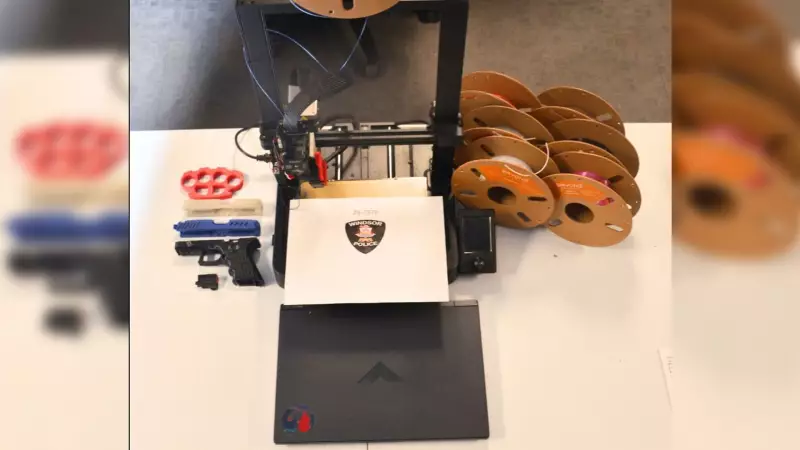
Windsor Police Make Arrests in 3D-Printed Firearms Case
Windsor police have announced the arrest and charging of two men as part of an ongoing investigation into 3D-printed firearms. The case underscores the evolving challenges law enforcement faces with advancing technology that enables the creation of untraceable, homemade weapons.
Details of the Investigation
While specific details about the investigation remain limited due to its active nature, authorities confirmed that the arrests were made following a probe into the production and potential distribution of 3D-printed firearms. These weapons, which can be manufactured using commercially available 3D printers and digital blueprints, present significant regulatory and safety concerns as they often bypass traditional firearm controls and serial number tracking.
The arrests highlight a growing trend across Canada and internationally, where law enforcement agencies are increasingly encountering homemade firearms created through additive manufacturing. Unlike conventional firearms, 3D-printed guns can be made from plastic polymers or composite materials, making them difficult to detect with standard security screening methods.

Legal and Safety Implications
The case raises important questions about firearm regulation in the digital age. Under Canadian law, producing firearms without a license is illegal, regardless of the manufacturing method. However, the accessibility of 3D printing technology and online firearm designs creates enforcement challenges for police agencies nationwide.
"This investigation demonstrates our commitment to addressing emerging threats to public safety," a Windsor police spokesperson stated. "We are actively monitoring technological developments that could be exploited for criminal purposes."
Public safety experts note several concerning aspects of 3D-printed firearms:
- They can be manufactured without traditional metal components, evading metal detectors
- Digital blueprints are easily shared online across borders
- The weapons lack serial numbers, complicating tracing efforts
- Quality and reliability vary significantly, creating additional safety risks
Broader Context and Response
The Windsor arrests occur amid increasing attention to 3D-printed weapons globally. In recent years, Canadian law enforcement has intercepted several homemade firearms created through additive manufacturing, prompting discussions about potential legislative updates and enforcement strategies.
Police agencies across Canada have been enhancing their technical capabilities to detect and investigate these emerging threats. This includes specialized training for officers, collaboration with technology experts, and increased monitoring of online platforms where firearm designs are shared.
The two men charged in Windsor now face legal proceedings that will test how Canadian courts address cases involving this new category of weapon manufacturing. Their arrests serve as a reminder that while technology evolves, existing firearm laws still apply to all methods of production.
As the investigation continues, Windsor police encourage anyone with information about illegal firearm manufacturing to contact authorities. The case represents an important step in addressing the complex intersection of technology and public safety in modern law enforcement.