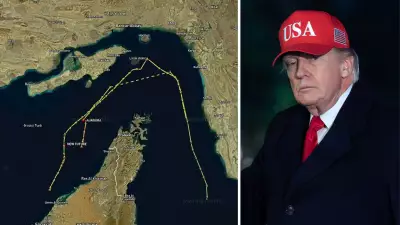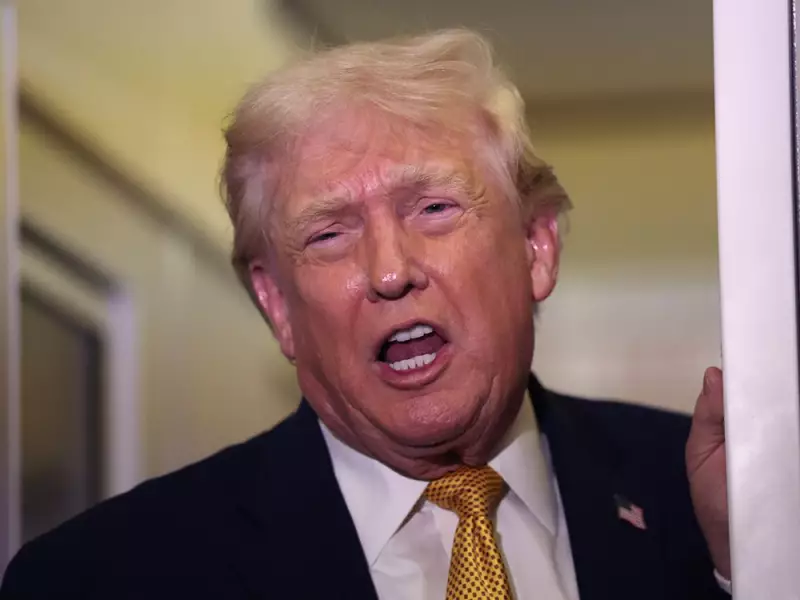
Former U.S. President Donald Trump has declared that his personal sense of morality is the singular limiting factor on his authority to launch military operations anywhere in the world. This striking assertion was made in an interview with The New York Times, published on Thursday, January 8, 2026.
‘The Only Thing That Can Stop Me’
The comments came just days after Trump, having returned to the White House, authorized a swift military operation that led to the capture of Venezuelan President Nicolás Maduro and his wife. When questioned about whether any boundaries existed on his global executive powers, Trump provided a revealing answer.
“Yeah, there is one thing. My own morality. My own mind. It’s the only thing that can stop me,” Trump told the newspaper. He elaborated by stating, “I don’t need international law,” while simultaneously claiming, “I’m not looking to hurt people.”

In a characteristically contradictory follow-up, the Republican president then said he does need to abide by international law, but immediately qualified it by adding, “it depends what your definition of international law is.”
A Pattern of Military Action and Legal Challenges
Trump’s second term has been marked by a series of military engagements, despite his self-proclaimed title as a “peace president” and his pursuit of a Nobel Prize. Since his re-election, U.S. forces under his command have conducted strikes in multiple countries.
These actions include attacks on Iran’s nuclear program in June, as well as operations in Iraq, Nigeria, Somalia, Syria, Yemen, and most recently, Venezuela. The United States has a history of distancing itself from international legal bodies, not being a member of the International Criminal Court (ICC) and frequently rejecting rulings from the UN’s International Court of Justice (ICJ).
Domestically, Trump’s relationship with the law has been contentious. He was impeached twice, faced federal charges related to conspiring to overturn the 2020 election—which were dropped after his re-election—and was convicted for covering up a hush money payment.
Global Repercussions and Future Targets
Emboldened by the success in Venezuela, Trump has issued threats toward other nations and territories. The list includes Colombia and the autonomous Danish territory of Greenland, a fellow NATO member. His desire for Greenland has caused significant strain within the alliance.
When pressed by the Times on whether preserving NATO or acquiring Greenland was his priority, Trump indicated “it may be a choice.” He further justified the potential acquisition by saying U.S. ownership of Greenland is “what I feel is psychologically needed for success.”
In response to these expansive claims of power, a bipartisan effort is underway in Congress to impose checks. The Senate advanced a measure on Thursday aimed at curtailing presidential military action regarding Venezuela. However, analysts expect Trump would veto such legislation if it reached his desk.
In a separate business-related disclosure, Trump expressed frustration that he received “absolutely no credit” for prohibiting his family from foreign deals during his first term, suggesting a different approach may be taken now.
The interview underscores a presidency operating with a self-defined framework of constraints, raising profound questions about the balance of power, the role of international institutions, and the future stability of long-standing global alliances.