President Donald Trump launched a series of airstrikes on Iran late Tuesday and revoked a license allowing Tehran to sell oil on the global market, surprising NATO leaders gathered in Ankara, Turkey. The strikes were retaliation for attacks on three merchant ships in the Strait of Hormuz and underscored the fragility of an interim deal between the two countries.
Timing and Context
The action occurred shortly after Trump left a dinner hosted by Turkish President Recep Tayyip Erdogan, where leaders of NATO's 32 member countries had assembled ahead of Wednesday's talks. The summit was intended to showcase increased defense spending and support for Ukraine's war with Russia. Trump did not directly address the strikes Tuesday night. It is rare for U.S. presidents to launch military action while abroad, though former President Barack Obama authorized strikes in Libya during a 2011 trip to Brazil.
Allied Concerns and Trump's Demands
European allies and Canada had been wary that Trump might raise grievances over the U.S.-Israeli war on Iran, which they were not consulted about. Trump had demanded “loyalty” and branded NATO a “paper tiger” after some allies refused open access to their bases for U.S. attacks on Iran. During a meeting with Erdogan, Trump said he had been testing allies by requesting help with the Iran war. “Italy turned us down and Germany turned us down and France turned us down,” Trump said. “And that’s OK. But, you know, why are we spending hundreds of billions of dollars and they’re not there for us?”

NATO's Defense Spending Efforts
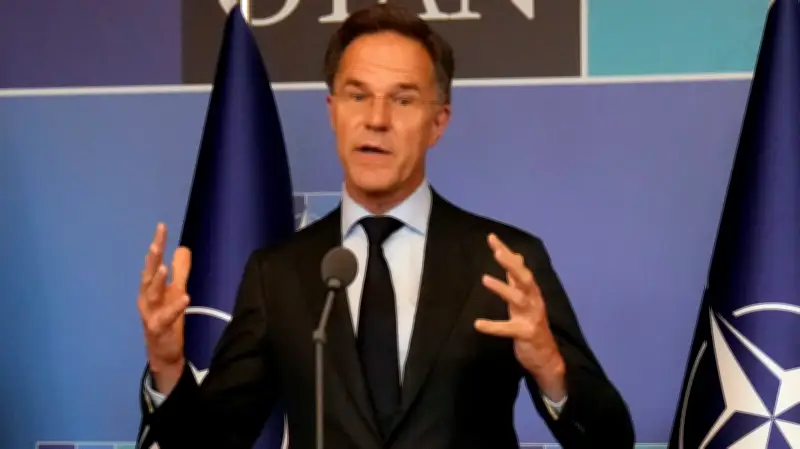
NATO leaders had been trying to show Trump how they were boosting defense. NATO summits are designed as a show of unity to deter adversaries, especially as Russia continues its war on Ukraine. Last month, NATO Secretary-General Mark Rutte visited Washington to hail the “Trump Trillion”—the $1.2 trillion that European allies and Canada have added to defense spending since 2017. In Ankara, Rutte hosted a “big reveal” event showcasing deals planned for that money, much of it to be spent on U.S. companies, creating thousands of jobs for Americans.
Despite these efforts, Trump reopened old wounds over Greenland, insisting the U.S. should control the semiautonomous island rather than NATO ally Denmark. NATO is founded on the principle that members will defend each other's territory, not threaten to seize it.
Defense Spending Targets and Grievances
Trump has long argued the U.S. carries more than its fair share of NATO's defense burden. At last year's summit, allies agreed to invest 5% of GDP on defense—3.5% on budgets and 1.5% on infrastructure for troop and equipment mobility. Rutte demanded “clear, concrete and credible plans” to meet spending targets. New NATO figures show Slovenia, Belgium, Spain, and the Czech Republic may struggle to meet the old 2% GDP target.
The Trump administration wants a “NATO 3.0” with Europe taking responsibility for its own security, including Ukraine, while America provides its nuclear umbrella. However, allies seek clarity on how deeply Trump intends to cut U.S. forces in Europe. The Pentagon has launched a six-month review of that presence, with drawdowns potentially depending on European defense spending increases and base access.
Ukraine's Push for NATO Entry
President Volodymyr Zelenskyy made a fresh appeal Tuesday for Ukraine to join NATO, saying its armed forces are highly experienced and would boost the alliance's capabilities. Zelenskyy, expected to meet Trump in Ankara on Wednesday, highlighted Ukraine's ability to strike deep inside Russia, hitting oil refineries and other targets. He said Ukrainian forces are “eliminating” an average of 30,000 Russian troops monthly. Concern is mounting among some European countries that Russia may be preparing a hybrid attack as Putin struggles in Ukraine.

Meeting with Syrian President
Trump will also meet with Syrian President Ahmad al-Sharaa, a former insurgent who led the offensive that ousted Bashar Assad in December 2024. Despite once being an al-Qaida fighter, al-Sharaa has won Trump's backing as he seeks to rebuild Syria and restore ties with the West. Trump has suggested al-Sharaa would do a better job rooting out Hezbollah in Lebanon than the Israeli army, raising alarms in Lebanon and Israel. The Syrian leader has said he has no interest in doing so.