As discussions about a potential armistice in the prolonged Russia-Ukraine war advance, a central proposal involves Western nations providing "security guarantees" to Kyiv. These pledges are intended to deter future Russian aggression should Moscow, after a pause, decide to renew its hostilities. However, this concept carries a heavy and often unhappy historical burden that Canada and its allies must carefully consider.
A Legacy of Broken Promises
The most direct precedent for Ukrainian security guarantees is the 1994 Budapest Memorandum. In exchange for surrendering its formidable nuclear arsenal, Ukraine received assurances from the United States, United Kingdom, and Russia that its sovereignty and borders would be respected. France and China provided separate, similar pledges. The core promise was that these powers would refrain from threats or use of force against Ukraine, except in self-defence.
History's verdict is clear: one of those signatories, Russia, blatantly violated this agreement with the annexation of Crimea in 2014 and the full-scale invasion launched in 2022. Moscow's justification, that these actions constitute self-defence, is widely rejected by the international community but underscores the fragility of such paper guarantees when faced with a determined aggressor.

Canada's Potential Role and Practical Challenges
Reports suggest Canada could be among the nations asked to participate in a new security guarantee framework for Ukraine. This immediately raises practical questions. What tangible military force could Canada commit to serve as a credible "tripwire"—a deterrent force whose engagement would trigger a larger, collective Western response if Russia attacked again?
Given the lessons of the past four years of high-intensity combat, traditional symbols of military power like tanks and armoured vehicles have proven vulnerable. The article wryly questions what Canada might offer: a commitment based on future F-35 fighter jets or unfinished icebreakers? The challenge of defining a meaningful, credible Canadian contribution that would genuinely deter a future Vladimir Putin is substantial.
The Shadow of Munich and the Question of American Commitment
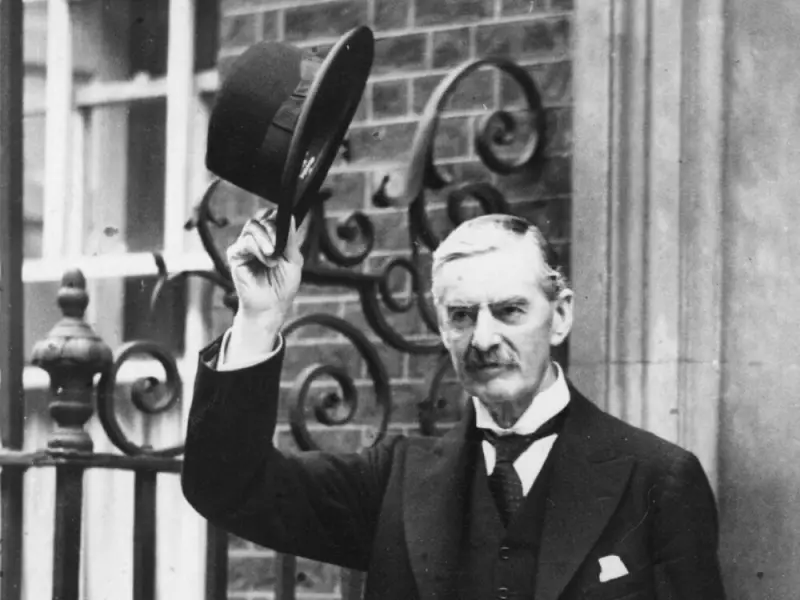
The historical parallels extend further back than 1994. The 1938 Munich Agreement is a stark lesson in the failure of security guarantees. France had a mutual defence treaty with Czechoslovakia, and Britain was pledged to support France. Yet, when Hitler demanded the Sudetenland, British Prime Minister Neville Chamberlain and French Prime Minister Édouard Daladier capitulated, sacrificing Czechoslovak territory for what was falsely hailed as "peace for our time." Czechoslovakia, excluded from the talks, was left defenseless.
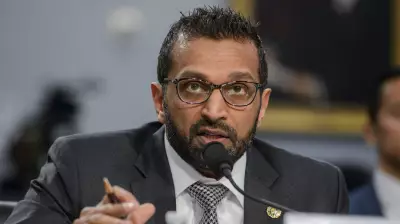
Compounding modern uncertainties is the question of American participation. Rumours indicate the United States may not provide guarantees, a stance that could fundamentally undermine any collective pact. The volatility of U.S. politics, exemplified by the potential return of Donald Trump to the presidency, raises profound doubts for allies. Would a guarantee from a Trump administration be trusted to be honoured, especially given his past transactional view of international alliances and known propensity for holding grudges?
Navigating a Path Forward
Despite this grim historical record, it is crucial to acknowledge that Ukraine's supporters—the U.S., U.K., France, Canada, and others—have provided unprecedented military and financial aid since 2022. This support, while sometimes constrained by political calculations (such as limits on long-range strike capabilities), represents a form of active guarantee far more concrete than any pre-2022 document.
The central dilemma remains: Can a new system of security guarantees be crafted that learns from the failures of Budapest and Munich? Any agreement must be backed by unambiguous, pre-positioned, and politically durable military commitments that a future Russian leader would believe would be activated. For Canada, as it contemplates this profound responsibility, the lesson of history is not to avoid making promises, but to ensure that any promise made is ironclad, credible, and ultimately, redeemable without hesitation.