Sanctioned Tanker Tests U.S. Hormuz Blockade with U-Turn Maneuver
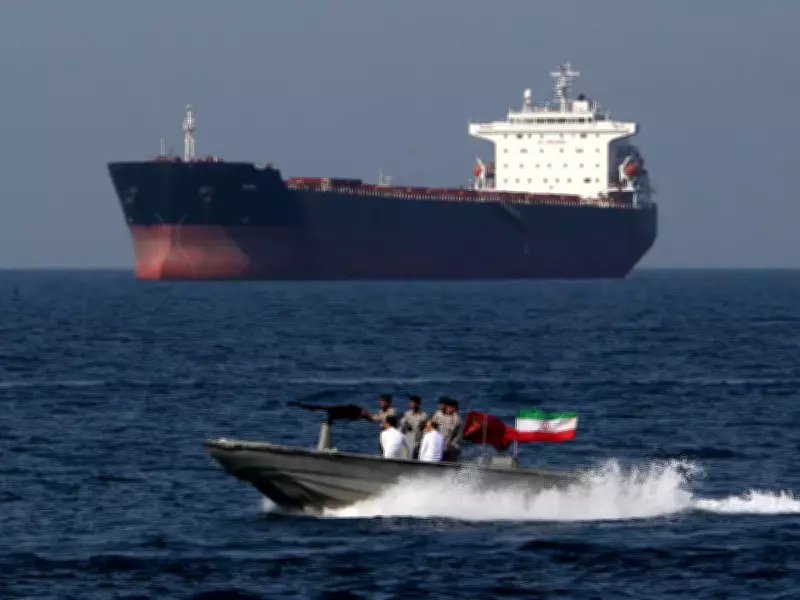
A U.S.-sanctioned tanker with connections to China, which had been under close observation as one of the initial vessels to challenge United States President Donald Trump's naval blockade, appeared to execute a U-turn after sailing out of the strategically vital Strait of Hormuz. The vessel, identified as the Rich Starry, was blacklisted by Washington in 2023 for its role in assisting Tehran to evade international energy sanctions, adding a layer of geopolitical tension to its movements.
Monitoring Challenges Amid Signal Interference
According to vessel-tracking data compiled by Bloomberg, the Rich Starry seemed to transit the Strait of Hormuz in the early hours of Tuesday morning. Later that same day, after completing the crossing, it turned around in the Gulf of Oman. This maneuver has captured the attention of shipowners, energy traders, and investors across global financial markets, all keenly following its route to gauge the practical implications of the latest U.S. efforts to pressure Tehran and curtail its oil revenues.
While there has been elevated scrutiny on visible transits through Hormuz, accurately monitoring these movements has proven tricky due to a combination of signal jamming and spoofing. The Rich Starry has a documented history of spoofing its satellite signals, as reported by TankerTrackers.com Inc., an organization that specializes in monitoring vessels using advanced satellite data. This technological interference complicates real-time tracking and enforcement efforts.

Historical Context and Enforcement Questions
This is not the first instance of the Rich Starry altering its course. On a prior exit attempt on Monday, the ship appeared to U-turn near Hormuz before restarting its transit several hours later. Such behavior highlights the ongoing cat-and-mouse dynamics in the region. The U.S. has established a blockade in the Gulf of Oman and the Arabian Sea, positioning warships to intercept Iranian vessels attempting to sail out of the Persian Gulf.
Charlie Brown, an advisor to United Against Nuclear Iran, a U.S.-based lobby and pressure group focused on Tehran, emphasized the complexity of the situation. "The real issue is not simply whether ships can pass through Hormuz, but what spectrum of enforcement options U.S. warships apply, and where they choose to apply them," Brown stated, underscoring the strategic decisions facing naval commanders.
Additional Vessel Movements and Uncertain Destinations
Following its U-turn, the Rich Starry's destination was listed as "for orders," indicating uncertainty in its next port of call. Prior to this change, it had variously signaled intentions to dock at the Omani port of Sohar, highlighted Chinese ownership and crew, and again listed "for orders," reflecting the fluid nature of its operations.
Another tanker, the Elpis, was in the strait and headed into the Gulf of Oman just as the blockade commenced. It appears to have halted outside the narrow waterway, off the Iranian coast. Ship-tracking platforms Kpler and Vortexa indicate that the Elpis had previously docked at an Iranian port in the gulf before attempting to pass through Hormuz, making it a potential target for patrolling U.S. Navy vessels. The Elpis paused its journey at roughly the same location where the Rich Starry turned around, although it has not broadcast a signal for several hours, leaving its current status—whether it continued onward or turned back—uncertain.
This incident underscores the heightened tensions and operational challenges in one of the world's most critical maritime chokepoints, with implications for global energy markets and international security.