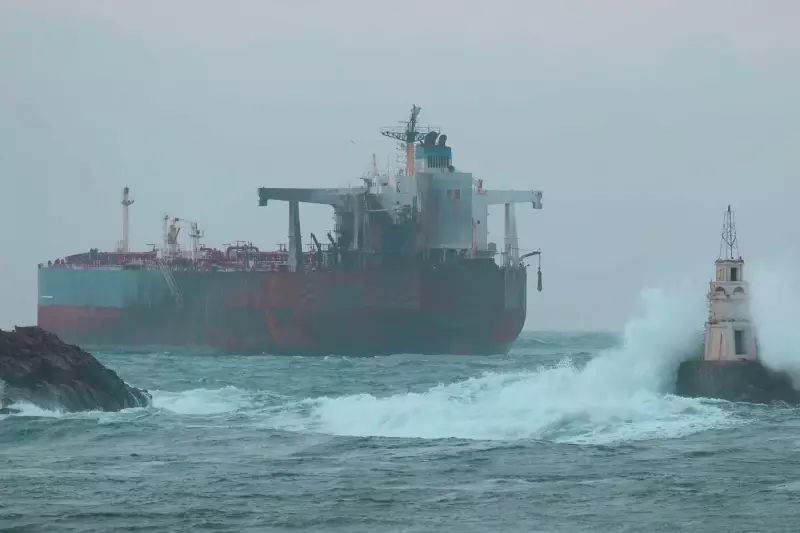
A Russian-linked oil tanker, operating under international sanctions, is currently stranded off the coast of Bulgaria after what is believed to be a Ukrainian maritime drone strike. The incident marks a significant escalation in the conflict's reach into the western Black Sea.
The Attack and Immediate Aftermath
The vessel, identified as the Kairos, was reportedly struck on Saturday, December 6, 2025, near the Bulgarian port of Ahtopol. Bulgarian authorities and maritime observers confirmed the tanker was damaged and left immobilized following the attack. Photographic evidence from the scene shows the large ship listing slightly as it sits anchored close to shore.
While Ukraine has not officially claimed responsibility, multiple security analysts and regional officials point to a Ukrainian unmanned surface vessel (USV), commonly referred to as a sea drone, as the likely cause. This form of asymmetric warfare has become a hallmark of Ukraine's strategy to challenge Russia's naval dominance and disrupt its logistical chains, even for vessels in neutral waters.

Profile of the Targeted Vessel
The Kairos is not an ordinary commercial tanker. It has been under sanctions by Western nations, including Canada and the United States, for its role in transporting Russian oil, potentially in violation of international price caps. The tanker is part of a so-called "shadow fleet" used to circumvent sanctions and export Russian petroleum products.
Its presence so far west in the Black Sea, near a NATO member state's coastline, underscores the complex and risky nature of these sanction-evasion operations. The attack raises immediate questions about the safety of maritime traffic in the region and the potential for environmental disaster should a damaged tanker leak its cargo.
Regional and International Implications
The incident places Bulgaria, a NATO and European Union member, in a delicate position. The Bulgarian government is now tasked with managing a security and environmental incident involving a sanctioned vessel from a conflict zone. Local authorities are monitoring the situation closely, with a primary focus on preventing any oil spill that could threaten the country's Black Sea coastline, a vital tourist and ecological zone.
For Ukraine, striking a tanker involved in transporting Russian oil aligns with its broader campaign to diminish the Kremlin's war-funding revenues. However, conducting such an operation near the territorial waters of a NATO ally introduces new diplomatic complexities. The event signals that Ukraine may be expanding its maritime drone campaign's operational range, targeting vessels it deems legitimate military or economic targets regardless of their immediate location.
International observers are watching the response from Moscow, which has previously characterized such attacks as terrorism. The stranded status of the Kairos presents a logistical and reputational challenge for Russian maritime operations, highlighting the growing vulnerability of its shadow fleet.