Russian Missile and Drone Attack on Kyiv Region Claims Four Lives and Injures Fifteen
A devastating Russian military strike targeted the Kyiv region on Saturday, March 14, 2026, resulting in the tragic loss of four lives and leaving at least fifteen individuals wounded. The assault, which involved a combination of missiles and drones, struck a residential neighborhood in Brovary, a locality situated close to the Ukrainian capital. This incident underscores the ongoing intensity of the conflict, even as diplomatic efforts to achieve peace appear to be at a standstill.
Details of the Attack and Immediate Aftermath
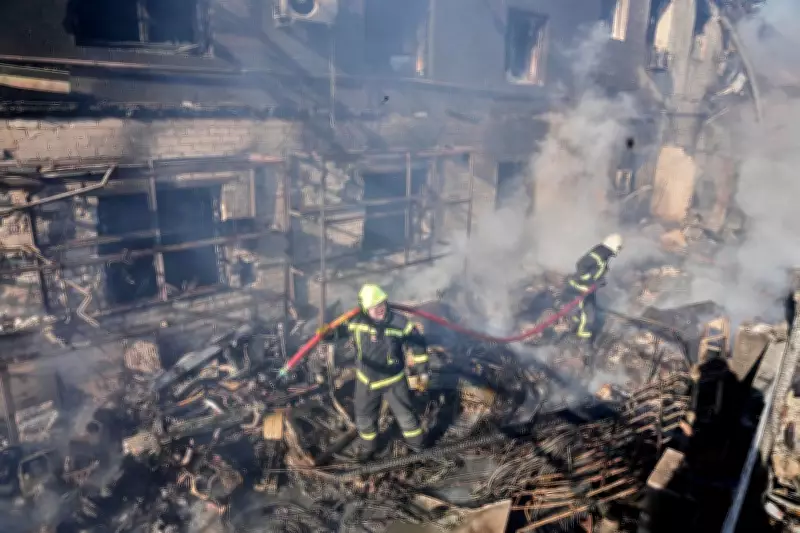
Emergency responders, including firefighters, were swiftly deployed to the scene to extinguish blazes ignited by the attack. Photographic evidence from the aftermath depicts a scene of significant destruction within the residential area, highlighting the direct impact on civilian infrastructure. The attack represents a continuation of Russia's military campaign against Ukraine, which has persisted for several years, causing widespread devastation and humanitarian crises.
Stalled Peace Negotiations and Broader Context
This violent episode occurs against a backdrop of stalled peace talks between Russian and Ukrainian officials. Diplomatic channels aimed at resolving the protracted war have seen little progress recently, with both sides entrenched in their positions. The attack near Kyiv serves as a grim reminder of the human cost of the ongoing hostilities and the urgent need for a renewed diplomatic push to end the violence.

The international community continues to monitor the situation closely, with many nations condemning attacks on civilian areas. The war has had far-reaching consequences, influencing global energy markets, geopolitical alliances, and humanitarian aid efforts. As the conflict enters another year, the toll on Ukrainian civilians remains a central concern for global observers and policymakers alike.