Republican Opposition Mounts Against Trump's Greenland Campaign
Donald Trump's increasingly assertive efforts to gain control of Greenland have sparked significant pushback from within his own party, with Republican lawmakers expressing concerns that could lead to congressional action to limit presidential authority. This development marks a notable shift as members of the Republican Party, which controls both chambers of Congress, have generally been reluctant to challenge Trump's exercise of executive power.
Congressional Concerns Over Military Action
Several Republican legislators have indicated they expect a war powers resolution to gain majority support in the coming weeks. Such a measure would prevent the president from deploying troops to Greenland without explicit congressional approval. This comes after a similar resolution aimed at restricting military action in Venezuela failed last week when Trump successfully persuaded two Republican lawmakers to change their votes.
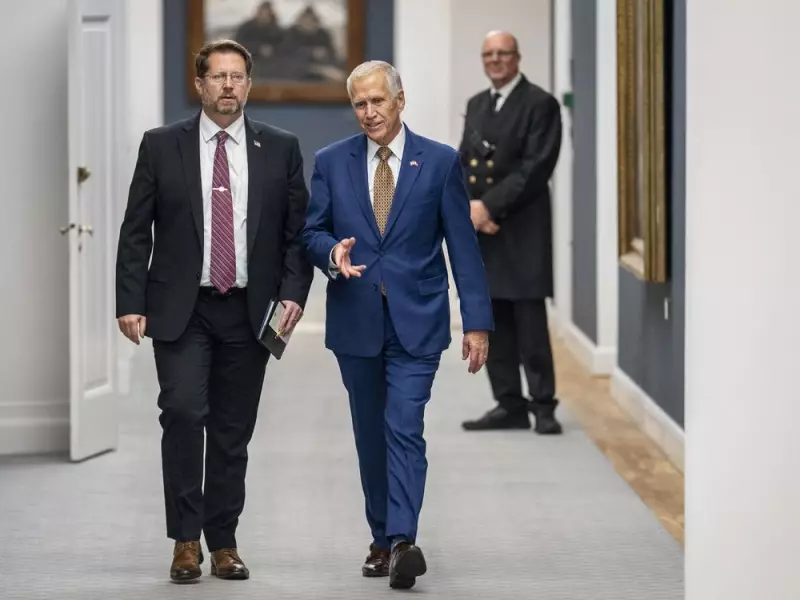
North Carolina Republican Senator Thom Tillis has been particularly vocal, stating on Tuesday that he is working to "de-escalate" the situation involving Greenland and Denmark. Tillis emphasized that any "kinetic action or sort of increase in military presence" would likely trigger a war powers resolution supported by most Senate Republicans.

Potential for Veto-Proof Majority
Tillis went further, suggesting that such a resolution could achieve "veto-proof majorities," meaning at least two-thirds of the 100-member Senate would support it. This assessment was echoed by Kentucky Republican Senator Rand Paul, who told NBC News over the weekend that he had heard of "no Republican support" for a military invasion of Greenland, noting that "even the most hawkish members of our caucus have said they won't support that."
The growing criticism from within the Republican Party represents one of the first significant signals that an increasing number of lawmakers are willing to challenge what they perceive as presidential overreach. At least one Republican has publicly suggested that if Trump were to use military force to seize the Danish territory, it could constitute an impeachable offense and potentially end his presidency.
Diplomatic Efforts and International Relations
Tillis made his comments during the World Economic Forum in Davos, Switzerland, shortly after participating in a bipartisan delegation of U.S. lawmakers who traveled to Denmark to meet with Danish officials and their counterparts from Greenland. Alaska Senator Lisa Murkowski was the only other Republican besides Tillis on the Copenhagen trip, but she indicated afterward that many more party members share her concerns about the president's actions regarding Greenland.
Meanwhile, Democratic lawmakers are considering ways to censure the president over his threats to impose tariffs on European allies who resist his plans for the Arctic territory. This bipartisan concern reflects broader anxieties about the potential damage to international relationships and the precedent of unilateral territorial ambitions.
Broader Implications for Presidential Authority
The Greenland controversy comes after a year in which Trump has repeatedly tested the boundaries of presidential power, often at the expense of congressional authority. While Republicans have generally refrained from challenging these actions, the Arctic territory issue appears to be crossing a threshold that has prompted more vocal opposition from within the party.
Tillis has shown increased willingness to criticize Trump in recent weeks, even threatening to delay approval for the president's forthcoming nomination for Federal Reserve chair following the Justice Department's probe into testimony by current Fed Chair Jay Powell. However, Tillis was careful to frame his Greenland concerns as criticism of "the bad advice he is getting" rather than direct criticism of the president himself.
The situation continues to evolve as lawmakers weigh the balance between supporting their party's president and upholding constitutional checks on executive power, particularly regarding military action and international diplomacy in the strategically important Arctic region.