North Korea Conducts Ballistic Missile Test with Cluster Munitions
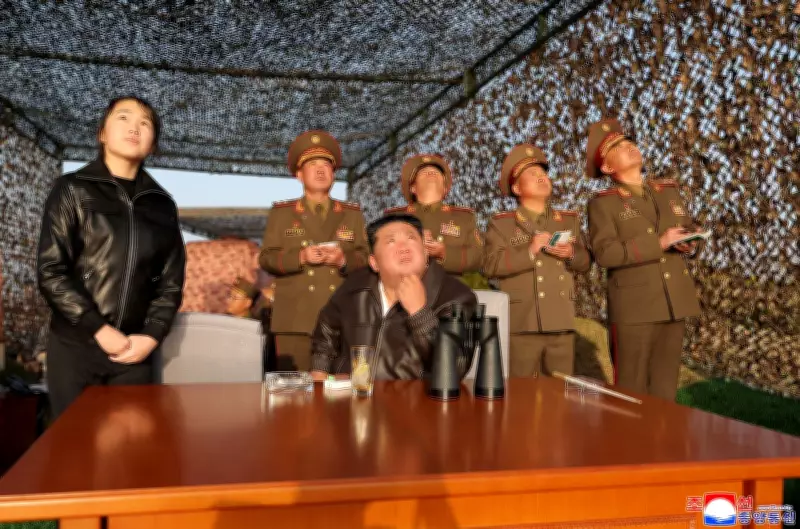
North Korea has carried out a test launch of upgraded surface-to-surface ballistic missiles equipped with cluster munitions, according to state media reports. The event, which took place on Sunday, April 19, 2026, was personally observed by the country's leader, Kim Jong Un, alongside his daughter, as confirmed by the Korean Central News Agency (KCNA).
Details of the Launch Event
The test occurred at an undisclosed location within North Korea, with KCNA releasing photographs showing Kim Jong Un seated and watching the launch with his daughter. Independent journalists were not granted access to cover the event, and the authenticity of the images cannot be independently verified due to restrictions imposed by the North Korean government. The images featured a Korean language watermark reading "KCNA," identifying the source as the state-run news agency.
Cluster munitions, which are controversial weapons that disperse smaller explosives over a wide area, were reportedly part of this test, highlighting ongoing advancements in North Korea's military capabilities. This launch follows a pattern of recent missile tests by the isolated nation, raising concerns in the international community about regional stability and security.

International Context and Verification Challenges
The lack of independent verification underscores the difficulties in assessing North Korea's military activities, as the regime tightly controls information. Analysts note that such tests are often used to demonstrate technological progress and assert strength domestically and internationally. The involvement of Kim's daughter in the observation has sparked speculation about her potential role in future leadership, though official statements from North Korea remain limited.
This event adds to a series of provocative actions by North Korea, including previous missile launches and nuclear tests, which have drawn condemnation from global powers. Experts warn that the use of cluster munitions, banned by many countries due to their humanitarian impact, could escalate tensions in the region.
As of now, no official response has been issued by neighboring countries or international bodies regarding this specific test, but monitoring continues amid heightened vigilance over North Korea's military ambitions.