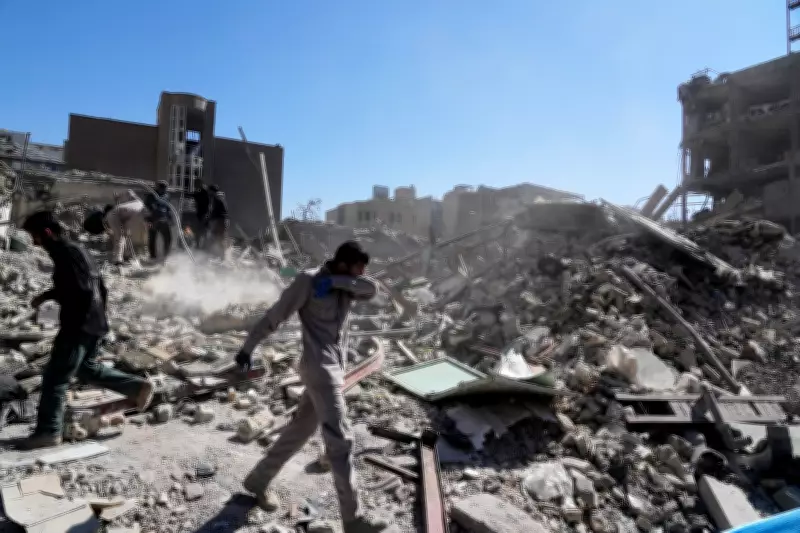
Middle East Conflict Intensifies as Strikes Escalate on Multiple Fronts
The ongoing conflict in the Middle East has entered a critical and dangerous new phase, with military strikes escalating dramatically across the region as the war involving Iran reaches its fourth consecutive day. The situation has deteriorated rapidly, with hostilities expanding on multiple fronts and raising profound concerns about regional stability and global security implications.
U.S. Military Operations Target Iranian Capabilities
Former President Donald Trump has outlined aggressive U.S. military operations against what he described as a "sick and sinister" Iranian regime. In detailed remarks, Trump revealed that American forces are actively "annihilating" elements of the Iranian Navy while systematically destroying missile capabilities throughout the country. These operations represent a significant escalation in the conflict that began earlier this week.
From Istanbul, Trump warned that U.S. attacks will continue unabated as the war in Iran widens beyond initial expectations. Military analysts suggest these strikes represent the most comprehensive assault on Iranian military infrastructure in decades, targeting both conventional forces and proxy networks throughout the region.

Regional Retaliation and Expanding Hostilities
Iran-backed militant groups have launched retaliatory strikes across the Middle East, creating a dangerous cycle of escalation that threatens to draw additional nations into the conflict. These groups have demonstrated sophisticated capabilities in their responses, targeting both military and civilian infrastructure in neighboring countries.
The expanding hostilities have created what military strategists describe as a "multi-front conflict" with fighting occurring simultaneously in several theaters. This complex battlefield situation complicates diplomatic efforts and military planning, as traditional front lines have become increasingly blurred in the modern warfare landscape.
Humanitarian Crisis and Civilian Impact
Hundreds of casualties have been reported in Iran following drone strikes that targeted the U.S. Embassy in Saudi Arabia, highlighting the international dimensions of this conflict. The civilian toll continues to mount as infrastructure damage disrupts essential services and creates humanitarian challenges throughout affected regions.
International organizations have expressed grave concern about the potential for mass displacement and refugee crises as the conflict intensifies. Medical facilities in several countries report being overwhelmed with casualties, while supply chains for essential goods face severe disruption.
Global Economic and Diplomatic Ramifications
The conflict has already triggered significant economic consequences, with energy prices surging as tanker disruptions and facility shutdowns rattle global supply chains. The latest Middle East flare-up is driving crude oil and fuel prices higher, creating inflationary pressures worldwide.
Diplomatically, the situation has created complex challenges for international relations. Canada has urged its citizens to avoid all travel to ten countries as the conflict spreads throughout the Middle East, reflecting growing concerns about regional instability. Meanwhile, trade and defense agreements are being reassessed as nations position themselves in response to the evolving crisis.
Diaspora Communities Grapple with Conflict Fallout
Iranian diaspora communities worldwide are experiencing profound impacts from the escalating conflict. In Calgary, the Iranian community finds itself divided following recent military actions, with debates raging about the appropriate response to developments in their homeland. Similar divisions are emerging in other diaspora communities as families grapple with concerns about relatives in affected regions.
In Regina, Iranian Canadians are reflecting on their future as the Middle East conflict intensifies, with many expressing anxiety about both personal connections to the region and broader implications for global security. These community divisions mirror the complex geopolitical landscape unfolding in real-time.

Cybersecurity Dimensions and Digital Warfare
The conflict has extended into the digital realm, with hackers targeting Iranian apps and websites following U.S.-Israeli strikes. This cyber dimension represents a new frontier in modern warfare, where digital infrastructure has become as critical as physical military assets.
Security experts warn that these cyber attacks could escalate further, potentially affecting critical infrastructure beyond the immediate conflict zone. The integration of digital warfare tactics adds another layer of complexity to an already volatile situation.
Uncertain Future and Prolonged Conflict Concerns
Military analysts express growing concern about the potential duration of this conflict, with Trump suggesting the war could last weeks rather than days. The expanding nature of hostilities and the involvement of multiple state and non-state actors create conditions for a prolonged confrontation with unpredictable outcomes.
As the conflict enters its fourth day, fundamental questions remain unanswered about exit strategies and diplomatic resolutions. The international community watches with apprehension as what began as a regional confrontation threatens to evolve into a broader conflict with global implications that could reshape Middle Eastern geopolitics for years to come.