Macron Unveils New Nuclear Deterrence Framework with European Allies
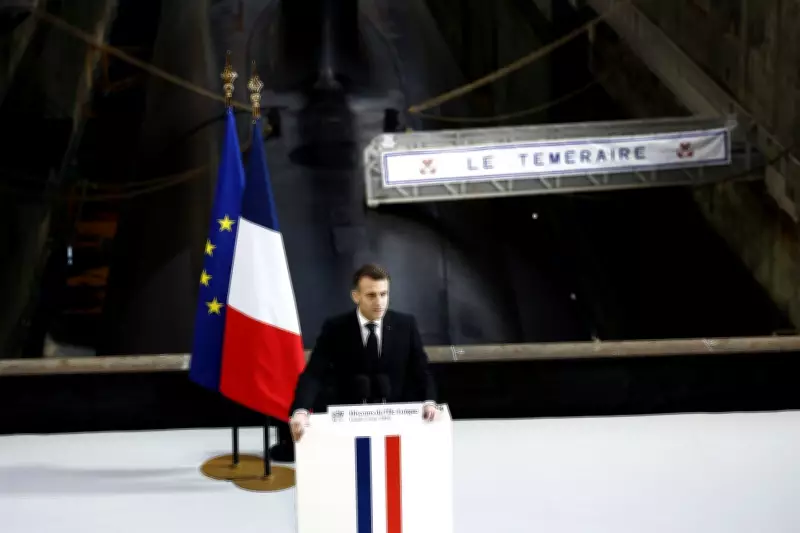
French President Emmanuel Macron has detailed a groundbreaking deterrence strategy that integrates eight European allies while firmly maintaining France's exclusive authority over its nuclear arsenal. This announcement was made during a significant address at the Nuclear Submarines Navy base of Ile Longue in Crozon, France, on March 2, 2026, where Macron stood beside the submarine 'Le Temeraire' (The Temerarious).
A Strategic Shift in European Defense
The new strategy marks a pivotal evolution in France's defense posture, emphasizing enhanced cooperation with key European partners without compromising national sovereignty over nuclear capabilities. Macron emphasized that this approach is designed to bolster collective security across the continent in response to escalating global uncertainties and regional conflicts.
Key elements of the strategy include:

- Involvement of eight unspecified European allies in deterrence discussions and planning.
- France's unwavering retention of sole control over the activation and deployment of its nuclear weapons.
- A focus on strengthening diplomatic and military ties to address emerging threats.
Context and Implications
This move comes amid a backdrop of heightened tensions, including recent drone strikes on the U.S. Embassy in Saudi Arabia and ongoing conflicts in the Middle East, which have prompted nations to reassess their security frameworks. Macron's speech underscores France's commitment to playing a leading role in European defense, leveraging its nuclear deterrent as a cornerstone of stability.
Analysts suggest that this strategy could redefine NATO dynamics and influence broader international relations, particularly as countries like Russia and Iran continue to pose challenges to global security.
The initiative reflects a careful balance between fostering alliance solidarity and preserving France's autonomous decision-making power, a principle long cherished in French military doctrine. As Macron stated, "Our deterrence remains a sovereign tool, but one that serves a shared European interest."