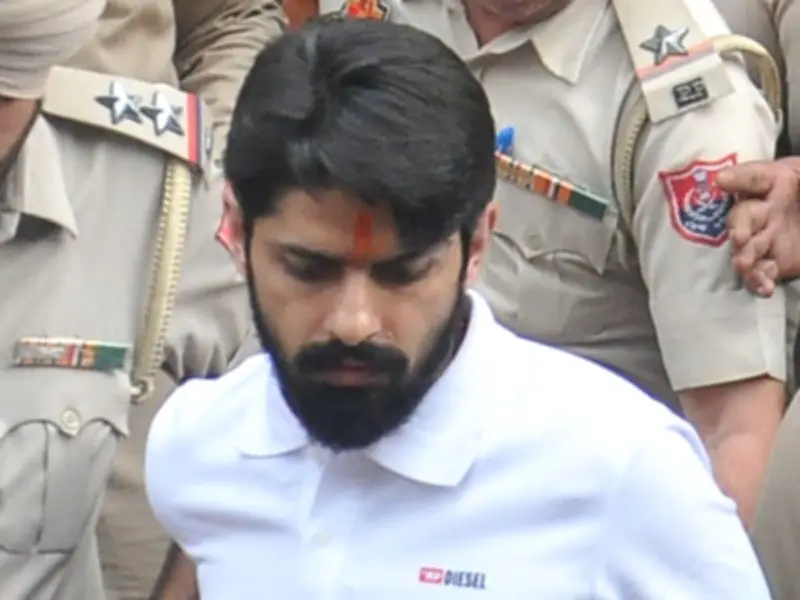
Lawrence Bishnoi, a 33-year-old Indian gangster who has been imprisoned for over a decade, is accused of orchestrating a growing global network of violence from his jail cell, including ordering one of Canada's highest-profile recent murders. On Tuesday, he became the centrepiece of a sweeping international law enforcement operation led by the United States, involving Canadian and European police agencies.
From Student Politics to Transnational Crime
Bishnoi's background is unexpectedly conventional. Born in Punjab, northwestern India, his father was a former policeman in the neighbouring state of Haryana. In 2010, Bishnoi enrolled at Panjab University, where he entered student politics—a rough-and-tumble arena where violence and dramatic action were key to success. He continued his studies to obtain a law degree. As a student council leader, his police file grew; his first significant criminal complaint was torching a rival student leader's car.
That early lesson—that intimidation through violence brings success—appears to have shaped his trajectory. Several of his student allies stayed with him, forming the core of a network that soon outgrew campus life. According to a U.S. criminal indictment, Bishnoi “traded campus politics for criminal activity and refashioned his associates and followers into a criminal organization.”

Prison-Based Empire
Bishnoi was imprisoned in India in 2015 on charges that have kept him in custody through ongoing trials and hearings, without a final conviction. It was while incarcerated that his network evolved into a transnational criminal syndicate, authorities allege. Members moved abroad, targeting the Indian diaspora, particularly members of India's Sikh minority. The Bishnoi organization is headquartered in India, but thousands of its members and associates have spread to cities across the United States, Canada, the United Kingdom, Europe, Australia, and elsewhere.
Despite his physical absence from the streets, Bishnoi's name has become legendary—an ominous ghost—in India and in Canadian suburbs, where murder, extortion, shootings, arsons, and threats have frustrated police and stoked community fear. His apparent impunity has only boosted his influence, authorities say.
International Crackdown
The recent U.S.-led operation marks a significant test of Bishnoi's power. He now faces serious charges, including allegedly ordering a murder in Canada that has drawn international attention. The case highlights the growing challenge of prison-based gang leaders who use modern communication to direct violent campaigns across borders. Canadian police have been particularly vocal about the Bishnoi network's impact, linking it to a series of targeted attacks and extortion schemes against the Sikh community in Canada.
The indictment underscores how Bishnoi's organization has adapted to global migration patterns, with members embedding themselves in diaspora communities to carry out crimes. Authorities believe the network's reach extends to drug trafficking, weapons smuggling, and contract killings, making it one of the most dangerous Indian-origin criminal groups operating internationally.
Background and Early Life
Bishnoi's rise from a law student to a feared gangster is rooted in the volatile mix of student politics and regional crime in Punjab. His father's background as a policeman gave him some insight into law enforcement, but Bishnoi chose a different path. After the car-torching incident, his criminal activities escalated, leading to his arrest and eventual imprisonment. Yet, from behind bars, he has maintained control over his network, using encrypted communications and a loyal cadre of lieutenants to execute orders.
The case has drawn comparisons to other prison-based crime bosses, but Bishnoi's global footprint is unusually large for an Indian gangster. His ability to inspire fear and loyalty among members abroad has made him a priority target for international law enforcement.

Impact on Canada
In Canada, the Bishnoi gang's activities have included high-profile murders, arson attacks on businesses, and threats against community leaders. The RCMP and local police have struggled to contain the violence, which has eroded trust among diaspora communities. The U.S. indictment charges Bishnoi with conspiracy to commit murder and other offenses, alleging he directed a plot that led to a killing in British Columbia. The victim was a prominent Sikh activist, according to sources familiar with the case.
The operation against Bishnoi involved coordinated arrests in multiple countries, seizures of assets, and the dismantling of key cells. Authorities hope the charges will disrupt the network's operations and send a message that prison-based leadership does not grant immunity.