Former Canadian Defense Minister's Startup Juno Secures Funding for Arctic Security Initiative
Vancouver-based defense technology startup Juno Industries Inc., chaired by Canada's former defense minister Harjit Sajjan, is actively raising capital as the nation accelerates its military modernization efforts. The company aims to close a Series A funding round of approximately $10 million by mid-April, according to CEO Hunter Scharfe.
Funding and Growth Strategy
Hunter Scharfe revealed in an interview that Juno anticipates completing this initial funding phase soon, with plans for subsequent rounds to support testing, hiring, and facility expansion. "We will probably be doing another round quite quickly after that," Scharfe stated, emphasizing the company's rapid growth trajectory. Currently employing about 20 people, Juno expects to double its workforce in the coming weeks as it scales operations.
Arctic Security Product Launch
Juno, founded in April of last year, announced the development of its inaugural product called Polar Nexus—a sophisticated hub designed for communications, drones, and sensors in Arctic environments. This system represents the first in what Scharfe describes as "many sensor nodes and deploy platforms" from the company. Polar Nexus is being manufactured in collaboration with Critical Infrastructure Technologies Ltd., targeting the unique challenges of Arctic security.

Leadership and Strategic Vision
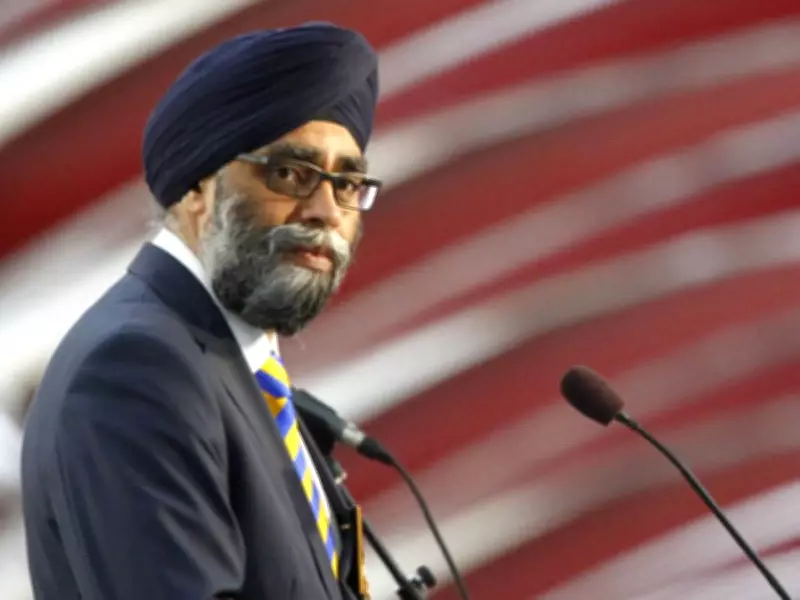
The startup's executive chairman, Harjit Sajjan, served as Canada's defense minister from 2015 to 2021 and previously as an officer in the Canadian Armed Forces. Juno has also enlisted former Royal Canadian Air Force commander Michael Hood as an adviser, strengthening its defense sector connections. Sajjan confirmed that Juno is currently engaged in discussions with the Canadian armed forces regarding potential collaborations.
Positioning as a 'Neo-Prime' Contractor
Juno aspires to become what industry insiders call a "neo-prime" defense contractor—a fast-growth startup competing directly with traditional prime contractors like Lockheed Martin Corp. This model mirrors successful companies such as Anduril Industries Inc., which have disrupted the defense technology landscape with innovative approaches to national security.
"Autonomous systems are going to become the forefront of defense investment," Scharfe explained, highlighting the increasing importance of data capabilities in modern warfare. "Those systems are very powerful and have a lot of different data capabilities. But the issue is what platform will be trusted to trawl through the data, interpret it, and provide officials options for action. Juno absolutely wants to be that platform."
Market Context and National Priorities
The company's emergence coincides with significant increases in Canadian defense spending. Prime Minister Mark Carney recently announced that Canada has met its NATO commitment to allocate two percent of GDP to defense, with plans to elevate this to 3.5 percent by 2035, plus an additional 1.5 percent for related infrastructure. Carney has pledged to prioritize domestic military procurement over U.S. suppliers, creating favorable conditions for Canadian defense businesses.
Juno draws inspiration from successful defense technology firms like Anduril and Palantir Technologies Inc., particularly noting Palantir's Maven artificial intelligence system adopted by the Pentagon. The startup's mission to reestablish "Canadian dynamism" echoes the "American Dynamism" initiative of venture capital firm Andreessen Horowitz, which funds projects aligned with national interests.
As Canada embarks on what Scharfe describes as a "historic military build-up," Juno Industries positions itself at the forefront of technological innovation in Arctic security, leveraging its leadership's defense expertise and the nation's renewed commitment to sovereignty and defense capabilities.