Iran Conflict Exposes Critical Gaps in Canada's Defense Capabilities
The ongoing war in Iran has cast a harsh spotlight on the vulnerabilities within Canada's national defense framework, revealing significant dependencies on foreign military suppliers and highlighting shortcomings in domestic resource development. Recent parliamentary committee testimony from senior government officials has underscored the gap between ambitious policy goals and practical realities in Canada's defense sector.
Parliamentary Testimony Reveals Defense-Resource Nexus
Wendy Hadwen, assistant deputy minister of policy-industry at the Department of National Defence, and Isabella Chan, senior assistant deputy minister of lands and minerals at Natural Resources Canada, presented before the defense committee this week. Their testimony focused on the critical connection between national security and Canada's mineral resources sector, emphasizing the country's theoretical advantages in critical minerals like germanium, lithium, and titanium.
However, the reality falls short of the rhetoric. While officials spoke of "Canada's strong advantage" and being in "a unique and fortunate position," the actual mining infrastructure remains underdeveloped. Statistics indicate only 56 active mines exist from a potential list of 170 proposed projects, with approval processes moving at glacial speeds that undermine Canada's aspirations to become a critical-minerals superpower.

Defense Industrial Strategy Faces External Pressures
The government's recently launched Defence Industrial Strategy aims to strengthen sovereignty through massive domestic investments, with a "Build-Partner-Buy" approach targeting 70 percent domestic procurement compared to the current 30 percent. This strategy seeks to reduce reliance on foreign suppliers and create jobs while bolstering national security.
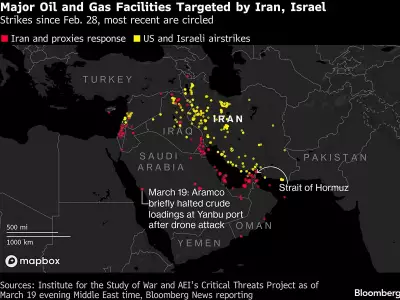
Yet the Iran conflict has exposed how external shocks can disrupt even the best-laid plans. Industry sources indicate that the massive consumption of surface-to-air missiles in the Gulf region—where approximately 800 Patriot missiles have reportedly been fired—is creating supply chain pressures that could trigger "force majeure" contingencies for manufacturers.
Missile Shortages Threaten Canadian Defense Plans
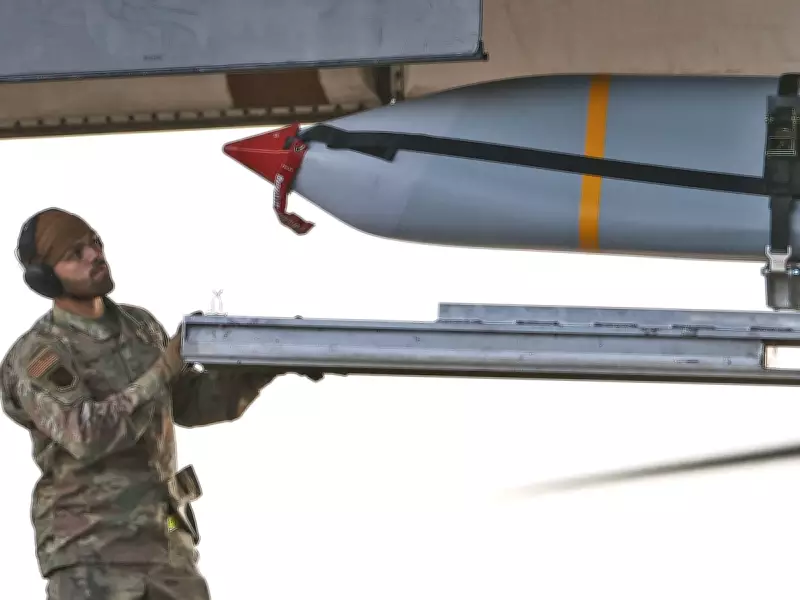
Lockheed Martin, a primary manufacturer of Patriot missiles, produces only about 500 annually, though production is increasing toward a long-term goal of 2,000 per year. Should host countries prioritize replenishing their own missile stocks before exporting—as force majeure provisions might require—countries like Canada that don't manufacture such munitions could face critical shortages regardless of existing contracts.
This potential shortage echoes concerns already expressed by Ukrainian President Volodymyr Zelenskyy regarding missile supplies if the Gulf conflict persists. For Canada, the implications are particularly significant for the planned multi-billion-dollar Ground-Based Air Defence system scheduled for implementation by 2029 to protect key infrastructure.
The first phase of this plan involves purchasing Saab RBS 70 NG portable air defense systems for Canadian Forces stationed in Latvia—a procurement that could be jeopardized by global supply constraints resulting from the Iran conflict.
Strategic Implications for Canadian Sovereignty
The current situation highlights a fundamental tension in Canada's defense posture: while political will, strategic planning, and funding may be aligning, practical implementation faces substantial hurdles. The slow development of critical mineral resources combined with dependence on foreign missile supplies creates vulnerabilities that external conflicts like the war in Iran can exploit.
Canada's defense capabilities remain less sovereign than official statements suggest, with the gap between aspiration and reality becoming increasingly apparent as global tensions escalate. The Iran conflict serves as a stark reminder that national security depends not only on strategic planning but also on resilient supply chains and timely resource development—areas where Canada still has significant work ahead.