Iran's Foreign Minister Takes Defiant Stance on Nuclear Program
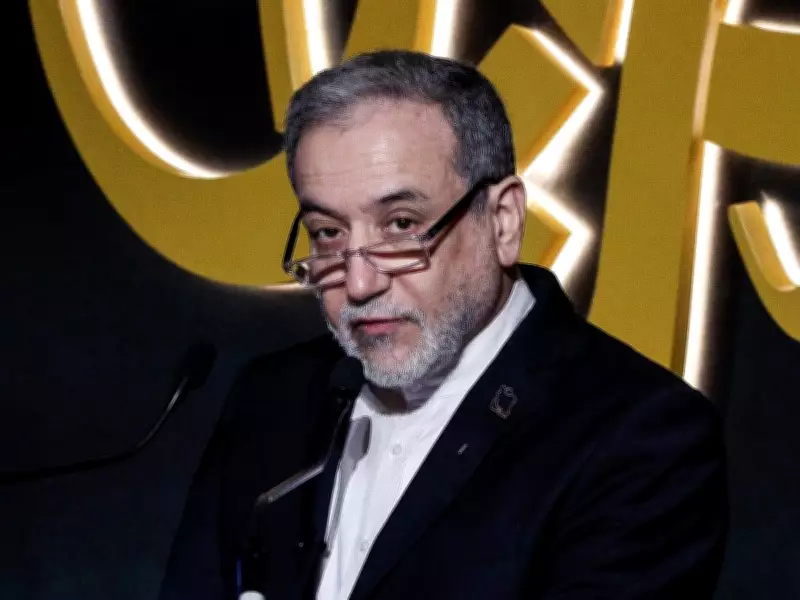
In a bold declaration that sharpens the ongoing standoff over its nuclear ambitions, Iran's Foreign Minister Abbas Araghchi has vowed that Tehran will never abandon uranium enrichment, even if it leads to conflict with the United States. The statement, made during a forum in the capital, underscores Iran's unwavering commitment to its nuclear program despite intense international pressure.
'No Right to Dictate Our Behaviour'
Araghchi emphasized that the Islamic Republic has paid a heavy price for its peaceful nuclear program and uranium enrichment efforts. "Why do we insist so much on enrichment and refuse to give it up even if a war is imposed on us? Because no one has the right to dictate our behaviour," he asserted, according to reports from AFP. This defiant rhetoric highlights Iran's determination to maintain control over its nuclear activities, framing it as a matter of national sovereignty.
The foreign minister also addressed the U.S. military deployment in the region, dismissing it as ineffective. "The show of force does not scare us," he stated, reinforcing Iran's resistance to external coercion. This comes amid heightened tensions in the Gulf region, where U.S. forces have been bolstered in response to Iran's nuclear advancements.

Diplomatic Engagements and Mixed Signals
Araghchi's comments follow recent diplomatic engagements, including a meeting with U.S. Special Envoy to the Middle East Steve Witkoff in Oman. President Donald Trump described the nuclear talks as "very good," suggesting a potential opening for dialogue. Iranian President Masoud Pezeshkian echoed this sentiment in a social media post, writing in Persian that the talks were a step forward and emphasizing dialogue as Iran's strategy for peaceful resolution.
However, Pezeshkian also reiterated Iran's stance on nuclear rights under the Non-Proliferation Treaty, stating that while the nation responds to respect, it does not tolerate the language of force. This dual approach reflects the complex dynamics at play, with Iran balancing diplomatic overtures with firm assertions of its nuclear prerogatives.
Escalating Tensions and Military Posturing
Tensions continue to mount as Trump has warned Iran against cracking down on protesters and hinted that military action could be averted if negotiations progress. On Friday, the American leader told reporters that "we're in no rush," but cautioned that consequences would be "very steep" if a deal is not reached, as reported by The Hill.
Adding to the military dimension, Witkoff boarded the USS Abraham Lincoln in the Arabian Sea over the weekend, accompanied by U.S. Central Command head Adm. Brad Cooper and Jared Kushner, Trump's son-in-law and unofficial adviser. This visit to the carrier strike group underscores the U.S. military buildup in the region, aimed at deterring Iranian aggression while supporting diplomatic efforts.
Broader Implications for Global Security
The ongoing standoff between Iran and the United States has significant implications for global security and Middle East stability. Key points to consider include:
- Iran's insistence on uranium enrichment as a sovereign right, despite international concerns over nuclear proliferation.
- The role of diplomatic channels, such as the talks in Oman, in de-escalating tensions while addressing core issues.
- The impact of U.S. military deployments on regional dynamics and Iran's response to perceived threats.
- The potential for further escalation if negotiations fail, with both sides prepared for conflict scenarios.
As the situation evolves, the international community watches closely, hoping for a peaceful resolution that addresses security concerns while respecting Iran's rights under international treaties. The defiant statements from Iran's leadership, coupled with U.S. military posturing, suggest that the path forward remains fraught with challenges and uncertainties.