Iranian Missile Breaches Israeli Defenses, Strikes Near Nuclear Research Town
A direct strike by an Iranian ballistic missile has ripped through residential buildings in the southern Israeli town of Dimona, wounding dozens of people and shattering the sense of security for residents who live near a key nuclear research facility. The attack, which occurred on March 21, 2026, marks a significant and dangerous escalation in the ongoing conflict between Israel and Iran, with the projectile managing to bypass Israel's much-vaunted air defense systems.
Residents Express Shock and Disbelief
Galit Amir, a 50-year-old care provider in Dimona, told AFP that she had always believed the presence of the Shimon Peres Negev Nuclear Research Center on the edge of her hometown would ensure robust protection. "We thought we were safe," she said, describing how the missile strike tore apart that assumption. "Dimona is the most safe place in Israel. We didn't expect this." Amir runs a care home not far from the nuclear site, where six people suffered minor injuries during the attack.
The strike hit a residential neighborhood just kilometers from the facility, which is officially dedicated to research but widely believed by analysts to house Israel's undeclared nuclear arsenal. Israel maintains a policy of "strategic ambiguity" regarding its nuclear capabilities, neither confirming nor denying possession of such weapons.

Widespread Destruction and Reluctance to Discuss Nuclear Presence
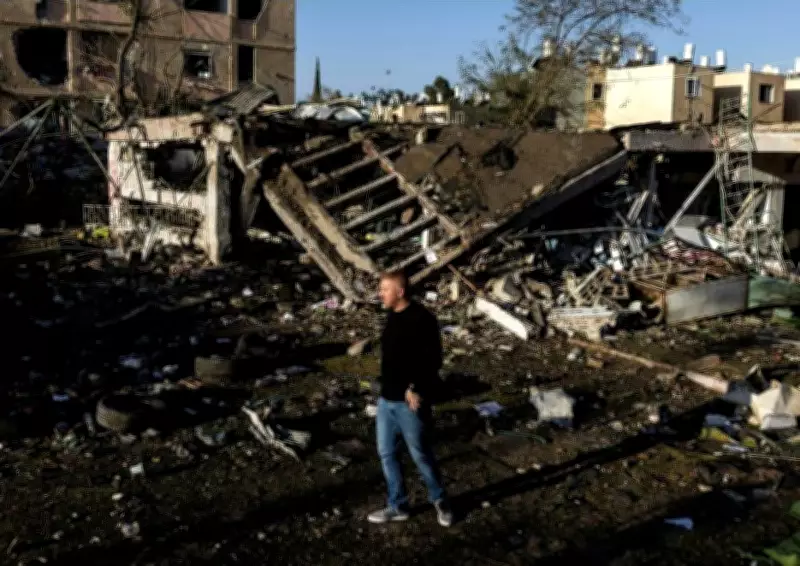
In the aftermath of the attack, the scale of destruction in Dimona was jarring. Debris stretched as far as the eye could see, including:
- Chunks of concrete and collapsed walls
- Shattered glass and twisted metal scattered everywhere
- Nearby houses blown apart, sometimes leaving only load-bearing walls standing
- Signs of everyday life like an exercise ball and dog food bag visible in the dust
Despite the devastation, many residents were reluctant to discuss the sensitive issue of the nuclear facility nearby. When asked about safety concerns, one young woman standing outside her home—with its front door blown inward—insisted, "They hit a textile factory, that's all." David Azran, a 54-year-old contractor whose home was near the impact point, similarly denied the facility's existence, stating, "There is no nuclear research facility." Azran, who had a rifle slung over his shoulder, added, "I don't feel threatened. I have faith."
Escalation in Regional Conflict
Iran stated that the missile launch was in response to an earlier strike on its own nuclear facility at Natanz, highlighting the tit-for-tat nature of the conflict. The attack on Dimona, a town of approximately 40,000 people nestled in the Negev desert, has thrust it into the global spotlight as a flashpoint in Middle East tensions.
Just hours after the Dimona strike, another Israeli town nearby was hit by another direct missile attack, compounding the crisis. The failure of Israel's air defenses to intercept the projectile raises serious questions about the country's security preparedness and the evolving threat landscape in the region.
As residents grapple with shock mixed with resignation, the incident underscores the precarious balance between secrecy and safety in areas hosting sensitive military installations. With little official information emerging about the Dimona site, the attack serves as a stark reminder of the vulnerabilities that exist even in supposedly well-protected locations.