Retired General Condemns Trump's Leadership Amid Iran Conflict
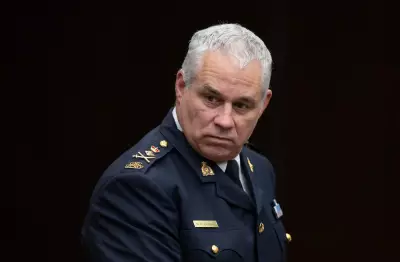
Retired U.S. Army Brigadier General Steve Anderson delivered a scathing critique of President Donald Trump on Tuesday, labeling him "an absolutely terrible commander in chief" during a CNN appearance. The veteran's comments came in response to Trump's escalating threats against Iranian civilian infrastructure, which Anderson warned could lead to Nuremberg-style trials for American leaders.
Trump's Threatening Ultimatum
On Easter Sunday, President Trump issued a staggering ultimatum to Iran, threatening to bomb the nation's bridges and power plants if it failed to reopen the Strait of Hormuz by 8 p.m. ET on Tuesday. The strategic waterway facilitates approximately one-fifth of global oil transportation, making it crucial to international energy markets. Trump reinforced his position with a chilling declaration: "A whole civilization will die tonight."
Military Leadership Under Fire
During his interview on CNN's "News Central" with host Kate Bolduan, Anderson expressed deep concerns about presidential leadership. "We already knew that Donald Trump was a pretty bad president, but now we know that he's an absolutely terrible commander in chief, as well," Anderson stated. He highlighted what he described as contradictory messaging and policy vacillation regarding American objectives in Iran.

The retired general questioned: "Does he support the Iranian people? Does he not? Does he want regime change? Does he not? Do the allies stick with us? Does he need them? I mean, it goes on and on... This guy is just not competent in terms of leading this force."
Mounting Human and Strategic Costs
The ongoing conflict has already extracted a heavy toll, with at least 13 U.S. military service members and more than 2,000 Iranians reported killed. Anderson noted that despite the hostilities, Iran has actually increased its oil exports since the war began—a development he characterized as "the greatest geopolitical blunder that the United States has ever committed in its history."
Trump has provided multiple, sometimes contradictory justifications for initiating military action, while repeatedly extending his deadline regarding the Strait of Hormuz. Anderson predicted this pattern would continue, stating, "I believe that he'll figure out a way to either extend the deadline, because there's no way that he can do what he says he's going to do."
War Crimes and Historical Parallels
The retired veteran issued his most severe warning when discussing the potential bombing of civilian targets. "If he were to do that, it would be... the commitment of a great war crime," Anderson told Bolduan. He drew explicit parallels to post-World War II justice, adding, "I'm old enough to remember the Nuremberg trials and how we've held the Germans accountable after the atrocities they committed during World War II."
In 1946, twelve high-ranking Nazi officials received death sentences at Nuremberg for their roles in wartime atrocities. Under international law, the deliberate destruction of civilian infrastructure constitutes war crimes—a legal reality that contrasts sharply with Trump's Monday defense of his threats, during which he referred to Iranians as "animals."
A Warning for Future Accountability
Anderson expressed concern about potential future consequences for American military personnel and leaders. "I'd hate to think, you know, five, ten years from now, we'd be doing the same kind of thing with American soldiers and leaders that made decisions that were being directed by the president of the United States that are illegal," he stated.
The retired general further criticized Trump for failing to provide U.S. soldiers with "clear objectives" to execute, compounding what Anderson views as a disastrous foreign policy approach that threatens to plunge the globe into an energy crisis while undermining America's moral standing and strategic interests.