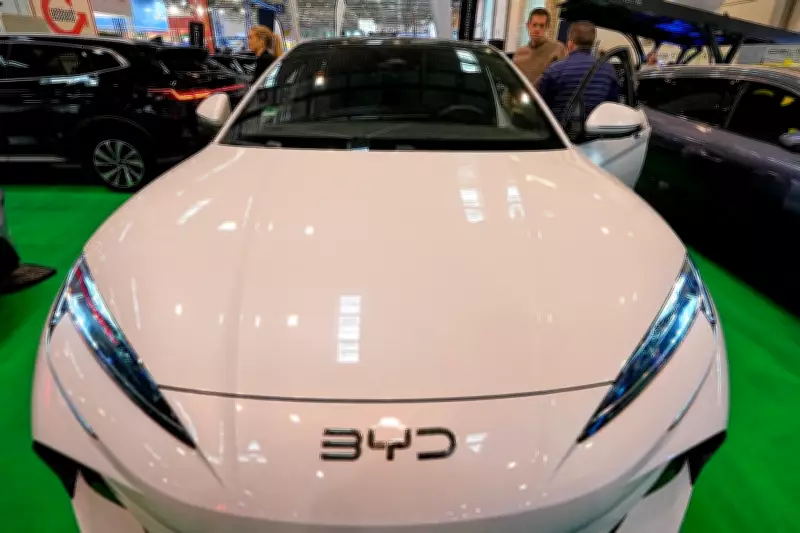
Security Expert Calls for Canada to Mirror Poland's Chinese Electric Vehicle Ban at Military Installations
A prominent security analyst is urging the Canadian government to implement a prohibition on Chinese-made electric vehicles at military bases, aligning with a recent policy enacted by Poland. The expert contends that such a measure is critical to safeguard national security and prevent potential espionage activities.
Poland's Precedent and the Growing Security Debate
Poland instituted a ban on Chinese electric vehicles, including popular models from manufacturers like BYD, at its military facilities earlier this year. This decision was driven by apprehensions regarding data security and the possibility of embedded surveillance technology within these vehicles. The expert emphasized that Canada should "absolutely" adopt a similar stance to mitigate comparable risks.
The core concern revolves around the sophisticated software and connectivity features standard in modern electric vehicles. These systems could potentially be exploited to gather sensitive information or even disrupt operations at secure locations. With military bases housing critical infrastructure and confidential data, the vulnerability introduced by foreign-made EVs is deemed unacceptable by security professionals.

Broader Implications for Canadian Policy and Trade
This recommendation arrives amid a complex backdrop of international trade and domestic policy discussions. Notably, Quebec Premier François Legault recently dismissed concerns from Ontario Premier Doug Ford regarding the province's ambitious electric vehicle targets. Simultaneously, British Columbia Premier David Eby is promoting his province as a "stable jurisdiction" during a trade mission to China, highlighting the delicate balance between economic engagement and security priorities.
The push for a ban also intersects with ongoing debates about environmental goals and technological sovereignty. As Canada advances its green transportation initiatives, ensuring the security of the technology underpinning this transition becomes paramount. The expert's advice suggests that national security considerations must take precedence, potentially influencing procurement policies and bilateral trade relations.
Industry Response and Future Considerations
The automotive industry, particularly segments invested in electric vehicle adoption, may view such a ban as a significant hurdle. However, proponents argue that security protocols must evolve alongside technological advancements. The situation mirrors broader global tensions, where technological dependence on certain nations is increasingly scrutinized through a security lens.
As the federal government evaluates this recommendation, it will need to weigh the expert's warnings against diplomatic and economic factors. The outcome could set a precedent for how Canada manages the intersection of emerging technology, environmental policy, and national defense in an increasingly digital and geopolitically charged world.