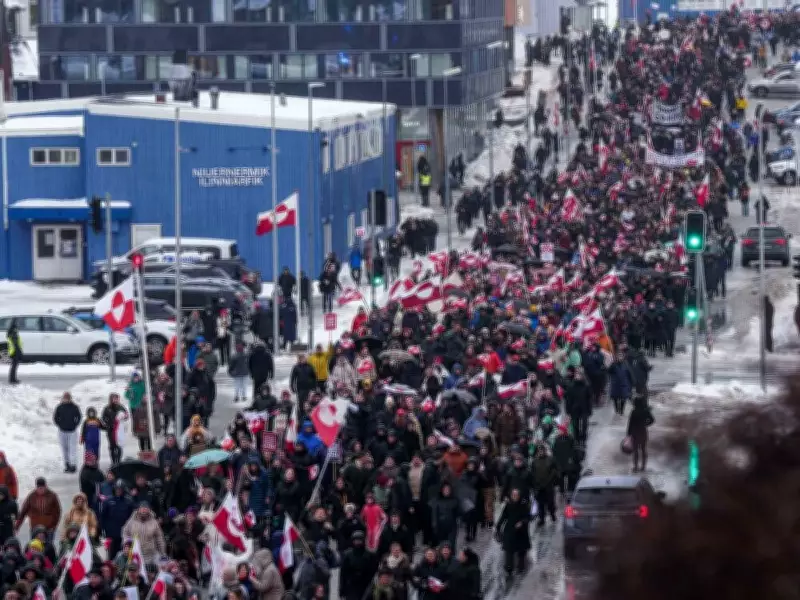
Denmark Prepared to Destroy Greenland Runways Amid U.S. Invasion Fears
In a dramatic revelation of escalating Arctic tensions, the Danish military dispatched explosives and critical blood supplies to Greenland in January as part of contingency planning for a potential U.S. attack. This extraordinary preparation unfolded as diplomatic relations with former President Donald Trump deteriorated over his persistent efforts to gain control of the strategically vital Arctic island.
Military Preparations Revealed
According to a comprehensive report by DR, Denmark's public broadcaster, Danish troops deployed to Greenland at the beginning of the year carried sufficient explosives to completely destroy the island's primary runways. These critical aviation facilities are located near the capital city of Nuuk and at the former fighter base in Kangerlussuaq. The military personnel were additionally equipped with blood supplies specifically intended for potential combat situations, underscoring the seriousness of their preparations.
Two separate European officials confirmed the DR report on Thursday, detailing how Denmark sought to substantially increase the potential costs for Trump should he attempt to use military force to seize Greenland. This strategic approach received explicit backing from both France and Germany, creating a unified European front against what was perceived as an unprecedented threat to NATO alliance stability.

European Solidarity Against Trump's Threats
"We were very worried this was going to go really wrong," disclosed one European official regarding Trump's repeated January threats concerning Greenland. The former president's aggressive posture followed his successful intervention in Venezuela, where he helped topple President Nicolás Maduro. This victory apparently emboldened Trump, leading European officials to fear similar actions might be contemplated against Greenland.
Danish Prime Minister Mette Frederiksen characterized the situation as "the worst foreign policy situation since the second world war." She credited European cooperation as the primary factor that eventually improved circumstances, stating that "the only reason we are today in a better situation...is because we have European co-operation."
Covert Military Exercises and Diplomatic Resolution
Denmark coordinated with several European nations including France, Germany, and Nordic countries to deploy troops to Greenland under the guise of planned military exercises. Officials in Copenhagen maintained these exercises had been properly reported to the U.S. Defense Department. However, the actual purpose, according to the DR investigation, was to prepare for a possible American attack and ensure any takeover of Greenland would require hostile military action.
"The French were incredibly helpful," revealed a second European official. "They understood straight away that we needed a plan." This European solidarity proved crucial in developing a coordinated response to what was perceived as a genuine threat to Arctic sovereignty and NATO alliance integrity.
Diplomatic De-escalation and Ongoing Negotiations
The immediate crisis was ultimately defused through diplomatic channels, with NATO Secretary-General Mark Rutte playing a pivotal role. The veteran European politician successfully convinced Trump during the World Economic Forum in Davos to accept the framework of a "future deal" with Denmark regarding Greenland's status.
Prime Minister Frederiksen confirmed that high-level negotiations continue with American representatives, seeking a potential compromise that respects both Danish and Greenlandic sovereignty concerns. "I hope for an agreement, but as I have said, Trump's desire to take over Greenland remains intact," she cautioned, indicating that underlying tensions persist despite the diplomatic progress.

Long-Term Implications and Regional Concerns
The DR report involved interviews with twelve senior government, military, and intelligence officials across Denmark, France, and Germany, revealing how preparations intensified following Trump's Venezuelan intervention. "After Venezuela, they thought they could walk on water. Let's take this thing, and this country," observed a third European official, capturing the apprehension that spread through European capitals.
While immediate fears have somewhat subsided, one former Danish minister offered a sobering assessment: "Greenland has not gone away. It's only sleeping." This statement reflects ongoing concerns about Arctic sovereignty and the potential for renewed tensions over Greenland's strategic importance in an increasingly contested polar region.
The revelation of Denmark's military preparations highlights the extraordinary measures European nations were willing to take to defend against what they perceived as a genuine threat from a traditional ally. The episode underscores the fragility of international alliances when confronted with unilateral actions and the importance of multilateral cooperation in maintaining global stability.