Prime Minister Mark Carney Announces Sweeping Defence Industrial Strategy in Montreal
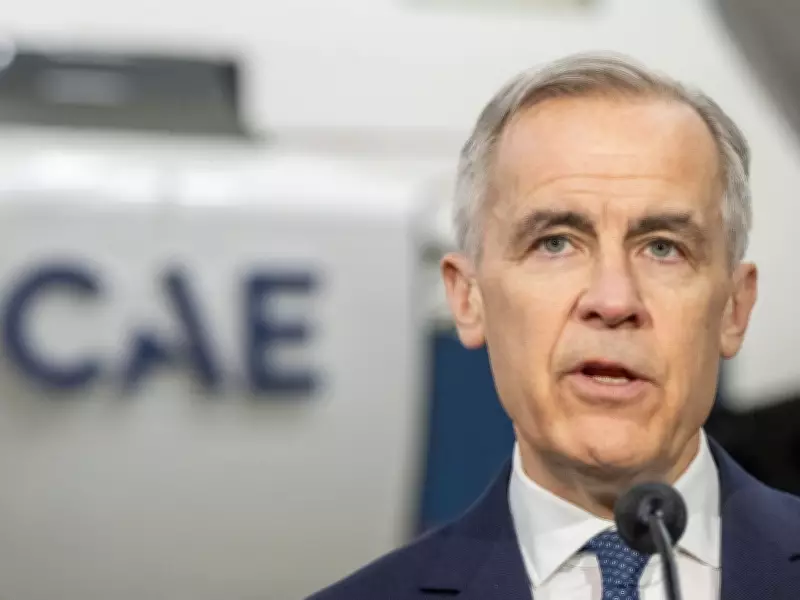
Prime Minister Mark Carney traveled to Montreal on Tuesday, February 17, 2026, to unveil a comprehensive new defence industrial strategy for Canada. The announcement, originally scheduled for a week earlier in Halifax, was delayed due to the tragic shooting incident in Tumbler Ridge, British Columbia. Instead, Carney made the pivotal announcement at the facilities of flight simulation company CAE Inc., outlining a bold vision for bolstering Canada's defence capabilities while stimulating domestic economic growth.
Substantial Defence Spending Commitments
Standing before an audience that included CAE employees, Carney declared ambitious spending targets that would significantly reshape Canada's defence landscape. The prime minister committed to doubling defence expenditures by the end of the decade, representing an additional $80 billion over the next five years alone. Beyond this, Carney announced Canada would invest an additional $45 billion annually on domestic resilience as part of NATO commitments, generating both security and economic advantages.
"Over the next decade, Canada will invest $180 billion directly in defence procurement, $290 billion in defence- and security-related infrastructure, and create over $125 billion in additional downstream economic benefits," Carney stated confidently.

According to official documentation from the Prime Minister's Office, this strategic initiative is projected to yield substantial economic returns. The Defence Industrial Strategy aims to create approximately 125,000 high-paying careers, increase defence exports by 50%, raise the share of defence acquisitions awarded to Canadian firms to 70%, and grow Canadian defence industry revenues by an impressive 240%.
Infrastructure and Procurement Details
The Carney government outlined specific infrastructure investments planned over the coming ten years. These include:
- 21,000 new military buildings
- 11,740 military housing units
- 5,500 kilometers of roads
- Expanded land for training exercises and airfields
Carney introduced a new procurement framework called "build, partner, buy" that prioritizes Canadian companies. Under this approach, domestic manufacturing will be the preferred option when possible, followed by international partnerships, with direct purchasing reserved only for items Canada cannot produce or develop collaboratively.
"At the heart of this strategy is renewing our relationship with industry by providing clear long-term demand signals," Carney explained, addressing historical challenges where Canadian companies hesitated to invest in defence products due to inconsistent government purchasing and restrictive export policies.
Trade Diversification and International Relations
Perhaps the most controversial aspect of Carney's announcement involved discussions about trade diversification. The prime minister spoke about establishing a trade bloc that would exclude the United States, specifically mentioning potential collaboration between the European Union and the Comprehensive and Progressive Agreement for Trans-Pacific Partnership.
This initiative, which some media outlets have characterized as an "anti-Trump trade alliance," would theoretically create a trading bloc encompassing 39 countries with a combined population of 1.5 billion people. Carney acknowledged discussing this concept in his World Economic Forum speech in Davos, Switzerland, framing it as part of a broader strategy he calls "variable geometry."
However, Carney tempered expectations about rapid trade diversification. "If that were to ever happen, it wouldn't take place until decades from now," he conceded, acknowledging the immense challenge of reducing Canada's economic dependence on the United States.
Notable Omissions and Future Considerations
Conspicuously absent from Carney's announcement was any mention of Canada's ongoing review of the F-35 fighter jet program. Canada has participated in the F-35 program since 1997 and currently faces a decision about purchasing 88 of these fifth-generation stealth jets versus considering alternatives like Sweden's fourth-generation Gripen fighter.

This omission raised questions given that abandoning the F-35 program could jeopardize more than 3,000 direct jobs associated with Canada's participation. The prime minister's silence on this matter suggests the government continues to deliberate this significant defence procurement decision.
Carney's defence industrial strategy represents a fundamental shift in how Canada approaches national security and economic development. By explicitly linking defence policy with industrial strategy, the government aims to create a virtuous cycle where military spending strengthens domestic manufacturing capabilities while enhancing national security.
As Canada navigates complex international relationships and evolving global threats, this comprehensive approach seeks to position the country as both a reliable security partner and a competitive player in the global defence industry.