Carney Must Demonstrate Arctic Military Strength to Counter Trump's Expansionist Ambitions
In a week marked by unprecedented diplomatic provocations, U.S. President Donald Trump has made it clear that traditional norms of international relations no longer apply to his administration. His recent letter to Norway's prime minister, where he complained about not receiving the Nobel Peace Prize and declared his intention to seek "Complete and Total Control of Greenland," represents just the beginning of concerning developments for Canada.
Trump's Unpredictable Foreign Policy Threatens Canadian Sovereignty
The situation has escalated beyond mere rhetoric. Trump's establishment of a "Board of Peace" with a $1 billion membership fee and invitations to controversial world leaders demonstrates his disregard for conventional diplomacy. More alarmingly for Canadians, Trump has directly targeted our country through social media posts and policy discussions that undermine our sovereignty.
The threat has become tangible through multiple channels:

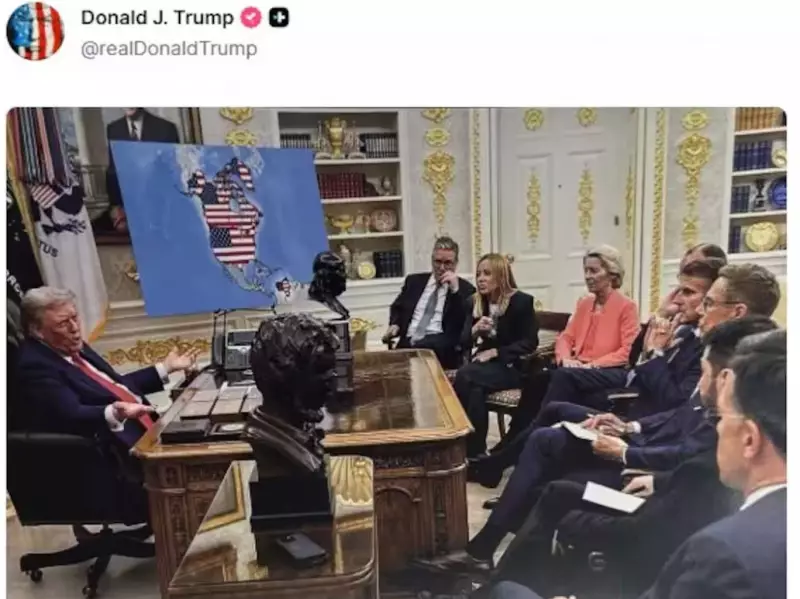
- An AI-altered image posted on Truth Social superimposing the American flag over Canada
- Public advocacy by Trump allies like Steve Bannon for Alberta to join the United States following separation discussions
- The upcoming renegotiation of CUSMA, which could eliminate tariff-free trade protection for 80% of Canadian exports
This combination of economic pressure and territorial ambition represents what can only be described as a hybrid war against Canadian interests. Whether motivated by distraction from domestic controversies or genuine expansionist desires, the effect remains the same: Canada faces direct political and economic conflict with its historically closest ally.
The Urgent Need for Arctic Military Demonstration
Prime Minister Mark Carney's administration must respond with immediate and decisive action. The most effective response lies in demonstrating Canada's commitment to defending its Arctic territories through visible military presence and international cooperation.
The proposed strategy involves multiple components:
- Deploying Canadian troops to strategic Arctic locations
- Inviting NATO allies to establish permanent military presence in Canada's northern regions
- Significantly increasing military assets in the Arctic, including icebreakers, aircraft, and submarines
This approach directly counters Trump's argument that Canada cannot adequately defend its Arctic territories against potential threats from Russia and China. By demonstrating both national capability and international support, Canada can send a clear message that its sovereignty is not negotiable.
Implementing Immediate and Long-Term Defense Solutions
Former deputy chief of the defence staff Mark Norman recently proposed establishing a permanent NATO command base at Iqaluit, an excellent long-term solution that deserves serious consideration. However, immediate action cannot wait for infrastructure development.
The current geopolitical climate demands boots on the ground now, with visible military presence serving as both practical defense and symbolic statement. This demonstration of resolve must be accompanied by careful diplomatic positioning, particularly avoiding increased reliance on China as a counterbalance to American pressure.
Carney's recent agreement allowing significant numbers of Chinese electric vehicles into Canada has drawn criticism and could potentially provide additional justification for American interventionist arguments. The path forward requires strengthening relationships with traditional allies while maintaining clear independence in defense policy.
As Canada navigates this unprecedented challenge to its sovereignty, the Arctic emerges as both the symbolic and practical battleground where national resolve must be demonstrated. Through decisive military presence and strategic international partnerships, Canada can protect its interests while maintaining its position as a sovereign nation in an increasingly unpredictable geopolitical landscape.