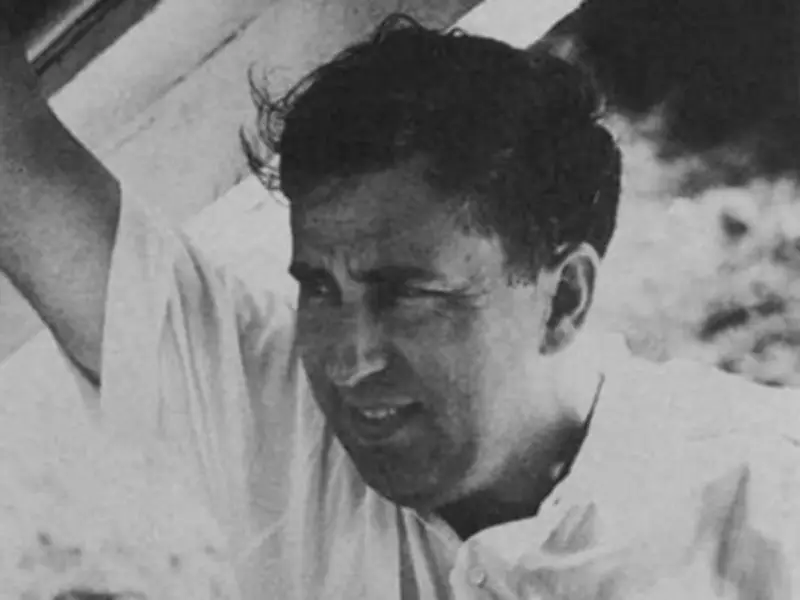
From Canadian Rocket Prodigy to International Arms Dealer: The Gerald Bull Story
In the annals of Canadian innovation, few stories are as dramatic and tragic as that of Gerald Bull. A celebrated rocket-engineering prodigy from Kingston, Ontario, Bull began his career with ambitions that could have placed Canada at the forefront of the 1960s space race. His early work showed promise of making his homeland a serious contender in cosmic exploration.
A Brilliant Mind Takes a Dark Turn
When scientific progress bypassed Bull's visionary plan to construct massive guns capable of launching projectiles into orbit, something within the inventor fractured. Rather than redirecting his talents toward legitimate scientific pursuits, Bull channeled his missile design expertise into much darker endeavors. He began developing horrific weapons for some of the world's most sinister regimes, effectively transforming from national hero to international villain.
This descent into arms dealing reads like something from a spy thriller, complete with shadowy governments, secret weapons programs, and international intrigue. Bull's clients included some of the most notorious regimes of the late 20th century: Apartheid South Africa, Baathist Iraq under Saddam Hussein, and Islamist Iran.

The Supergun Project
Bull's most infamous creation was the "supergun" he designed for Iraqi dictator Saddam Hussein. This massive artillery piece, officially known as Project Babylon, was intended to be the largest gun ever built, capable of firing projectiles hundreds of miles or potentially even launching satellites into space. The weapon represented both the height of Bull's engineering genius and the depth of his moral compromise.
"He essentially became a fiendish secondary character in a real-life James Bond movie," as described in the Canada Did What? podcast. The comparison proves eerily accurate, not just in Bull's activities but in his ultimate fate.
A Mysterious and Violent End
Like many villains in spy fiction, Bull met a violent and mysterious end. In March 1990, he was assassinated outside his apartment in Brussels, Belgium. Five bullets were fired into his head and back as he approached his front door. The murder remains officially unsolved, though many intelligence experts believe Mossad, the Israeli intelligence agency, was responsible for eliminating the man who was providing advanced weapons technology to Israel's enemies.
The tragedy of Gerald Bull's story lies in what might have been. Under different circumstances, his genius could have made him a national icon—someone featured on postage stamps or memorialized in university buildings. Instead, his legacy is one of wasted potential and deadly consequences.
The Canadian Context
Bull's story stands in stark contrast to other celebrated Canadian inventors like:
- Abraham Gesner, who invented kerosene and created the first mass-market use for petroleum
- Robert Foulis of New Brunswick, who developed the foghorn to prevent maritime disasters
- Sandford Fleming, the engineer who created the system of international time zones
While these innovators used their talents to improve human life and safety, Bull's later work contributed to conflict and destruction. His journey from bright Ontario boy with dreams of conquering the stars to accessory to supervillainy serves as a cautionary tale about how brilliance without ethical grounding can lead to catastrophic outcomes.
The full story of Gerald Bull's rise and fall is explored in depth in Season 2, Episode 5 of the Canada Did What? podcast, hosted by Tristin Hopper. This dark chapter in Canadian history reminds us that technological genius carries with it profound moral responsibility—a lesson as relevant today as it was during Bull's controversial career.