Canada Achieves NATO Defense Spending Target After Two Decades
OTTAWA — The North Atlantic Treaty Organization (NATO) officially confirmed on Thursday that Canada has successfully reached the long-standing defense spending target of two percent of its gross domestic product. This achievement comes exactly twenty years after the initial commitment was first made by member nations.
Historic Milestone for Canadian Defense
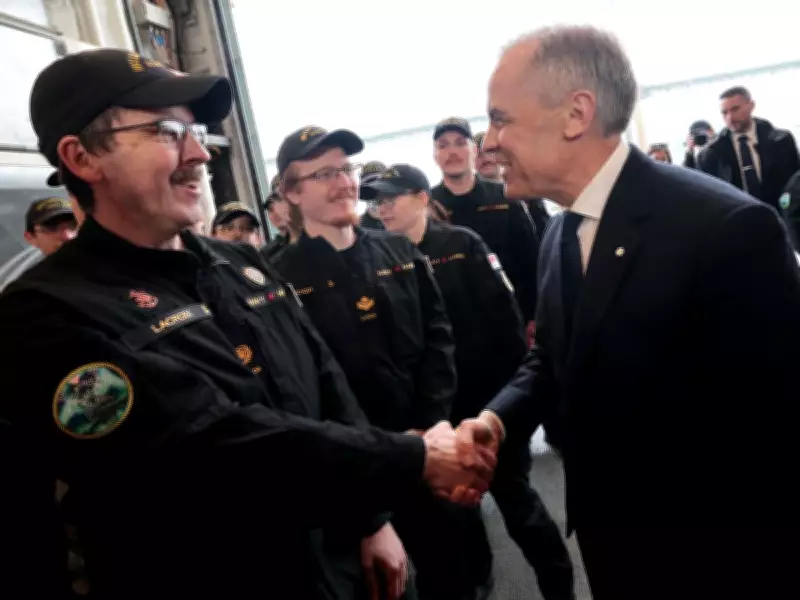
Prime Minister Mark Carney made the announcement during a visit to HMCS Margaret Brooke at HMC Dockyard in Halifax, where he addressed naval crew members and reporters. "We control our destiny," Carney declared. "I am pleased to announce today that we have kept that ambitious promise."
According to the Prime Minister, this represents the highest level of defense spending Canada has seen since the fall of the Berlin Wall in 1989. "For the last ten months, Canada's new government has been working with unprecedented speed and scale," Carney explained. "In ten months, we have invested more than $60 billion in our defense and security. That's the largest year-on-year increase in defense investment in generations."

NATO Report Details Collective Achievement
The NATO report released on Thursday outlined defense expenditures across all 32 member nations. For the first time in the alliance's history, every single member met the two percent spending target in 2025. The commitment was originally established in 2006 and reaffirmed in 2014, but previous administrations under Prime Ministers Stephen Harper and Justin Trudeau were unable to achieve the benchmark.
Canada's military spending reached just over $63 billion annually in 2025, according to the NATO documentation. NATO Secretary General Mark Rutte addressed the significance of this collective achievement during a press conference in Brussels. "For too long, European allies and Canada were over reliant on U.S. military might," Rutte stated. "There has been a real shift in mindset, a collective recognition of our changed security environment."
Political Reactions and Criticism
Rutte acknowledged that without pressure from the current U.S. administration under President Donald Trump, he doubts allies would have reached the spending target. "Take some big economies like Spain, Italy, Belgium and Canada, were far from the two percent mark," he noted. "They all got to the two percent."
Conservative Defense Critic James Bezan offered a critical perspective during a press conference in Ottawa. "It's no question that Mark Carney is responding to the person in the White House," Bezan asserted. "That's the wrong reason. We were supposed to be here as a nation more than two years ago. We shouldn't have been dragging our feet and dithering and not making the investments into the equipment that we need."
Bezan specifically criticized what he called the federal government's "creative accounting," arguing that it has not translated to improved operational readiness for the Canadian Armed Forces. "We are still sitting with many fleets, whether it's in the air force, the army or the navy, that are unserviceable," he detailed. "Only 50 percent of the Canadian Armed Forces equipment is deployable, and we know that's impacting our operational readiness and our interoperability with our allies."
The debate continues as Canada marks this significant defense spending milestone while facing questions about how effectively these financial commitments translate to military capability and preparedness.