Canadian Government Concealed Iranian Missile Attack on Kuwait Air Base
In a stunning breach of transparency, the Canadian government deliberately concealed from the public that Iran committed an act of war against Canada by launching a missile strike on a Canadian air base in Kuwait. The attack occurred on March 1, 2026, at the Ali Al-salem Air Base, yet Prime Minister Mark Carney's administration kept this critical information secret until media reports forced disclosure ten days later.
Government Secrecy and Defensive Posturing
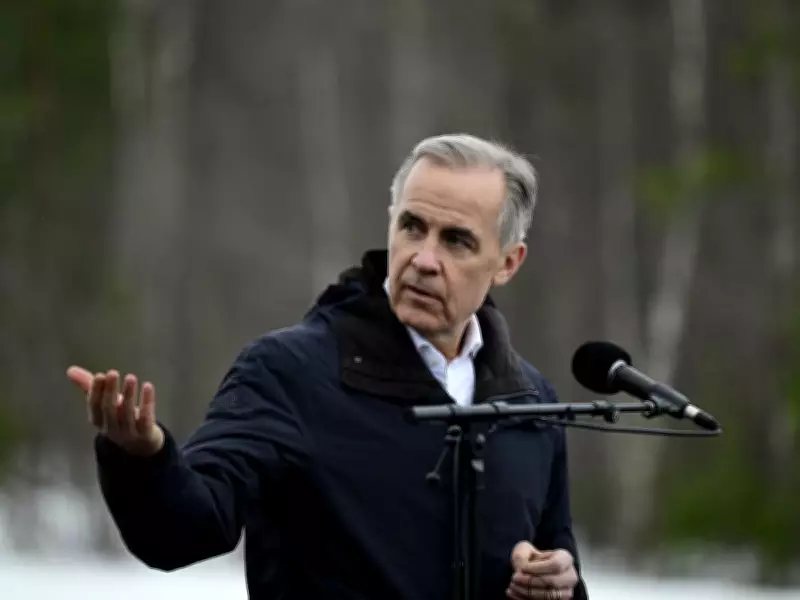
When questioned on Thursday about why this significant security breach was not publicly disclosed, Prime Minister Carney appeared visibly annoyed, deflecting responsibility by stating, "I'm not the only spokesperson for the government." This defensive tone reveals an administration uncomfortable with accountability, but the secrecy itself represents a fundamental failure for any government serious about national defense.
Despite repeated assurances that Canada would not become involved in the conflict with Iran, neither Carney nor any of his ministers explained how the Iranian attack on Canadian forces might influence government policy or response. This omission creates a dangerous gap between official rhetoric and ground reality.

Contradictory Positions on Iranian Conflict
The Liberal government has demonstrated remarkable inconsistency regarding its stance on the Iranian conflict. Prime Minister Carney initially declared support for American and Israeli strikes against Iran, only to have Foreign Affairs Minister Anita Anand seemingly walk back that support days later. Carney then reaffirmed that attacking Iran was the right course of action, while simultaneously expressing regret that such actions might not align with international law.
This contradictory messaging reached its peak when Carney stated, "We will never participate in Iran," despite having previously committed to defending Canadians and allies. The government's official position appears to support military action against Iran while objecting on both legal and moral grounds—a fundamentally incoherent stance that undermines Canada's credibility on the world stage.
Internal Party Divisions and Security Implications
Within the Liberal caucus, members have expressed disappointment that Carney hasn't outright opposed the war or consulted them more thoroughly. This raises serious questions about whether the prime minister even informed his own party colleagues about the missile attack on Canadian forces. The anti-Israeli faction within the party may be influencing policy to such an extent that Canada cannot properly acknowledge when its sovereignty has been directly challenged by foreign aggression.
The threat from Iran extends far beyond theoretical concerns. The regime has targeted U.S. bases and civilian infrastructure throughout the Middle East, while also launching missiles at other NATO members including Turkey and a British base in Cyprus. Canada's insistence on non-involvement begins to appear less like prudent diplomacy and more like an abdication of fundamental state responsibilities to defend both national interests and allied commitments.
Domestic Security Concerns and Inadequate Response
The Iranian threat manifests domestically as well, with potentially hundreds of regime-linked agents operating within Canada, including members of the Islamic Revolutionary Guard Corps—the same organization responsible for orchestrating global terrorist attacks and the 2020 downing of a plane carrying 57 Canadians.
Since 2022, immigration officials have suspended travel visas for 239 individuals with concerning links to the Iranian regime, with 32 specifically named by the Canada Border Services Agency as "inadmissible" to Canada. Yet despite these designations, only one individual has actually been deported, revealing a significant gap between identification and enforcement that leaves Canada vulnerable to continued infiltration.
The combination of foreign attack concealment, contradictory policy positions, and inadequate domestic security measures paints a troubling picture of a government struggling to address serious national security threats with the urgency and transparency they demand.