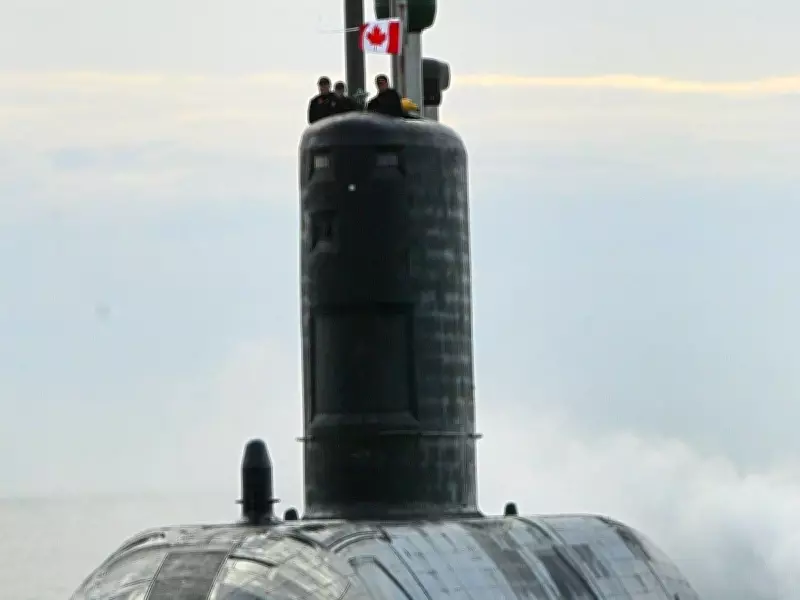
British Columbia-based companies are actively positioning themselves as potential suppliers for Canada's ambitious $60 billion initiative to acquire 12 new submarines for the Royal Canadian Navy. This massive defense procurement project, which will see submarines constructed at offshore shipyards, has attracted significant interest from local firms eager to participate in the economic opportunities it presents.
International Bidders and Local Partnerships
The competitive bidding process has been narrowed down to two major international contenders: Germany's Thyssenkrupp Marine Systems and South Korea's Hanwha Ocean. In a significant development at a recent industry event in Calgary, several B.C. companies formally signed partnership agreements with Hanwha Ocean, signaling their intent to contribute to the submarine project.
Among these firms is EMCS Industries Ltd., based in North Saanich, which specializes in manufacturing advanced antifouling systems for ships. Trevor Tasker, executive chairman of EMCS, expressed enthusiasm about the opportunity, stating, "To be involved in something this important to Canada is huge. From a growth perspective, for us to be recognized as one of the major players in our field and be trusted with this, yeah, it's a big deal."

Strategic Economic Benefits
Hanwha Ocean has publicly identified EMCS as a new partner, alongside Burnaby-based OSI Maritime Systems and Jastram Technologies of North Vancouver. According to Glenn Copeland, CEO of Hanwha's Canadian subsidiary Hanwha Defence Canada, these partnerships represent "part of a broader effort to contribute to Canada's long-term economic growth and sovereign defence capability, aligned with the country's national priorities." Hanwha is specifically promoting its KSS-III submarines for the Canadian procurement.
Both Hanwha and Thyssenkrupp have established Canadian offices to facilitate collaboration with local suppliers, demonstrating sensitivity to Canada's desire to maximize domestic economic benefits from this substantial defense contract.
Canada's Defense Industrial Strategy
This submarine procurement aligns with Prime Minister Mark Carney's recently announced Canadian defence industrial strategy, developed in response to shifting dynamics within NATO. The strategy emerged following concerns raised by U.S. President Donald Trump about alliance members not adequately contributing to collective defense efforts.
Under this comprehensive strategy, Canada has committed to increasing military spending to five percent of gross domestic product by 2035. A key priority involves directing as much of this additional funding as possible toward domestic companies and economic development.
Building Domestic Capabilities
The defense industrial strategy emphasizes awarding contracts to Canadian companies for equipment manufacturing whenever feasible. When domestic companies lack specific capabilities, the approach involves partnering with trusted allied nations to develop those capacities within Canada.
For major equipment acquisitions like submarines, where domestic construction may not be practical, the strategy mandates conditions that favor bidders who commit to reinvesting in the Canadian economy and ensuring sovereign maintenance capabilities for newly acquired assets within Canada.
This submarine procurement represents one of the largest defense initiatives in Canadian history, with British Columbia companies now strategically positioning themselves to capture significant economic benefits from the $60 billion project through supplier partnerships with international defense contractors.